
"Putin Has Stopped Moving Nuclear Weapons To Belarus"
2- 20.08.2026, 15:36
- 2,892
There are two reasons why the Kremlin rejected this idea.
The Main Intelligence Directorate of the Ukrainian Ministry of Defense stated that, in the event of a new wave of mobilization, Russia could form a strike force as early as this winter and once again attempt to launch an offensive in northern Ukraine, including from Belarusian territory.
How likely is a mass mobilization in Russia in the coming months? Could Moscow really attack Ukraine from the north again after that, including from Belarus? The website Charter97.org posed to the well-known historian and journalist Yuri Felshtinsky:
“Mobilizing a second army is quite difficult”
— Let’s think this through. I believe that mobilizing and creating a second ground army is a somewhat more complex task for Russia today than simply mobilizing a certain number of people. In Russia, as we know, hundreds of thousands of soldiers are drafted into the army twice a year, and the Russian Federation deploys roughly the same number to Ukraine. Mobilizing a second army is quite difficult. It needs to be equipped and trained; people need to be taken out of the Russian economy; and it may affect territories that were previously untouched by the war, such as Moscow. With open borders, this would undoubtedly lead to a new wave of migration, which would negatively impact the success of the mobilization campaign. That’s the first point. In other words, mobilizing and forming a second army is not as simple a task as it would be if one simply had to mobilize a few hundred thousand people.
The second point is the concentration of the army in Belarus. As we know, to launch an offensive against Ukraine and Kyiv, this army must be redeployed. To invade Europe, this army must also be redeployed into your country. There is simply no other way to carry out preparatory operations for an offensive.
Drawing on the experience of 2022, and already being at war with Russia, Ukraine, in my view, would launch a preemptive strike in this scenario. This will be absolutely necessary because, otherwise, either Ukraine or Europe will be placed in a situation where an attack occurs rapidly, as it did in February 2022. I think the Russian General Staff must assume that the Ukrainian Armed Forces will launch a preemptive strike against Belarus if a concentration of Russian troops is detected in Belarus. This is the second important point.
“Russia did not risk transferring nuclear weapons to Belarus”
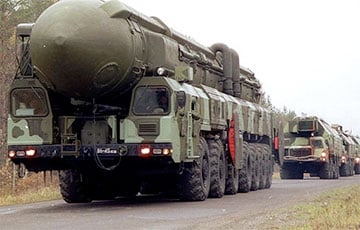
The third serious point: perhaps to prevent a preemptive strike against Belarus—as the Russian leadership would perceive it—tactical nuclear weapons will be deployed there. As we know, the Russian and Belarusian sides have already carried out all the preparatory measures for this. However, despite numerous discussions, threats, and the publication of articles—such as Sergey Karaganov’s piece on the need to launch a preemptive nuclear strike against Eastern and Central Europe—there are currently no Russian nuclear weapons in Belarus.
In other words, Russia did not risk transferring nuclear weapons to Belarus. There are likely valid reasons for this as well. One of them is the general risks associated with transferring nuclear weapons across borders. The second reason is a certain distrust of Lukashenko, because all these people are predators and do not trust one another—neither Putin trusts Lukashenko, nor does Lukashenko trust Putin. And the third reason is, once again, the threat of a preemptive strike by Ukraine against Belarus if the transfer of nuclear weapons—or even the theft of such weapons—is detected. Ukraine certainly has the capability to carry out such operations. We saw this during the Kursk operation and in operations like “Pautina.”
Even when it comes to moving nuclear weapons, Russia undoubtedly faces difficulties. Not to mention that this violates signed international treaties. Let’s assume that Russia doesn’t care about that.
“Moscow Is Russia’s Only Achilles’ Heel”
The only cause for concern today is Russia’s air superiority. We see that Ukraine lacks ballistic missiles and that the Ukrainian Armed Forces lack the capability to launch devastating and massive strikes against Moscow. Because Moscow is the only thing that matters to Russia—its sole Achilles’ heel and its weakest point. Therefore, this war can, in fact, only be won by striking Moscow.
Moscow understands this as well, which is why it is closely monitoring Ukraine’s ability to either develop ballistic missiles or obtain them from its allies. The allies are in no hurry to supply these missiles to the Ukrainian Armed Forces because they fear threats from the Russian leadership. All the talk about a “cornered rat” that might launch a nuclear strike is taken very seriously in Europe. It’s clear that European leaders are in no hurry to go to war with a nuclear power. But for this very reason, they are not providing Ukraine with long-range missiles. Consequently, Ukraine cannot strike vulnerable targets such as Moscow and cannot end this war. Otherwise, I believe Ukraine would have already ended this war with Russia.
And here’s another very important point—one related to the timeline. January 20, 2029, marks the end of Donald Trump’s presidency. Let’s hope he leaves the White House. U.S. foreign policy toward Ukraine, Europe, and Russia will undoubtedly change, because today Trump is Putin’s most important and most loyal ally, who is sabotaging all of Ukraine’s military efforts and Europe’s economic efforts to help Ukraine in this matter. Putin knows this, too. On the one hand, he still has time until January 20, 2029. On the other hand, that isn’t much time. Can we assume that 2026–2027 will be the last window of opportunity for Putin to make any strategic decisions? If we’re talking about something like the start of a winter campaign, mobilization will be necessary. Although offensive operations are more difficult to carry out in winter, in a certain sense. In February 2022, Russia started a war, but the Russian Federation had not planned to go to war. This is also an important point. In February 2022, Russia planned to capture Ukraine in a very short time, without fighting and without casualties. The fact is, however, that the war turned out to be protracted and bloody. But since it began in the winter, our concerns that Russia might launch another military offensive this winter are likely well-founded.
“If Russia loses control over Belarus, Russia loses this war”
Having said all this, we must acknowledge that Belarus undoubtedly remains a springboard for the Russian leadership to launch an offensive into Europe and Ukraine, and for a second offensive on Kyiv. Will Russia use this springboard again? That’s a difficult question. But, as I have said many times before, I believe that in this war there are two components of Ukraine’s victory and Russia’s defeat—which, in essence, are one and the same. The first is strikes against Moscow; the second is the liberation of Belarus from Lukashenko.
I believe this is the key to victory. If Russia loses control over Belarus, Russia loses this war. Because the invasion of Ukraine didn’t start as an isolated operation to seize Ukraine either. Putin never planned to stop there. He planned to move further. And moving further was only possible from Belarus. If you look at a map, it’s clear that an advance into Europe by a ground army is only possible from Belarus. The moment Lukashenko loses power, Putin loses control over Belarus, and your country ceases to be his springboard for an attack on Europe—that’s when Putin loses this war. One way or another, the regime in Belarus will have to change, because otherwise it will be impossible to rebuild the European security system.
And I think this is already well understood in Europe today. The European security system will not consist of us joining forces to overthrow the regime in Russia. We will most likely not succeed in doing that. But we can build a security system by ensuring that Belarus becomes a democratic country, joins the European Union, and joins NATO after Trump leaves the White House—because right now, NATO, strictly speaking, does not exist. And a bulwark will be created stretching from Finland to Ukraine, encompassing Sweden, the Baltic states, Poland, Belarus, and Ukraine. Russia will never be able to pass through this “mountain range” again.
***
Renowned American historian and journalist Yuri Felshtinsky is the author of the book *Natalia Radina’s Belarus: A Journalist Against a Dictator*. “Natalia Radina’s Belarus” is the story of modern Belarus as told through the life of one person. At the center of the book is the Belarusian journalist Natalia Radina, editor-in-chief of one of the country’s most famous opposition websites—“Charter ’97.”
The book *Natalia Radina’s Belarus* is available for purchase at:
Belarusian edition—published by the “Yanushkevich” publishing house “Knigavka”, the “Knigavka” bookstore located at ul. Kłopotowskiego 4, 03-717.
The Russian edition is available on the publisher’s website “ISIA Media”, Amazon, and Babook.
Ukrainian edition — “Oleg Fedorov’s Printing House” and Yakaboo.

Bank's name: Bank Millennium S.A.
Address: ul. Stanislawa Zaryna, 2A, 02-593, Warszawa
IBAN: PL97116022020000000216711123
SWIFT: BIGBPLPW
Name of the account holder: Fundacja “KARTA ‘97”
Purpose/title of payment: Donation for statuary aims
You can contact us by the e-mail [email protected]