


Success For The Ukrainian Armed Forces: Details Of A Secret Ukrainian Offensive Revealed
- 20.08.2026, 16:17
- 1,744
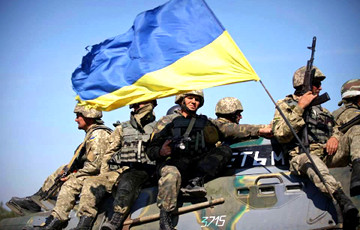
For a long time, not even journalists knew the results.
In late April, servicemen of the 80th Brigade of the Ukrainian Armed Forces’ Airborne Forces were deployed under the strictest secrecy to a new offensive direction—Oleksandrivske, located at the junction of the Donetsk, Dnipropetrovsk, and Zaporizhzhia regions. The publication "Ukrainska Pravda" reports this, citing its own sources.
The operation was initiated by Oleksandr Syrskyi, who at the time served as Commander-in-Chief of the Armed Forces of Ukraine. For several months, the sector remained off-limits to journalists; however, as it turned out, it played a significant role in the context of the current spring-summer campaign—and became an unexpected success for the Ukrainian army, both for Ukrainians themselves and for the Kremlin.
The Main Objective of the Operation
The Ukrainian Armed Forces’ offensive on the Oleksandrivka front was not merely an attempt to recapture individual villages. According to the publication and military officials interviewed, the strategic objective was to thwart the Russian plan to advance through Hulyaypole, which would have posed a subsequent threat to Orekhov—and thus to Zaporizhzhia as well. The strike on the adjacent sector forced the Russian command to redeploy reserves there: according to Syrsky, the Russians even had to withdraw certain units from the Pokrovsk area.
In fact, we are talking about two consecutive offensive operations. The first began in early 2026 north of Huliaipole—Ukrainian units advanced 9–11 km deep into Russian positions. The initial plan to advance even further and cut into the enemy’s rear could not be carried out due to a lack of forces; however, the offensive halted the advance of Russian troops toward Orekhov and laid the groundwork for the next phase.
The second operation began on May 5 and covered a front more than 50 km wide. Its goal was to drive Russian forces out of the Dnipropetrovsk region as much as possible and advance toward Komar–Velyka Novoselka; to this end, additional Airborne Forces units were deployed to the sector.
According to official data released by the Ukrainian command on August 12, from January through August, defense forces regained control of 26 settlements and approximately 745 km² of territory across three regions. At the same time, “UP” clarifies that this area may include not only fully liberated lands but also territories that have simply been cleared of Russian infiltration. One of the main outcomes was the nearly complete expulsion of Russian forces from the Dnipropetrovsk region—a large buffer zone has effectively formed in front of the region, and holding this zone reduces the risk of further Russian land advances.
Surprise vs. Drones
The key to the initial success was the element of surprise and infiltration tactics. The Ukrainian military refers to the first two to three weeks as the most effective period of the operation: instead of head-on attacks, small, well-trained groups infiltrated between Russian positions, advanced deeper, cut off supply lines, and then mopped up enemy units left behind in the rear—in other words, the Ukrainian Armed Forces largely employed against Russia the same tactics of small infiltration groups that the Russian army itself actively uses in other sectors of the front.
However, after a few weeks, the advantage began to wane: Russia assessed the scale of the operation, brought up reserves, and deployed powerful UAV units, notably the “Rubicon,” to the sector. According to Ukrainian military officials, the performance of Ukrainian drone operators could have been better, but the enemy still held a numerical advantage in drones. Drones seriously hampered movement, resupply, and evacuation—roads were further mined and blocked by “loitering” drones.
The publication cites the unreliability of data on the actual front line as one of the main internal problems: before the start of the second operation, some units discovered that Russian groups had penetrated 2–10 km deeper than the official situation indicated on the maps. Because of this, advancing units first had to clear their own presumed rear areas—or encounter the enemy there while advancing. The publication describes at least three such sections.
The situation was further complicated by the terrain and logistics: in some areas, forest belts had been cleared or mined, forcing the infantry to move across open terrain under the surveillance of drones. The logistical reach in some places extended to 10–20 km or more—one of the commanders reported that his unit had to cover about 20 km just to reach the line of contact, after which they still had to engage in combat. Rivers created additional supply difficulties: temporary crossings were quickly destroyed, and some groups had to cross by boat or even swim.
Results as of August 20
According to “UP,” the operation is ongoing, but its main advances appear to be behind it. The maximum plan was not fully achieved—there were not enough personnel and resources to maintain the initial pace. Nevertheless, the key strategic objective can be considered achieved at this point: the Russian advance toward Orekhov has been halted, a significant portion of the territory has been returned to Ukrainian control, and the Dnipropetrovsk region has been virtually cleared of Russian ground forces. This is precisely why most of the company and battalion commanders interviewed by the publication assess the operation as a success.

Bank's name: Bank Millennium S.A.
Address: ul. Stanislawa Zaryna, 2A, 02-593, Warszawa
IBAN: PL97116022020000000216711123
SWIFT: BIGBPLPW
Name of the account holder: Fundacja “KARTA ‘97”
Purpose/title of payment: Donation for statuary aims
You can contact us by the e-mail [email protected]