


Media: Moscow May Have Been Targeted By Ukrainian Ballistic Missiles For The First Time
18- 20.09.2026, 12:37
- 14,878
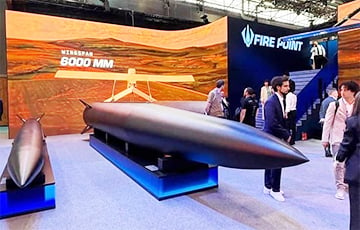
Zelenskyy mentioned the Pelican missiles.
On the night of September 20, the Ukrainian Defense Forces launched a massive missile and drone strike on the Russian capital. Pelican ballistic missiles were also reportedly used. This was reported this morning by the head of Ukraine Volodymyr Zelenskyy. The Ukrainian president confirmed the destruction of one of Russia’s largest oil refineries in Kapotna and a “logistics facility”—a warehouse complex in Sofrino.
“Our long-range strikes had a very tangible impact in the Moscow region last night. One of the Russian Federation’s key oil industry facilities and a logistics facility belonging to the aggressor have been destroyed. These are billions of dollars that support the war machine,” Zelenskyy said.
He also reported the successful destruction of a certain facility in the Voronezh region. The president thanked the Ukrainian units that participated in the operation for their precision. These include the Ukrainian Armed Forces’ Unmanned Systems Forces, the Security Service of Ukraine (SBU), the Special Operations Forces (SSO), military intelligence, and the Foreign Intelligence Service (SVR).
“Moscow must stop building echeloned air defense rings at the expense of other regions and instead end its brutal war and choose peace. There are de-escalation measures on the table: in the energy sector and food security. Political will is needed,” Zelenskyy stated.
He listed the weapons used in the attack. These include long-range strike UAVs such as the FP-1, RZ-100, MICH-2000, “Lyutye,” “Sichen,” and “Barsy,” the “Palyanitsa” drone missile, “Vendetta,” and “Pelican,” according to “Dialog.UA”.
The mention of the “Pelican” sparked particular interest among the public. The fact is that this is the name being used for Ukraine’s first ballistic missile—the FP-7 Pelican. There is no definitive confirmation yet that these are the specific missiles in question.
Volunteer Serhiy Sternenko expressed doubt that it could have been a ballistic missile. “Actually, if we’re talking specifically about the ‘Pelican’ missile—also known as the FP-7—its stated range is up to 350 km. But Moscow is about 500 km away. Perhaps there’s some other product called ‘Pelican.’ We’ll wait for more details,” he noted.

Bank's name: Bank Millennium S.A.
Address: ul. Stanislawa Zaryna, 2A, 02-593, Warszawa
IBAN: PL97116022020000000216711123
SWIFT: BIGBPLPW
Name of the account holder: Fundacja “KARTA ‘97”
Purpose/title of payment: Donation for statuary aims
You can contact us by the e-mail [email protected]