
Doctor: The Current Administration Doesn't Have Much Sense.
2- 11.09.2026, 9:55
- 16,338

The regime is triggering a new exodus of medical professionals.
Belarusian doctors may be required to serve a mandatory term of service in public institutions for up to seven years. Only after that will doctors be allowed to transfer to private medical centers.
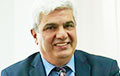
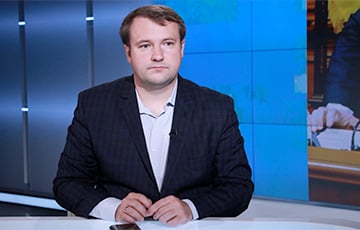
Why is the Lukashenko regime tightening working conditions for doctors? The website Charter97.org asked this question of Alexei Nosov, a Belarusian trauma surgeon living in Spain:
— Regarding the seven-year service requirement: there are definitely hidden pitfalls, one hundred percent. For one simple reason: the discussion most likely refers to assigned employment, not just serving out a term. The point is that in the past, you had to work for three years, after which you could choose another place if you found somewhere you could go. But now, if we’re talking specifically about assignment, you’re effectively stuck in this system for seven years, and everything depends on where you’re assigned.
Because there are regions where “Bulgakov-style” medicine is still the norm, so to speak. For example, we work in Spain, and our local hospital has an MRI machine—not to mention other medical imaging tests. But over there, a district hospital means a white coat, a doctor, and a syringe. I’m, of course, exaggerating a lot. Naturally, they have X-rays there, and some hospitals have ultrasounds, but they lack the level of diagnostics needed to make medical decisions.
The point is that when a doctor ends up there, their experience will be very basic and rudimentary. To put it bluntly, you have to cobble something together out of Styrofoam and sticks, figure it out, and cure the patient. That’s quite difficult. So, naturally, people don’t want to work there. On top of that, there are the conditions a young specialist faces. In very few—extremely few—places is housing or any kind of benefits provided. In the rest, there’s often no proper infrastructure.
Friends, who were assigned to such places have told me: in the winter, you bundle up in a sheepskin coat, with a dog following behind you; you go out, howl at the moon, and head right back home because everything’s covered in snow—just like in a Bulgakov novel. That’s the kind of places we have. And, naturally, who would want to go there? Now this might become mandatory for seven years. But people aren’t stupid; I hope they’ll find a way out. There are plenty of job opportunities for doctors around the world, in many countries. So either the authorities will start creating decent conditions for the healthcare system to function and for young medical professionals, or people will have to realize that their own skin is closer to their body after all. Most likely, that’s exactly what will happen.
The point is that the authorities in Belarus are, in principle, looking for ways to preserve this soap bubble that exists within the country. And since they don’t have much of a plan, they’re trying, you know, to paint the walls of the cowsheds with pink circles: maybe it’ll fly, maybe it’ll work.
— Won’t a seven-year residency requirement deter applicants from medical schools, where there’s already a shortfall?
— It’s hard to say. Because the mindset of the people who’ve stayed there—especially those living in the outlying regions—is a bit different. Minsk is one thing; the mindset there is still fairly European, albeit with certain flaws. But people living in the outlying regions have a completely different mindset.
For example, some local official or other influential person would be more than happy to get his son into medical school—even if the son isn’t a very good student. Or a daughter—even if she isn’t a very good student either. But it’s possible to pass the medical school entrance exams and get admitted through a referral. Then, of course, they’re assigned back to their hometowns.
In such cases, this probably won’t deter them, because people want this for themselves. It’s seen as a form of career advancement. Although they don’t understand what it’s really like to work as a doctor in Belarus—what the working conditions are like or how much doctors are paid. So, because of the prestige, they’ll most likely apply anyway. As for the rest—I don’t know; we’ll see. It’s very difficult to predict.

Bank's name: Bank Millennium S.A.
Address: ul. Stanislawa Zaryna, 2A, 02-593, Warszawa
IBAN: PL97116022020000000216711123
SWIFT: BIGBPLPW
Name of the account holder: Fundacja “KARTA ‘97”
Purpose/title of payment: Donation for statuary aims
You can contact us by the e-mail [email protected]