

"This Will Happen After September 20": Political Analyst Names An Important Date For Ukraine And Russia
7- 15.09.2026, 20:21
- 23,056
Trump, as always, is announcing something that doesn't exist yet.
U.S. President Donald Trump stated yesterday on the social media platform Truth Social that Ukraine had agreed not to launch strikes against Russian energy facilities. According to him, Russia agreed to do the same.
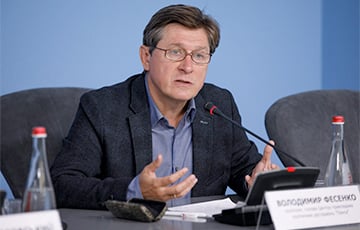
The website Charter97.org asked renowned Ukrainian political scientist and head of the “Penta” Center for Applied Political Studies, Volodymyr Fesenko, to comment on the current situation:
- That’s Trump in a nutshell. As always, he’s announcing something that doesn’t exist yet. He did this repeatedly during the ceasefire negotiations with Iran: he announced that, supposedly, everything had been agreed upon, and so on. But we see that the war hasn’t ended after all. Yes, there were ceasefire agreements that ultimately weren’t implemented. Now we’re seeing a very similar situation.
Neither Moscow nor Kyiv confirms the existence of such agreements. In other words, Trump said that’s it—Kyiv won’t strike Russian oil refineries, and Russia won’t do the same. Although Ukraine currently doesn’t have any operational oil refineries like those in Russia. So it’s a completely different situation.
Most importantly, I want to emphasize that neither Moscow nor Kyiv has confirmed the existence of any such agreements. Although I don’t rule out the possibility that there may be some behind-the-scenes consultations regarding this energy truce. That’s possible.
- What, then, is the point of Trump’s statements?
- That’s Trump’s approach. When he spoke of a ceasefire in the Persian Gulf, it had the desired effect. It seems like purely media-driven activity, but back then, after such statements by Trump, oil prices almost always fell—albeit temporarily.
In other words, Trump’s statements influenced the market and oil prices on global markets. And now, I think Trump wants to achieve the same effect—even if only temporarily—by making such optimistic statements; he wants the U.S. diesel market to react as a result, so that diesel and gasoline prices begin to fall.
- Why is the issue of diesel prices so important to Trump?
- Because in the U.S., this has long been a political pattern. If gasoline and diesel prices rise in the United States during an election, it means that the ruling president’s party—or the president himself, if it’s a presidential election—will lose the election. This is an ironclad rule. And right now, this poses a huge risk for Trump.
If the Republicans lose control of both chambers of Congress—the Senate and the House of Representatives—then Trump will face the risk of impeachment. So this is in his interest. He’s making these statements not so much for Ukraine’s sake—and certainly not for Russia’s—but rather for the American public, in order to achieve, at least temporarily, a drop in diesel prices.
Although in reality, the main reason for high diesel prices in the U.S. is not Ukraine, nor Ukrainian strikes on oil refineries. It is, first and foremost, the war with Iran. And the fact that this war is still ongoing, that the Strait of Hormuz is blocked, and now also the Bab el-Mandeb Strait between the Red Sea and the Indian Ocean—that is the main reason. But there is a minor factor related to the fact that Russia has indeed stopped exporting its diesel to global markets. Although, in reality, there is no diesel shortage in Russia.
This is a sort of stabilizing measure, and it is only indirectly related to the strikes on Russian refineries. Nevertheless, the U.S. does have an interest in ceasefire negotiations. That’s why I think the Americans will push this issue forward. The only question now is whether they’ll be able to reach an agreement. There are various possibilities here. They could negotiate in parallel, as they did last year—separately with the Russians and separately with us—and reach some kind of agreement.
It’s important to the Russians that we stop striking their refineries. The Russians, however, aren’t striking our oil refineries—they destroyed them long ago, back in 2022. The Russians are striking gas stations and infrastructure facilities. And Zelenskyy said last night that we’re interested in reaching an agreement that there will be no strikes, for example, on grain silos, food supply facilities, port infrastructure, and so on.In other words, an agreement on a broader scale. I’m not entirely sure if Russia will agree to this.
Here, we need to negotiate so that both sides agree on the other side’s list. They must agree not to strike specific targets. This must, after all, be mutually agreed upon. Therefore, it seems that trilateral negotiations will be necessary. Consultations are currently underway regarding the resumption of these talks. And it seems both sides are ready to resume them.
Most likely, this will happen after September 20, following the Russian State Duma elections. So for now, there’s an idea, and there’s Trump’s well-intentioned wish—which he decided, in his own style, to present as good news, as if everything had already been decided and everyone had already reached an agreement.
In reality, they’re only just beginning to negotiate. And then there’s the question: Will they be able to reach an agreement or not? There’s no certainty about that. It’s worth noting that Trump is very important to the Kremlin. Therefore, they may make concessions to Trump ahead of the congressional elections; they may agree on a certain compromise.
But they’ll only agree to something that works until November 3—until the congressional elections. By that point, it will no longer be relevant for Trump. And for the Russians, it’s important to resume attacks on Ukraine’s energy infrastructure on the eve of winter and throughout the winter. They’ll simply find a pretext to violate this agreement and resume the attacks on the energy sector.
That’s the situation. It may not be very optimistic. Nevertheless, I think there will, one way or another, be an attempt to reach some kind of agreement on this ceasefire. Whether this agreement will materialize and whether it will work—unfortunately, there are still many skeptical expectations on that front.

Bank's name: Bank Millennium S.A.
Address: ul. Stanislawa Zaryna, 2A, 02-593, Warszawa
IBAN: PL97116022020000000216711123
SWIFT: BIGBPLPW
Name of the account holder: Fundacja “KARTA ‘97”
Purpose/title of payment: Donation for statuary aims
You can contact us by the e-mail [email protected]