

Putin Has Run Into A "dilemma" In Europe
2- Vladimir Pastukhov
- 20.09.2026, 13:13
- 12,640
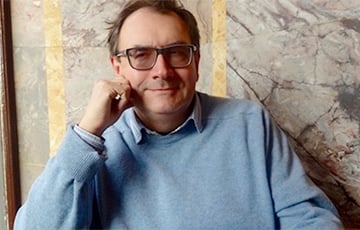
"Accountant" Merz will still strike the Kremlin as a person who is agreeable in every respect.
It was precisely the hope for a shift to the right in Europe that served as a powerful incentive for Putin to continue the war and motivated his rejection of Trump’s generous offer—Trump had extended a lifeline to him, and had Putin seized it, he could have emerged unscathed from the war a year ago (Personally, I consider this Putin’s second-biggest geopolitical mistake after actually starting this war.) In other words, for the sake of a crane offered by the European right, Putin turned down a sparrow offered by Trump. Well then, the “Decline of Liberal Europe” is worth a new batch of “cannon fodder.”
At first glance, this plan doesn’t seem all that crazy. Public sentiment in Europe is mixed.
Far-right parties have indeed staked their hopes on those who don’t understand the point of supporting Ukraine but are well versed in the price difference between gas from Russia and, say, from Norway or the U.S.—a point Putin himself never tires of mentioning. Theoretically, they could come to power and, once in power, influence the “Eurotroika’s” stance on providing aid to Ukraine. And they’ll listen to Trump more closely than the current European leaders do. So there is some merit for Putin in dragging out the war and waiting for the political climate in Europe to shift.
The problem is that weather forecasts are unreliable. Sometimes you expect a thaw in winter, but get an icy hailstorm in the middle of summer. It should already be a cause for concern that like charges repel each other rather than attract one another when they come close. The love between the Kremlin and the far right is fine from a distance. When they clash head-on in the cramped space of practical European politics, that love could quickly evaporate.
But beyond these general observations, there is a very specific problem that could make Putin’s conflict with far-right forces in Europe nearly inevitable. To understand the nature of this problem, we need to take a step back. It is no coincidence that right-wing parties are called populist—they are strongly oriented toward grassroots public opinion “here and now,” and they achieve success precisely where and when that grassroots opinion diverges from the establishment’s position. The current rise of the right in Europe can easily be explained by precisely this momentary rift between the position of the left-liberal establishment and the rapidly shifting views of the grassroots. The right is striking precisely and in force at this gap, including on the issue of support for Ukraine.
It’s no secret that, if we set aside those countries that have had the misfortune of being Russia’s neighbors, attitudes toward Ukraine in general—and toward the idea of providing it with financial support in particular—among the grassroots differ significantly from the officially stated position.
It is precisely this discrepancy—and not merely the Kremlin’s generous promises—that the far right in Germany and France, as well as to some extent in the United Kingdom, is primarily focused on. The problem, however, is that with its policy of “punishing Europe”—which Putin has begun to actively pursue in an effort to deter (or intimidate) the European establishment—the Kremlin is precisely eroding the very foundation upon which the right-wing’s agenda is built.
In chess, there is a concept called a “fork”—a situation in which you are bound to lose a piece, if not one, then the other. With his hybrid war in Europe, Putin has run into such a “fork.” He cannot fail to respond, because the level of European support for Ukraine has come to pose an existential threat to the Kremlin. But by responding—that is, by initiating sabotage and subversive activities in Europe, he will stir up precisely those anti-Russian sentiments among the “rank and file” that are not currently very prevalent there. And then his “right-wing hope” will change course on the fly, transforming from pro-Russian “Sauls” into pro-Ukrainian “Pauls.” And that’s when some “accountant” like Merz will strike the Kremlin as a charming, cautious, and pleasant person in every respect.
Vladimir Pastukhov, “Telegram”

Bank's name: Bank Millennium S.A.
Address: ul. Stanislawa Zaryna, 2A, 02-593, Warszawa
IBAN: PL97116022020000000216711123
SWIFT: BIGBPLPW
Name of the account holder: Fundacja “KARTA ‘97”
Purpose/title of payment: Donation for statuary aims
You can contact us by the e-mail [email protected]