

British Prime Minister Kir Starmer Has Resigned
1- 22.06.2026, 11:50
- 5,364
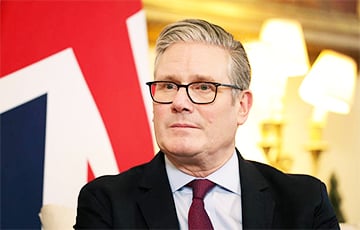
Photo: Getty Images
The former mayor of Greater Manchester may head the government.
British Prime Minister Keir Starmer has announced his resignation. The country’s government may now be led by Andy Burnham — now the former mayor of Greater Manchester, who last week won a decisive victory in the special election for the Makerfield parliamentary seat in northwest England, according to BBC.
Many in the Labour Party hope that Burnham will help the party overcome the threat posed by the growing popularity of Nigel Farage’s right-wing populist party, Reform UK : according to pollsters, it remains the most popular political force in the country.
However, a general election in the UK must be held no later than August 2029, so Labour hopes that by that time it will have managed to win back voters’ support.
Starmer is stepping down following the May 7 local elections, which were a disaster for the Labour Party; as a result, both the ruling Labour Party and the Conservatives suffered serious losses, ceding a significant portion of their votes to Reform UK and, to a lesser extent, the Green Party.
Starmer’s resignation means that the United Kingdom will have its seventh head of government in just over a decade.
Dissatisfaction with Starmer
The British government led by Keir Starmer came to power following the general election held in early July 2024. In that election, the Labour Party dealt a crushing defeat to the Conservatives, who had previously governed the country, and secured a record number of seats in Parliament.
In roughly two years in office, Starmer’s cabinet has managed to significantly reduce the scale of illegal immigration into the country. It was precisely this that sparked discontent among many voters, who cast their ballots for Reform UK, for which an anti-immigration agenda had become a central tenet of its platform. The government also claims that it has managed to improve the performance of the National Health Service—another critical issue in British domestic policy.
However, as our economic columnist Alexey Kalmykov explained last summer, Starmer’s popularity began to plummet sharply because he failed to convince voters of his ability to improve the country’s economic situation.
The current government’s term coincided with the beginning of Donald Trump’s, who launched a trade war with the rest of the world and decided to cut back on protecting Europe from Vladimir Putin’s Russia and other threats, which required nuclear-armed Britain to incur additional defense spending, as our correspondent wrote.
And this past winter, the U.S. and Israel launched a war against Iran, which resulted in the closure of the Strait of Hormuz. This led to rising energy prices and higher inflation.
As our correspondent Yuri Vendik wrote, the main criticism many of Keir Starmer’s opponents level at the prime minister is that, in their view, lacks both firm views on where to lead the country and how to transform its economy, and, consequently, a clear plan of action.
In addition, Starmer’s cabinet has been embroiled in several scandals, including — the appointment of Lord Peter Mandelson as British Ambassador to the U.S., who had maintained a friendly relationship with convicted pedophile Jeffrey Epstein.
Following the May 7 election, several Labour Party MPs called for the launch of a process to elect a new leader and, consequently, a new head of government. And on June 11, Defense Minister John Healey and his deputy Alistair Carnes announced their resignations: they stated that the defense investment plan “falls significantly short of the level required to defend the country in these dangerous times.”

Bank's name: Bank Millennium S.A.
Address: ul. Stanislawa Zaryna, 2A, 02-593, Warszawa
IBAN: PL97116022020000000216711123
SWIFT: BIGBPLPW
Name of the account holder: Fundacja “KARTA ‘97”
Purpose/title of payment: Donation for statuary aims
You can contact us by the e-mail [email protected]