

The Economist: The U.S. And Ukraine Have Begun Discussing A Two-Stage Agreement To End The War
3- 19.06.2026, 12:56
- 2,112
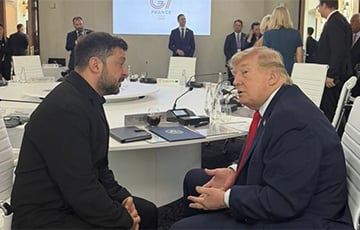
Trump got burned by Iran and decided to put pressure on the Kremlin.
A proposal for a peaceful resolution in Ukraine could include a phased plan—perhaps similar to the one that Donald Trump has just agreed upon with Iran. The Russian army’s setbacks and Ukraine’s successes in launching drone strikes against it, its supply lines, and targets within Russia itself have begun to shift Trump’s attitude toward the course of the Russian-Ukrainian conflict, writes The Economist.
Representatives from Kyiv and its team are now holding daily consultations on how to force Russia to the negotiating table.
One of the ideas they are discussing is ending the war in two stages. The first stage would involve a ceasefire along the current front line, extending 50–70 km inland on either side. Then, a broader agreement would follow.
According to The Economist, informal talks with Moscow have resumed. A high-ranking Ukrainian official, however, told the publication that Russia is unlikely to take any action before October, when it may want to show support for Trump ahead of the midterm congressional elections—“and get something in return.” But, according to him, the Kremlin will most likely stall until next spring, hoping that another massive winter missile and drone campaign against Ukrainian cities and energy infrastructure will force Ukraine to make concessions.
Moscow continues to insist that it is ready for negotiations only “in the spirit of Anchorage,” referring to the August 2025 meeting in Alaska where Vladimir Putin allegedly agreed with Trump to transfer the entire Donbas to Russia and recognize, de jure or de facto, of its control over Crimea and the occupied territories of the Kherson and Zaporizhzhia regions.
But the mood is shifting in the White House, whose occupant stated last year that Volodymyr Zelenskyy “has no cards” to play to continue the war. Two Ukrainian perspectives are beginning to take root in Washington, writes The Economist, citing insiders—that Russia cannot be trusted and that Ukraine is the winner, not the loser. This was confirmed by Ukraine’s successful strike on the Moscow oil refinery in Kapotna on the morning of June 18, as the G7 leaders’ summit was wrapping up in Évian, France.
Footage showing massive plumes of smoke over Moscow spread across global media and social media (with the exception of Russian state TV). And Zelenskyy declared: “If Ukraine burns, so will your Moscow. That is why we emphasize once again that it is time to put an end to the aggression; it is time to put an end to this war.”
Back in May Dan Driscoll, the Pentagon official in charge of the U.S. Army, stated that the Ukrainian Armed Forces’ tactical battlefield command and control system is currently superior to that of the U.S. military. Later, his superior, Defense Secretary Pete Hegset, acknowledged that the U.S. had “learned a great deal” from Ukrainian operations involving drones.
As meetings at the G7 summit showed, Europe and the U.S. agreed that Ukraine’s position in the war against Russia is strengthening, G7 representatives told Bloomberg. According to one of them, there is a general consensus that Russia will not be able to achieve victory on the battlefield. This indicates a significant shift in Trump’s position compared to how he assessed the conflict’s prospects after his meeting with Putin in Anchorage.
Sources close to the White House also confirmed these changes to The Economist. A former Ukrainian official told the publication: “Trump got burned on Iran and now understands that without putting pressure on Putin, he won’t get what he wants.”

Bank's name: Bank Millennium S.A.
Address: ul. Stanislawa Zaryna, 2A, 02-593, Warszawa
IBAN: PL97116022020000000216711123
SWIFT: BIGBPLPW
Name of the account holder: Fundacja “KARTA ‘97”
Purpose/title of payment: Donation for statuary aims
You can contact us by the e-mail [email protected]