


ISW: Kremlin Panicked Over Strikes On Tuapse Refinery
4- 29.04.2026, 8:42
- 4,128
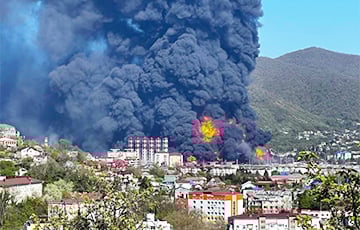
Moscow has classified data on the aftermath of the attacks.
On the night of April 28, the Defense Forces struck the Tuapse oil refinery for the third time in a month, with painful consequences for the aggressor. They were so tangible that they forced even the Kremlin to react.
A state of emergency has been declared in the area where the refinery is located, and Moscow has classified data on the consequences of the attacks. This is stated in the Institute for the Study of War (ISW).
New attack on the Tuapse refinery
On the night of April 28, the Defense Forces attacked the Tuapse oil refinery for the third time since early April. A new fire broke out there; the AFU General Staff said it was clarifying the extent of the damage inflicted on the enemy.
In the meantime, geolocation satellite images from April 28 show numerous pockets of burning and plumes of smoke at the Tuapse oil depot and refinery.
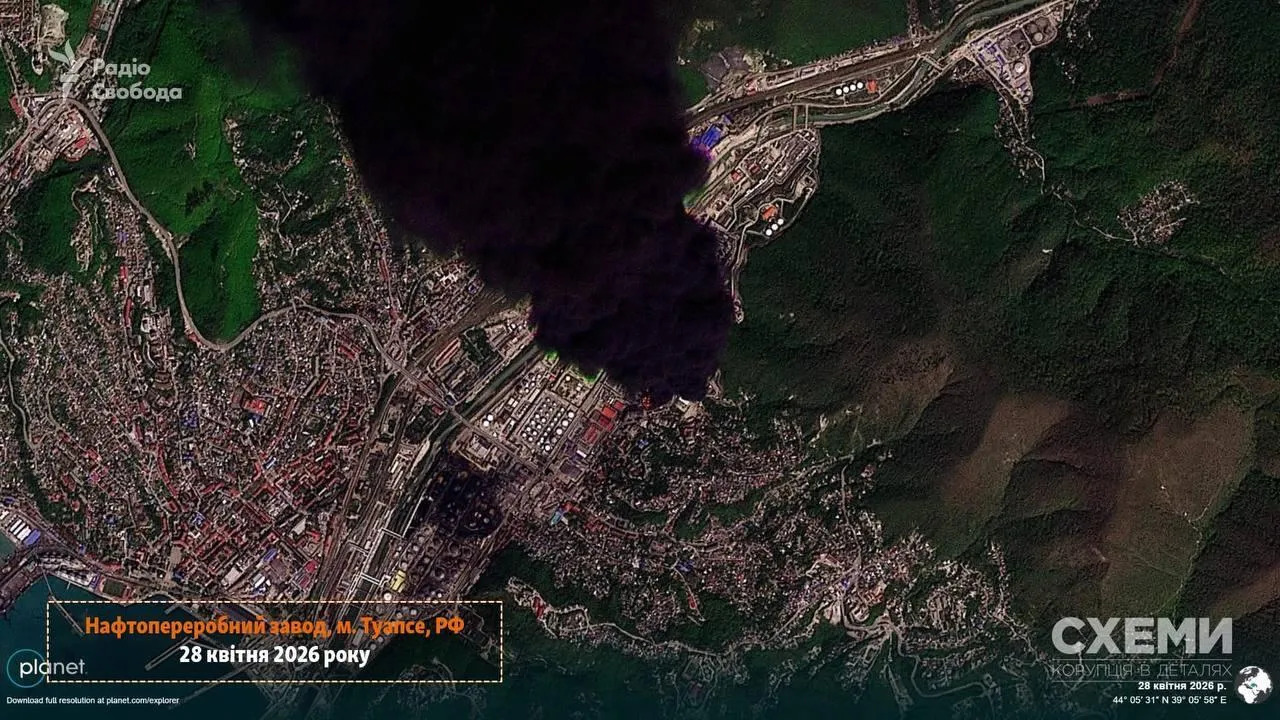
The Ukrainian OSINT Project estimated that Ukrainian strikes on April 27-28 damaged at least four oil storage tanks at the Tuapse oil refinery.
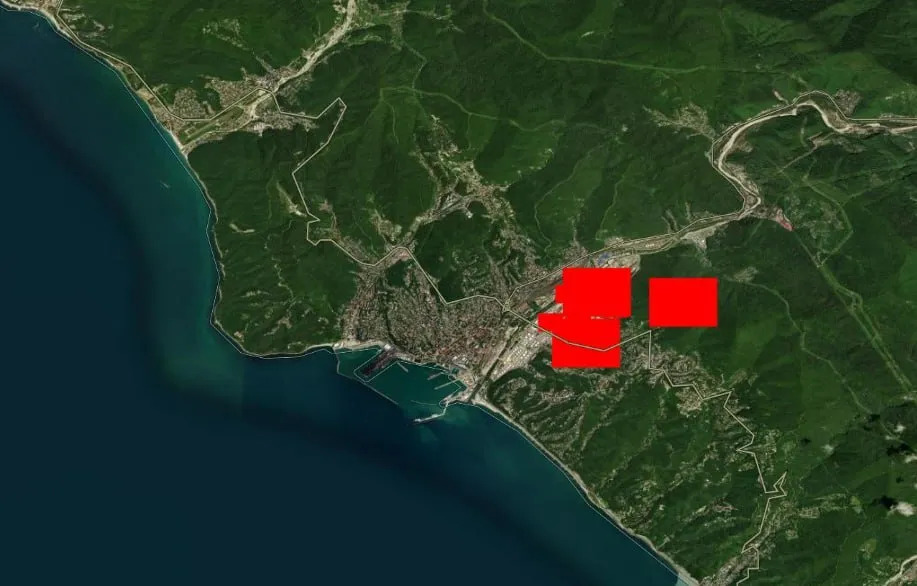
April 28 NASA FIRMS fire information system data shows thermal anomalies in the northern part of the Tuapse refinery, and the BBC Russian Service reported that previous Ukrainian strikes had not affected this part of the refinery.
The authorities of Krasnodar region blamed "debris" from drones for the fire at the Tuapse refinery.
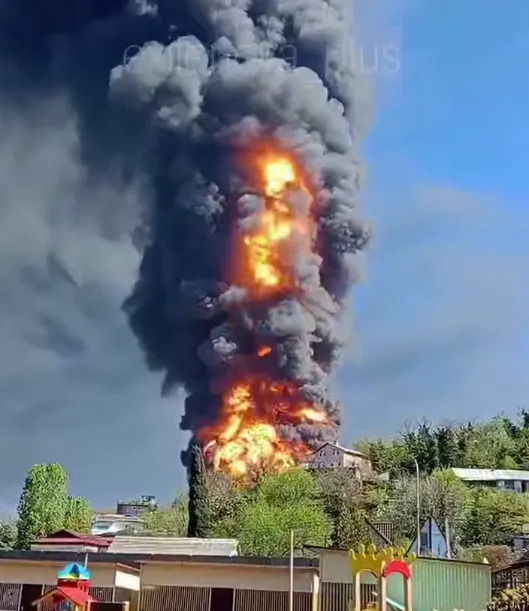
Ukrainian troops struck the Tuapse oil refinery on the night of April 15-16 and April 19-20, and the Unmanned Systems Force stated: the two strikes destroyed 24 oil storage tanks and damaged four others.
Russian opposition publication Astra noted that the Tuapse oil refinery suspended operations at its only refinery complex, which has an annual refining capacity of 12 million tons of oil per year, after the April 19-20 strikes.
Analysts recalled that in April 2026, Ukrainian forces stepped up a strike campaign against Russian military, oil and port infrastructure in the Krasnodar region. They attacked the Sheskharis oil terminal and the Admiral Grigorovich-class frigate near the port of Novorossiysk on April 5-6, the oil pumping station in Krymsk on April 8-9 and 10-11, the port and Nefteexport oil depot in Tuapse on April 15-16, the oil pumping station in Tikhoretsk on April 17-18 and the seaport in Yeisk on April 18-19.
Kremlin recognized the attack
The strikes on the Tuapse oil refinery on April 27-28 were so painful for the aggressor that even the Kremlin was forced to recognize them
After the latest attack, authorities in Krasnodar Krai declared a state of emergency in the Tuapse municipal district and said the strike had also caused an oil spill.
And Russian dictator Vladimir Putin met with Russian Minister of Civil Defense, Emergencies and Disaster Management Alexander Kurenkov on April 28 and instructed him to travel to Tuapse to oversee the response to the attack.
Kremlin spokesman Dmitri Peskov acknowledged the strike on Tuapse, but said all details on the hit sites were classified. He also criticized the Ukrainian strikes on Russian oil infrastructure, saying they continue to "destabilize global energy markets."
And the fact that there was a reaction from Moscow at all, ISW said, is a testament to the scale of the attack's impact.
"The Kremlin does not normally respond to Ukrainian strikes on Russian oil infrastructure, but the impact of the Ukrainian strikes was apparently so significant that it prompted a personal response from Putin and Peskov on April 28," the piece said.
Analysts emphasized that Ukraine is stepping up attacks on Russian oil infrastructure to prevent Moscow from using the global energy crisis to increase energy export revenues and generate money to continue its war against Ukraine.
"Ukrainian forces are likely to continue to use the large area deep behind Russia's rear and overwhelmed Russian air defenses to launch more frequent and large-scale strikes on Russian oil infrastructure and military assets, which will be supported by the

Bank's name: Bank Millennium S.A.
Address: ul. Stanislawa Zaryna, 2A, 02-593, Warszawa
IBAN: PL97116022020000000216711123
SWIFT: BIGBPLPW
Name of the account holder: Fundacja “KARTA ‘97”
Purpose/title of payment: Donation for statuary aims
You can contact us by the e-mail [email protected]