

BI: Ukraine Is Deploying Combat Robots On A Mass Scale Against Russian Troops
1- 21.06.2026, 10:46
- 2,470
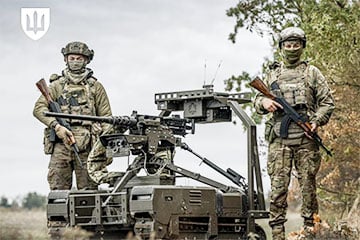
Kyiv plans to manufacture 50,000 ground robots in 2026 to replace human soldiers on the front lines.
Ukraine is rapidly increasing the number of ground combat robots on the front lines, assigning them increasingly dangerous tasks. Unmanned platforms deliver ammunition, evacuate the wounded, lay mines, and attack Russian troop positions.
Although many of these machines do not survive even a few combat missions, the military considers this a justified price to pay for the soldiers’ lives saved, writes Business Insider.
Due to heavy minefields, artillery fire, and the widespread use of drones, delivering supplies to the front lines has become one of the riskiest missions.
“If you send a human driver to deliver these supplies, there’s a huge chance he’ll be killed,” said Andriy Kushnerov, a platoon commander with the Ukrainian Armed Forces’ 59th Separate Assault Brigade .
That is precisely why the Ukrainian army is increasingly using ground-based unmanned platforms to deliver ammunition, food, and evacuate the wounded.
From kamikaze robots to multipurpose combat vehicles
One of the manufacturers of such systems is the Ukrainian company Ratel Robotics. Its CEO Taras Ostapchuk explained that the company’s first robot, developed in late 2023, was essentially a self-propelled platform equipped with anti-tank mines designed to strike enemy targets.
Today, the company produces hundreds of unmanned ground vehicles every month.
“The most important thing is to save the lives of our soldiers,” Ostapchuk emphasized.
According to him, the robots cost between $2,000 and $40,000, depending on their size and capabilities.
“We know how to produce the cheapest combat-ready robots,” he added.
Modern platforms can carry hundreds of kilograms of cargo, evacuate the wounded, lay mines, launch FPV drones, and carry out strike missions.
50,000 robots per year
Demand for ground-based robotic systems is growing rapidly. According to the publication, in the first half of 2026, Ukraine ordered 25,000 ground robots—twice as many as in all of 2025. By the end of the year, the plan is to manufacture 50,000 such machines.
President Volodymyr Zelenskyy previously reported that since the beginning of the year, Ukrainian-made robots have carried out more than 50,000 missions.
According to Andriy Hrytsenyuk, CEO of the state-run platform Brave1 , there are currently about 280 manufacturers operating in Ukraine, producing more than 550 models of ground robots.
“We must not put our soldiers at risk,” Hrytsenyuk emphasized.
He added that the military is striving to replace human personnel with unmanned systems as much as possible wherever feasible: “Whatever can be replaced by drones, we replace with drones.”
Most robots can only withstand a few missions
At the same time, even modern machines remain vulnerable on the battlefield. According to Andriy Kushnerov, near the front lines, a ground robot typically lasts only five to ten missions.
“This is a loss that Ukraine is willing to bear if it can save the lives of its soldiers,” the article notes.
To improve the survivability of their equipment, manufacturers have begun installing anti-shrapnel armor and are also working on defense systems against FPV drones.
The war of the future has already begun
The Ukrainian military believes that the widespread use of inexpensive unmanned systems is changing the very nature of war.
The commander of the unmanned systems company in the “Kraken” regiment, whose call sign is Grek, noted that robots increase the army’s “operational endurance” because they do not get tired and can operate in areas where the risk to humans is too high.
Experts emphasize that Ukraine’s experience could serve as an important lesson for other countries. Future wars may be determined not only by expensive high-tech systems, but also by the ability to rapidly produce large batches of relatively inexpensive robotic platforms that can be easily replaced after being lost on the battlefield.

Bank's name: Bank Millennium S.A.
Address: ul. Stanislawa Zaryna, 2A, 02-593, Warszawa
IBAN: PL97116022020000000216711123
SWIFT: BIGBPLPW
Name of the account holder: Fundacja “KARTA ‘97”
Purpose/title of payment: Donation for statuary aims
You can contact us by the e-mail [email protected]