
Battle After Battle
- 31.05.2026, 16:03
- 1,334
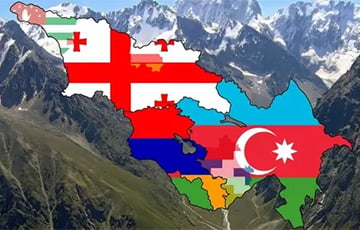
Russia is being pushed out of the South Caucasus.
The comfortable self-perception as a regional hegemon and "arbiter" in the eternal conflict between Armenia and Azerbaijan has been replaced by frustration and déjà vu with Ukraine. The more irritating for Moscow is the fact that now the military argument (even if there is a Russian base in Armenia itself) cannot be used - because of the war against Ukraine.
They have to rely on the notorious "soft power" instead of the usual shouting and reminders of military might. But even the usual tools of "soft power" in the Russian way - trade restrictions - can play only an auxiliary, not the main role.
Russia has included all possible threats, and some of them have been implemented: flowers, mineral water, cognacs, wines and fruit and vegetables have been banned. The threat to suspend or denounce the agreement on duty-free deliveries of gas, oil products and rough diamonds to Armenia if Yerevan continues its rapprochement with the EU, i.e. if the election is won by Nikol Pashinyan.
Moscow's nervousness is conveyed not only by these steps and the habitually boorish statements of Maria Zakharova. The main narrative that Russian propaganda at all levels is increasingly broadcasting to Armenian audiences and its own: the current elections in Armenia are not just an internal affair of the country, but in fact a referendum on whether it is with Russia or Europe.
There is another narrative that goes along with this: if Armenians confirm the vote of confidence in Nikol Pashinyan, it will mean that their country has gone the Ukrainian way, which means that it will have neither economy nor security.
The upcoming elections in Armenia will also be another serious test of Russian approaches to FIMI (manipulation of information and foreign interference) in general and interference in elections abroad in particular. We have seen these approaches repeatedly - in elections in Georgia and Moldova, and probably in Hungary as well. In Georgia they were relatively successful, but in Moldova both presidential and parliamentary elections did not bring the desired result. Although, judging by the monitoring of our institute, very substantial efforts and resources were invested.
Now, apparently, the same tools are being used to influence the elections in Armenia. Both in Georgia and Moldova, and now we see such basic elements of the Russian strategy: exploitation of the fear of war and the theme of frozen conflicts, strengthening of Eurosceptic sentiments, targeted campaigns against the pro-European leadership, as well as systemic undermining of trust in electoral procedures.
Of course, each country has its own specifics. For example, after the Armenian-Azerbaijani war of 2023, the topic of the frozen conflict is no longer relevant, but rather the manipulation of the Karabakh trauma and shifting the responsibility for the defeat to the Armenian leadership and personally to Nikol Pashinyan. While Russia has nothing to do with it, and the fact that it did not help its military ally - well, no one asked for its help.
In addition, the factor of the Armenian Apostolic Church plays a very important role. Russian propaganda uses it to promote the favorite narrative of "traditional values" and the dichotomy of "spiritual Russia versus soulless West." In general, traditional values and the notion of family are very widely used by Moscow in its attempts to influence elections - similar approaches were used during parliamentary elections in Georgia and Moldova.
In the Armenian case, similar to Russia's general attempts to sway Ukrainian society as well, the narrative of "pressure on the church" and "war against Christian identity" is widely used during the current election campaign, and individual criminal cases or political conflicts are interpreted as part of a "Western program" to dismantle the Church and the Christian identity of the country The main narratives are coherently set by Russian federal channels in news and political talk shows. It is they who broadcast the basic narratives of the Putin administration, and the other levels of propaganda are already oriented towards them. If a TV channel emphasizes the "Moldovan" or "Ukrainian" scenario, which the West is trying to implement in Armenia by the hands of its hireling Pashinyan in order to split the friendly nations, then we will see the same thing the next day in the Russian segment of Telegram. All sorts of war correspondents, Z-channels and specialized resources on the Caucasus ensure rapid replication of relevant messages. Be it the Armenia-EU summit, Ukrainian President Vladimir Zelensky's speech in Yerevan at the European Political Community summit, Pashinyan's reluctance to go to the EAEU summit, constitutional reform, etc. Telegram performs the function of accelerated dissemination and radicalization of narratives.
An important role is played by Armenian media and political platforms oriented at the Russian-speaking audience. The positions of local opposition politicians, church representatives and former government officials are articulated through them, often in coordination with Russian expert and media structures.
And finally, the Armenian Diaspora in Russia has a special role. Armenian Diaspora organizations in Russia provide additional infrastructure of influence through public events, forums, expert discussions and statements on the future of Armenian-Russian relations. These structures become an important channel for political mobilization and dissemination of pro-Russian interpretations among a part of the Armenian audience.
A particular feature of the current election campaign is the "nervousness" of the Kremlin and the direct ultimatum given to representatives of the Armenian Diaspora in Russia: either you help in any way you can to influence the election of a Moscow-friendly parliament, or your opportunities to make money here will be severely limited. For an example, you can look at the problems of the Azerbaijani Diaspora.
Although the Russian side uses mostly standard approaches in its attempts to influence the electoral process in Armenia, these elections will be non-standard for it.
First, they may consolidate the loss of the South Caucasus and set a bad example for Central Asia.
Second, Russia itself, through its propaganda and ultimatums, has made these elections a referendum on Armenia's European integration.
And third, the Kremlin cannot afford another loss after the fiascoes in Moldova and Hungary. It is obvious to everyone that Russia is making great efforts to prevent Nikol Pashinyan from remaining in the prime minister's chair or at least prevent him from getting a mandate of a significant majority. Therefore, not only are ominous predictions of Armenia's economic and cultural collapse if it chooses a pro-European course increasingly in play, but the very preservation of its statehood is being called into question.
Alexander Shulga, The Moscow Times

Bank's name: Bank Millennium S.A.
Address: ul. Stanislawa Zaryna, 2A, 02-593, Warszawa
IBAN: PL97116022020000000216711123
SWIFT: BIGBPLPW
Name of the account holder: Fundacja “KARTA ‘97”
Purpose/title of payment: Donation for statuary aims
You can contact us by the e-mail [email protected]