

On Either Side Of The Grille
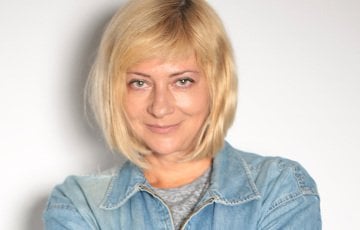
8- Irina Khalip
- 22.05.2026, 10:56
- 11,272
Lukashenko himself knows what the Belarusians sincerely wish him.
News in Kolyma: Magadan colony No. 3 has created a special barrack for political prisoners. The barracks for 120 people. Political prisoners sit with deserters. The attitude of the guards is harsh, as usual, but inside the barracks, according to the stories of the recently released - a friendly atmosphere and mutual support. There is even a mobilized man who did not return to the war from leave and specially hired a lawyer to prove that his client was a deserter. That is, so that the client was guaranteed to go to jail rather than go to war. The rest are mostly those convicted for their anti-war stance: rallies, posts on social networks, donations to the AFU, and so on.
In Soviet times, that's roughly what was done to the political (I don't mean Stalin's "Great Terror") - they were kept separate from other prisoners. There were two camps for political prisoners in the USSR - Perm-35 and Perm-36. Since there were fewer women political prisoners, a separate camp was not created for them: they were kept in an isolated barrack in the Mordovian zone. Since the most common article was "anti-Soviet agitation and propaganda," the Soviet authorities were careful to ensure that political prisoners did not lead their socially close friends astray or engage in agitation in the camps. The most correct approach seemed to be simple: isolate the political prisoners and leave them to simmer in their own juice. And for them it was just the same happiness: to be among their own, among like-minded people, among acquaintances. And in the pre-trial detention center, after the verdict, they dreamed of being on the stage as soon as possible and finally getting to the camp - to those who understood.
I recently spoke with Soviet dissident Ivan Kovalev, who spent five years in Perm-35 (his wife, Tatiana Osipova, spent the same five years in the Mordovian zone). He recounted how, during the stage, the "pakhany" said, upon seeing two of his sacks of food and belongings, "A little from the big one is not robbery, but sharing." Ivan Sergeyevich replied: "I will, of course, share, but I will not give it all away, for I am going to a political camp and am taking these things to my associates. Neighbors on the Stolypin wagon understood, did not take away, and shared something by mutual consent.
And here is how the Kiev poet and dissident Irina Ratushinskaya described the women's barracks for the political in her book "Gray is the color of hope": "Barbed wire. The path to the wooden house. The view of the house is more than informal: this dacha wreck. But on the other side of the barbed wire there is a quite official booth with a machine gunner. There are a few birch trees around the cabin, and grass has already broken through in some places. That's it. This is where I will be for another six years and five months - on this side of the gate, on this patch of land. This barracks was called "small zone" there. Its inhabitants did not cross paths with other prisoners. Even sewing machines were installed right in the "small zone" to prevent anti-Soviet propaganda among the prisoners.
With us, everything is different. The regime doesn't try to protect prisoners from anti-Lukashenka propaganda, because it's pointless. If in the USSR criminals and "everyday people" were considered socially close, then in modern Belarus any prisoner, regardless of the charges, is an enemy of the regime, hating it fiercely. There are no socially close people in our latitudes: everyone is equally distant from the regime, everyone equally hates it, everyone equally keeps a personal account to get even one day.
So it's useless to isolate political prisoners, the Lukashists understand it perfectly well. And they understand even better that they can't change anything: even if you put prisoners on featherbeds, they won't stop hating. So they follow a simple and uncomplicated way: they isolate political prisoners from those who are closest to them. They put families together, but never a mother and daughter in the same unit, and a father and son or brothers in the same colony. Friends, like-minded people, associates, "associates" - all are sent far away from each other, so as not to suddenly ease their lives with the feeling of closeness of a relative. They even release them with the same aim: Babariko was taken away, while his son was left in the colony; Zolotova from tut.by was taken away, while her colleague Chekina is still sewing uniforms in the Gomel zone.
The regime hopes that political prisoners will one day simply dissolve and become an unnoticeable and unremarkable part of the contingent.
But they don't. Even if you gather them in a separate barracks, even if you distribute them throughout all the zones and detachments so that they don't meet and don't communicate, nothing will change. Political prisoners will remain themselves. If you want to make them invisible, remove the damn yellow tags, remove any distinguishing marks, stop the pressure and torture. Better yet, release them all in one fell swoop, so that not even their spirit would be in Belarusian colonies. It would make you feel better, wouldn't it? They will certainly be less noticeable in big cities than in the ranks with their yellow tags.
I would like, of course, to continue: resign, don't disgrace yourself, write a sincere confession... However, he himself knows what the Belarusians on both sides of the bars sincerely wish him.
Irina Khalip, especially for Charter97.org.

Bank's name: Bank Millennium S.A.
Address: ul. Stanislawa Zaryna, 2A, 02-593, Warszawa
IBAN: PL97116022020000000216711123
SWIFT: BIGBPLPW
Name of the account holder: Fundacja “KARTA ‘97”
Purpose/title of payment: Donation for statuary aims
You can contact us by the e-mail [email protected]