
Natallia Radzina: Ukraine Is Beginning To Win The War
5- 26.05.2026, 22:36
- 26,954
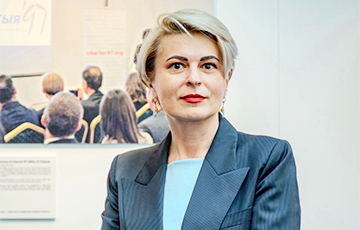
The commander of Ukraine's UAV forces is the best negotiator with Lukashenko.
Why did French President Emmanuel Macron called Lukashenko? Is there a threat of an attack on Ukraine from Belarus? How does lifting sanctions on Belaruskali threaten the West? Do Ukraine's successes bring closer the liberation of Belarus?
About this and more we talked to Natallia Radzina, editor-in-chief of Charter97.org.
- In recent weeks, the Western media have been writing about the transfer of initiative on the front to Ukraine. The Ukrainian armed forces have started hitting Moscow, and the traditional May 9 parade has become a demonstration of Putin's weakness. Do you see these events as positive signals for Belarus?
- Absolutely. I remember when a year ago, speaking at the Lennart Meri Security Conference in Tallinn, I said that Ukraine had the right to launch missile strikes against Moscow to end the war, it was perceived by many as a very radical proposal. Now it is commonplace and more and more Ukrainian drones are reaching the Russian capital. Ukraine is beginning to win the war. With such a rapid development of events, I do not rule out a sooner collapse of the regimes in both Russia and Belarus than we can imagine.
- French President Emmanuel Macron called Lukashenko for the first time since February 2022. French media say the Belarusian dictator was warned of the consequences of getting involved in a war against Ukraine. On the eve of his conversation with Lukashenko, Macron called Ukrainian President Volodymyr Zelensky, who has been talking about the threat from the territory of our country for the past weeks. Is there a risk of a new attack from Belarus?
- Specifically at the moment we do not see a large concentration of Russian troops and heavy equipment in Belarus, but potentially, as long as Belarus is under Russian influence, there is always a risk of an attack from the territory of Belarus. Including the possibility of missile fire both from the territory and from the airspace of Belarus, which has happened repeatedly during the war.
The situation has been aggravated by Russia's intention to deploy missiles with nuclear warheads and the "Oreshnik" complex in Belarus, as well as by the Russian-Belarusian nuclear exercises for the second time in the past two years. Hence the call of French President Emmanuel Macron to dictator Lukashenko with a warning about the consequences in case anything flies from the territory of Belarus in one direction or another, especially if the missiles with nuclear warheads. In the situation of uncertainty of the American foreign policy now France, though not formally yet, holds a nuclear umbrella over the whole Europe. I think that President Macron clearly and distinctly warned Lukashenko what awaits him in case of a nuclear strike from the territory of Belarus against Ukraine or neighboring NATO countries.
Of course, the Belarusian propaganda tried to present this call as some kind of recognition of Lukashenko's legitimacy, but it is not so. Let me remind you that Macron already called Lukashenko in the first days of Russia's large-scale war against Ukraine, on February 26, 2022. Then the dictator was also warned severely, and the Belarusian army did not enter the war against the neighboring country.
Ukraine also warned Lukashenko: in case of a repeated offensive from the Belarusian territory by the Russian army, the AFU will launch missile strikes on the leading Belarusian enterprises, first of all, oil refineries in Mozyr and Novopolotsk. And this is what the regime is really afraid of. I remember a few years ago, when this topic was not yet mainstream, in an interview with the Ukrainian media I expressed the idea that in case of a threat the AFU had the right to strike at Belarusian oil refineries. Lukashenko immediately reacted to this, made a public statement on the inadmissibility of such steps and ordered to install air defense systems closer to the plant in Mozyr. If he was so startled by the journalist's words, imagine his reaction when he is addressed with the same warnings by the commander of the AFU's Unmanned Systems Force Robert "Madiar" Brovdy?
- The United States has asked Lithuania, Poland, and Ukraine to lift sanctions on Belarusian potash to allow transit of the product through their territories. This is evidenced by an informal appeal of the US State Department to the three capitals. Many versions were put forward as to why the Trump administration went to negotiations with Lukashenko. It turns out that the main reason is potash fertilizers?
- I think that potash fertilizers are one of the main reasons for these negotiations. I was not at all surprised by the news about the US State Department's appeal to Lithuania, Poland and Ukraine to lift sanctions on Belarusian potash. In fact, as far as I know, the Americans have been exerting informal pressure on Lithuania for about a year already. The Americans need Belarusian fertilizers to get access to the nearest ports on the Baltic and Black Seas, as Russian ports are much farther away and do not have the necessary infrastructure. I'm also sure that Lukashenko himself insists on lifting the EU sanctions in negotiations with the Americans, because it's European restrictions, not American ones, that hurt his regime the most.
But I don't think that the EU countries and Ukraine will go for it in the conditions of war. I have already talked to some officials from these countries and so far the attitude to the American proposal is negative. "For the Americans it is an economic benefit, for us - a security threat," my interlocutors said.
- What is the danger for Poland, Lithuania and Ukraine if they agree with the US proposal and lift sanctions on Belarusian potash?
- The threat of a military attack on these countries from the territory of Belarus will increase. The Kremlin will definitely perceive the lifting of sanctions on Belarus as a weakness and will certainly take advantage of the vulnerability of these countries. First of all, where is the guarantee that together with potassium, weapons, explosives and sabotage groups will not be brought into Lithuania, Poland and Ukraine? No matter how they check, if the road is open, they will find ways. Secondly, if a precedent is set, restrictions on other Belarusian goods will be lifted after potassium. This, of course, as always, will be immediately used by Russia, and there you go - the Belarusian smuggling hub is back in business. Among other things, Belarus will certainly send to Russia dual-use products, components for the creation of armaments, and it is not excluded that armaments themselves.
All this will only strengthen the Russian and Belarusian regimes and allow them to move to a more active phase of war against Ukraine, as well as against the Baltic States and Poland.
I will give the example of Ukraine, which for many years of dictatorship in Belarus was one of its main trading partners. The country's authorities did not impose economic sanctions against
Lukashenko's regime even after the brutal suppression of popular protests against the rigged presidential election in 2020. As a result, Russian troops invaded Ukraine from the territory of Belarus.
And if Ukraine had stopped buying huge quantities of Belarusian oil products and fertilizers and had imposed sanctions on the dictatorship together with the EU immediately, instead of several years later, there might not have been an offensive from the territory of Belarus. Or, at least, it would have been expected and would not have been a "stab in the back" for the Ukrainian authorities, as the representatives of Vladimir Zelensky's office complained later.
I am not talking about the internal situation in Belarus, which will only worsen if the regime does not demand the full release of all political prisoners and an end to repression against the opposition. As a result of Trump's negotiations with Lukashenko, only a fraction of prisoners of conscience were released. The majority continue to be imprisoned. Moreover, over the last year the regime has recruited new hostages, the names of many of them we do not even know, because the relatives of the arrested are intimidated and they do not inform human rights activists about the detention of their loved ones. Thus, the law enforcers do not want to "spoil the statistics" so that the list of political prisoners would be as short as possible.
Therefore, once again, sanctions against the regime can be lifted only in case of irreversible changes in Belarus itself, release of all political prisoners, complete cessation of repression, the possibility of safe return of political emigration to the country. And, of course, the withdrawal of Belarus from Russia's war against Ukraine.
- What would be the most effective response to the threats from the Lukashenko regime?
- The decision to free Belarus from dictatorship and Russian influence. To stop being afraid and looking back at Moscow's reaction, and to have the determination to help Belarusians to free their country in reality, not in words. And this is not even a question of supporting democratic values or solidarity. These are beautiful words that we have been hearing from Western politicians for three decades. We need real actions to protect the EU countries' own security, because Russia will always threaten it from the Belarusian military bridgehead as long as the Russian gauleiter rules there.

Bank's name: Bank Millennium S.A.
Address: ul. Stanislawa Zaryna, 2A, 02-593, Warszawa
IBAN: PL97116022020000000216711123
SWIFT: BIGBPLPW
Name of the account holder: Fundacja “KARTA ‘97”
Purpose/title of payment: Donation for statuary aims
You can contact us by the e-mail [email protected]