
Cole Has Finished Lukashenko
5- Alexander Klaskovsky
- 29.04.2026, 11:47
- 2,864
It was like a spy novel.
On April 28, the special services of Belarus and Poland made an exchange on the border using the "five by five" formula. As a result, the political prisoner Andrzej Poczobut, who is a landmark for Warsaw, was released. The exchange took place as a result of a complex combination involving special services and diplomats of seven countries. The Belarusian KGB acted in close connection with Russia's FSB.
Washington played a special role in this story, to which Warsaw appealed.
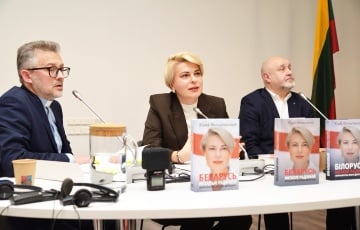
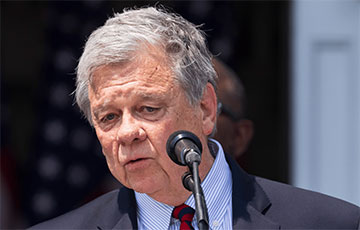
The US President's Special Representative for Belarus John Cole told a press conference in the Polish capital:
"Every time I've negotiated with Lukashenko, I've raised the issue of your people, especially the three people we're releasing today. They (it should be understood, the Belarusian authorities. - note) were very resistant, resisted their release, but over time, as our relations with Lukashenko improved, we finally managed to achieve it."
Besides Andrzej Poczobut, monk Grzegorz Havel, detained in Belarus last year allegedly for espionage, and another Polish citizen - political prisoner Tomasz Beroza - have been handed over to the Polish side. The five released by Minsk and Moscow also included two officers of Moldova's Information and Security Service (SIS).
In turn, the "Union State" received Russian archaeologist Alexander Butyagin (who was arrested in Poland at Ukraine's request); a certain Nina Popova (who Chisinau claims acted against Moldova's interests); former deputy director of the SIS Alexandra Balan; Vladislav Nadeiko, detained in Poland last year (both worked for the Belarusian special services); and another no-name. The latter, as we can assume, is also a Belarusian or Russian agent.
December 18 last year at the All-Belarusian People's Assembly, Alexander Lukashenko in his trademark manner lifted the veil of secrecy over the behind-the-scenes plot:
"Poczobut is our relationship with the Poles. Yes, it's an exchange. You (we are talking about the Polish side - note) suggested it: you give us people from Poland, we gave them their names - they are not guilty of anything, and we give you these criminals who have been convicted by the court.
In general, a classic of the genre: our people are brave scouts, noble Stirlitzes in the enemy's lair, their people are vile spies, villains.
Now Warsaw's gesture last November, when it opened two checkpoints on the border with Belarus, although it seems to have received nothing itself, becomes more understandable. Most likely, Minsk requested it as a "prepayment."
Niezłomny - that's how Tusk
Surprisingly, in this story, Lukashenko has pleased almost everyone in one way or another - Washington, the Poles, Moldova, and Vladimir Putin. Cole, as a diplomat, thanked the ruler of Belarus "for his willingness to engage constructively with the United States."
But democratically-minded Belarusians are hardly ready to applaud Lukashenko's "great combinator".
Yes, a number of persons from the ten released today, apparently, were really engaged in intelligence (or even sabotage) activities. Exchanges of captured agents are common for intelligence services.
But the most prominent of the ten - Poczobut, a journalist and activist of the Polish diaspora, served more than five years behind bars (and it was not his first term) purely for his professional and public activities. So in his case we are talking about a political hostage, for whom the regime paid a high price.
And the bargaining was brutal. As it turns out, Poczobut was on one of the previous lists of candidates for release, but Minsk crossed him off.
Niezłomny - that's how Polish Prime Minister Donald Tusk, who met him at the border, characterized this prisoner.
Yes, Andrzej has shown himself in detention as a man of indomitable will. But he looks exhausted - like many other political prisoners being released as a result of American diplomacy efforts. He himself said Tuesday that he weighs 74 kilograms - 19 less than he did three years ago.
Conditions that might be called medieval or torture-like are known to be a dark feature of Lukashenko's so-called penitentiary system.
Another former political prisoner Igor Losik wrote in his Telegram channel:
"Pochobut was kept in terrible conditions for three years, constantly alternating between PKT and SHIZO, in wild cold, without any ties with other prisoners, but never once made any concessions to the administration and those who were sent to him. A true symbol of courage and fortitude."
A new stage of the "big deal"
Meanwhile, Cole said he was going to visit Belarus again in two or three weeks. His previous visits to Lukashenko were crowned with the release of groups of political prisoners, each time more and more.
It is unlikely that he will go to Minsk now just to drink vodka with the dictator and bring him slimming pills. Surely there is a preliminary agreement that Lukashenko will release a new batch of political hostages.
It is a thankless task to guess, but, in theory, it should be an impressive group. On the one hand, Cole should not slow down. On the other hand, Lukashenko, as he himself has repeatedly admitted, is interested in a "big deal" with Donald Trump.
Although the Belarusian autocrat here, one must think, is in torment. It seems to be risky to pull the cat by the tail - the American president is fickle and may cool down to the game on the Belarusian track. At the same time, we don't want to get too cheap. We'll soon find out what gingerbread Cole will bring this time.
Why Sikorski is cautious
We should note that Warsaw has successfully built itself into the dialog between Washington and Minsk. On April 28, Foreign Minister Radoslaw Sikorski expressed hope that Poczobut's release would help reset Polish-Belarusian relations.
But he was cautious:
"I don't want to make empty promises, because such 'false dawns' have already happened."
Yes, Sikorski has already been burned by attempts to establish a dialog with Minsk. Before the 2010 Belarusian presidential election, he and his then-German colleague Hido Westerwelle flew to Lukashenko. On behalf of Europe, the diplomats promised the Belarusian authorities financial support of €3 billion in the case of fair elections.
The ruler promised to hold them "without a hitch and a hitch". And then, as we know, he went into a corkscrew: he dispersed the Square, jailed almost all his rivals and dozens of political activists.
And that was still, as we can judge now, a relatively vegetarian phase of the regime. After 2020, it became incomparably tougher. And to what extent Lukashenko is now able to soften repression is a big question.
In addition, the catastrophic events of 2020 and 2022 have sharply increased Minsk's dependence on Moscow. And the latter is absolutely not interested in Belarus improving its relations with the West. So Mr. Sikorski's caution is very understandable.
Alexander Klaskovsky, "Pozirk".

Bank's name: Bank Millennium S.A.
Address: ul. Stanislawa Zaryna, 2A, 02-593, Warszawa
IBAN: PL97116022020000000216711123
SWIFT: BIGBPLPW
Name of the account holder: Fundacja “KARTA ‘97”
Purpose/title of payment: Donation for statuary aims
You can contact us by the e-mail [email protected]