
The Kremlin Is Choosing Self-destruction
3- Yuri Fedorenko
- 1.10.2026, 17:12
- 6,010

Ukraine's response is unequivocal.
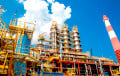
Between de-escalation and self-destruction, the Kremlin chooses self-destruction. The plan for “long-range sanctions” in October has been approved. This took place yesterday during a meeting between the President of Ukraine, the Ministry of Defense, and military officials. The enemy’s oil industry was burning, is burning, and will continue to burn. Yesterday’s decision put the final nail in the coffin of the so-called “energy truce.”
Throughout September, there were numerous diplomatic initiatives and contradictory statements from politicians regarding various options for a sectoral truce and a “double moratorium.” Some leaders voiced fears that Ukrainian drone strikes against the aggressor’s military-economic machine would destabilize the global energy market. One might have gotten the impression that Ukraine was being forced to make concessions.
Well, Ukraine’s response is unequivocal: there will be no concessions to the enemy. If de-escalation ever occurs, it will be on fair terms. In the meantime, the Ukrainian Defense Forces will consistently carry out all approved long-term objectives. To get a sense of the scale of these plans, one need only recall that in 2026, the number of Ukrainian attacks on Russian oil refineries exceeded the symbolic 200 mark.
Every month, a dozen major Russian enterprises involved in supplying the occupying forces or forming part of the Russian military-industrial complex are shut down. According to the Polish analytical group Rochan Consulting, Ukraine has attacked Russian oil refineries 11 times more effectively this year than last year. We will not stop here—we will continue to target the enemy’s fuel and energy infrastructure.
Along with Russia’s oil refining sector, the entire oil industry is “burning”—the flames are spreading to exports, transportation, storage, and even oil production—the “black blood” of the Russian economy. The fuel shortage is affecting transportation, agriculture, and, ultimately, all sectors of the economy.
Details of a conversation between U.S. CIA Director John Ratcliffe and representatives of Russian intelligence agencies recently surfaced in the global media. According to the authoritative German publication Frankfurter Allgemeine Zeitung, John Ratcliffe clearly explained to the Russians that, as a result of Ukraine’s far-reaching sanctions and massive military spending, the Kremlin’s economy faces a collapse similar to that experienced by the Soviet Union as a result of the Cold War.
Thanks to our systematic efforts, the enemy’s revenues are shrinking, while its war expenditures are rising. In terms of the share of military spending, Russia has long since caught up with the Soviet Union: this year, the “national defense” budget accounted for 30% of all spending. It is worth adding here that the Russian Ministry of Finance has allocated a record 35% for next year’s budget. This is how the Kremlin plans “de-escalation.”
We see that the aggressor is not moving toward de-escalation, but toward self-destruction. Therefore, we will help it reach its destination as quickly as possible. The tasks have been defined, the priorities set. We’re moving forward. Glory to Ukraine!
Yuriy Fedorenko, Facebook

Bank's name: Bank Millennium S.A.
Address: ul. Stanislawa Zaryna, 2A, 02-593, Warszawa
IBAN: PL97116022020000000216711123
SWIFT: BIGBPLPW
Name of the account holder: Fundacja “KARTA ‘97”
Purpose/title of payment: Donation for statuary aims
You can contact us by the e-mail [email protected]