

Taras Zagorodniy: Russia Is Heading For A Concrete Wall
22- 30.09.2026, 17:28
- 16,482
What's happening now is very reminiscent of the late Soviet Union.
CIA Director John Ratcliffe, during his visit to Moscow warned Russian leaders that a protracted war could lead Russia to economic collapse and even a fate similar to that of the USSR. This was reported by German media, citing assessments by U.S. intelligence.
Is the Russian economy really in such dire straits, and how is this already manifesting itself? The website Charter97.org spoke with Ukrainian political strategist and managing partner of the “National Anti-Crisis Group,” Taras Zagorodniy, about this:
— I think the Americans have talked about this before, because right now they’re more worried about Russia than Putin himself is. They’re making it very clear: guys, you urgently need to end the war, because you’re on the brink of economic collapse. Although, in fact, this collapse is already beginning.
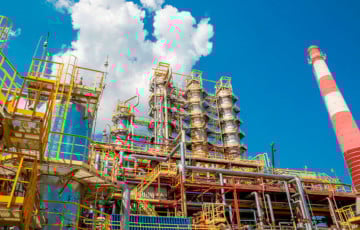
Especially since Ukraine continues to strike Russian oil refineries. In my opinion, all it would take is to take out two more major facilities to cause Russia serious problems, primarily with diesel fuel. And without diesel, the entire economy grinds to a halt.
In addition, Russians will soon need winter diesel fuel. After all, Russia is a northern country, and the production of winter diesel requires specific technological processes. And it’s far from certain that they’ll be able to produce the necessary amount.
Added to this are problems with exports through the Black and Azov Seas and capital flight. In fact, all the money that flows into Russia from exports immediately leaves the country. Essentially, what is happening now is very reminiscent of the late Soviet Union, when money was being siphoned out of the country as much as possible.
Another problem is the budget deficit, which already has virtually nothing to cover it with. According to various estimates, there is currently debate over whether it will amount to 12 or 15 trillion rubles by the end of the year. This already exceeds Russia’s remaining available reserves, including gold and diamond reserves and the National Wealth Fund.
The severity of the situation in the Russian economy is also evidenced by the taxes the authorities plan to introduce starting next year. They are raising taxes on virtually everything possible. This applies to private businesses, so-called “excess profits,” and those industries that are still operating: fertilizer production, metallurgy, non-ferrous metals, and gold mining.
They’re introducing a VAT on imports because there isn’t enough money. At the same time, they’re having to cut virtually all possible expenses, first and foremost funding for the civilian sectors of the economy.
— What could the escalating economic crisis lead to? Could Russia really face the same fate as the USSR?
— In fact, we are already seeing processes similar to those that took place in the Soviet Union. The USSR collapsed economically due to enormous spending on the defense industry, which consumed nearly a quarter of the budget. This was compounded by falling oil prices.
Russia is now following in the footsteps of the Soviet Union. The Americans see this and, in keeping with their long-standing tradition, are trying to save Russia, just as they once tried to save the USSR.
The problem lies in a systemic flaw on the part of the Americans. They think that Putin is considering the economic consequences of his actions. Although, it seems to me, Washington is gradually coming to the conclusion that the problem must be solved differently: by removing Putin from power and helping someone inside Russia to organize this.
The CIA director, for instance, could make it clear to someone in the Russian leadership—such as FSB Director Alexander Bortnikov or other intelligence officials—what guarantees they might receive. For example, ensuring that their families are taken abroad if they take the necessary steps. And this is by no means the only possible option.
That is why I fully agree with the assessment that Russia is currently hurtling toward a concrete wall. The only question is at what speed it will crash into it: 120 or 150 kilometers per hour. The result will be the same in both cases.
Moreover, even cautious Russian economists even cautious Russian economists who are part of the system had been saying as early as last summer. For example, Oleg Vyugin, former Deputy Minister of Finance and First Deputy Chairman of the Central Bank of Russia. As early as last spring, he warned that the war needed to be ended urgently by summer, since uncontrollable processes would otherwise begin in the economy. There will come a point when you will no longer be able to predict anything.
There was also a scandal surrounding the report by Andrei Klepach, who served as chief economist at VEB.RF. Back in May, at a meeting of the Nikitsky Club, he presented his assessments of where the Russian economy was headed. During the discussion, parallels were drawn between the events of 1917 and the situation in the Soviet Union.
Moreover, this took place even before Ukraine’s systematic attacks on Russian infrastructure. At that time, export routes through the Azov and Black Seas were still open. Since then, the situation has deteriorated significantly.
The Americans are trying to save Russia, but the problem is that they talk about it but don’t want to provide any money. And in general, no one wants to give Russia money right now.
China, as a matter of principle, doesn’t give money to anyone for free—including Russia. It only provides commodity loans for the export of its own products. The Europeans, of course, won’t give any money either. The only ones who could theoretically provide financial assistance to the Russians are the Americans.
But they won’t do that either, because Donald Trump won’t be able to explain to his voters why he’s giving money to Russia. That would be a completely crazy idea.
And for Russia to somehow sustain its economy and make ends meet right now, it needs about $100 billion. Just take it, you know, and hand over that money. But no one is going to do that.
At the same time, even if Russia stops the war, it’s important to understand that it won’t be able to cut military spending that quickly. And if it slashes spending drastically, the economy could collapse entirely. And that would have catastrophic consequences for the Russian people themselves.
It’s like riding a bike. As long as you’re riding and staying in the saddle, you can somehow keep going. But the moment you stop, you just fall. That’s the situation Russia finds itself in. No matter where you look, there’s a dead end.
That’s why the Americans are looking for different options to somehow save Russia. I think the CIA director could very well have shared all these economic calculations—including those obtained through intelligence channels—with the Russian leadership and explained: “Guys, you’re finished; you need to end the war immediately.”
— What can Ukraine and the West do to increase economic pressure on Russia and deprive the Kremlin of the resources to continue the war?
— Right now, Ukraine’s top priority is to take Russian oil refineries out of commission. Even if you still have some resources left—like gold and foreign exchange reserves and everything else—what are you going to do if there’s no diesel fuel in the country? No one will be able to make up for that shortfall.
The second area is strikes against the energy sector, which Ukraine is currently preparing for. Specifically, this involves the gas infrastructure. Facilities in the Urengoy area have already been targeted. Gas accounts for a significant portion of Russia’s electricity generation, so problems with its supply could deal a serious blow to the entire economy.
Here’s what Ukraine can do to exacerbate the economic crisis in Russia. And, in principle, it’s already working on this.
But it’s important to understand that, in my assessment, there are two Western countries in this whole situation that aren’t interested in Russia’s collapse. These are, first and foremost, the U.S. and Germany.
Other countries, such as the United Kingdom, have a completely different position. The British are actively helping Ukraine because they have their own political interests at stake.
Japan, for obvious reasons, is also not interested in maintaining the status quo. Because the Kuril Islands aren’t going to return on their own. And perhaps the issue could even extend to Sakhalin.
The remaining countries are either neutral on this matter or, at the very least, won’t be overly concerned if something were to happen to Russia.
For China, in principle, it also isn’t all that important whether Russia survives in its current form. If Moscow is gone, nothing will stop China from continuing to extract resources, for example, from Yakutia.
At the same time, as long as Putin remains in power, he will continue the war. But the economic situation is so dire that even if Russia were to halt hostilities now—which, in my opinion, Putin will not do—it still wouldn’t solve its problems.
Why? Because Trump, despite certain rhetoric that leads many here to believe he is playing into Russia’s hands, is in fact pushing the Russians out of every possible market.
First and foremost, this concerns Europe. Consider the European market lost to Russia forever. And for the past 300 years, Russia has largely relied on trade with Europe. As for oil, starting in the 1960s, it was the European market that was of key importance to Russia.
Now that market is lost, and I don’t think the Americans will allow Russia to return there. They won’t give it back.
The second factor increasing the pressure on Russia is the sanctions bill linked to the initiative by Lindsey Graham and Richard Blumenthal. Pressure will now be exerted on India to stop importing Russian oil. Moreover, the Americans’ own economic interests are at stake here.
If Russia were to lose its oil exports to India as well, it would be a real catastrophe for the country. After all, even the Soviet Union collapsed under more favorable conditions. At least no one was bombing it. It maintained a certain level of exports, including to Europe, and had some margin for resilience.
But today’s Russia no longer has that margin of safety. So yes, the Americans are trying to do something, but I doubt it will help them much.

Bank's name: Bank Millennium S.A.
Address: ul. Stanislawa Zaryna, 2A, 02-593, Warszawa
IBAN: PL97116022020000000216711123
SWIFT: BIGBPLPW
Name of the account holder: Fundacja “KARTA ‘97”
Purpose/title of payment: Donation for statuary aims
You can contact us by the e-mail [email protected]