
Yuri Felshtinsky: Lukashenko’s Regime Change Is Of Strategic Importance
8- 23.09.2026, 15:40
- 12,714
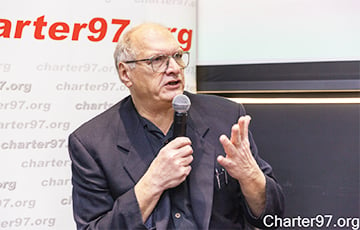
Photo: Charter97.org
Moscow could lose its most important foothold for exerting pressure on Europe.
Russia may try to test NATO's resolve as early as the coming months, warn Polish Prime Minister Donald Tusk and representatives of European intelligence agencies.
The website Charter97.org spoke with renowned historian and publicist Yuri Felshtinsky about threats to Europe, possible scenarios for the Kremlin’s actions, and the role of Belarus.
— How realistic is such a scenario, and how might the Kremlin carry it out?
— It is probably more accurate to assume that the current Russian leadership shares a general conviction that war with Europe is inevitable. The Russian General Staff’s concept likely holds that we must be prepared for this war. There could be several scenarios for the outbreak of hostilities, including a land war. These could involve an invasion of the Baltic states, Poland, and perhaps even Finland.
Or perhaps only into the Baltic states, or only into Poland. This is the general stance. Whether it means that actual military action will take place is a more complex and specific question. Until recently, when we discussed threats from the Russian Federation, the discussion focused, among other things or primarily, on a ground army invading the Baltic states—all of them or just one, such as Lithuania or Estonia—or Poland.
It is important to understand that there is, as it were, nothing to test NATO’s resilience against, because the alliance no longer exists. And talk of NATO existing as NATO is a deception of the global public.
To assume that Donald Trump will authorize the participation of U.S. troops in repelling Russian aggression in Europe is the height of misunderstanding the situation and naivety. That won’t happen as long as Trump is in the White House. Therefore, we can only talk about resistance to this aggression from European states or the European Union.
— Will Europe resist?
— That’s the right way to frame the question. Of course, the European Union cannot be written off. Since 2022, Europe has seriously reassessed the level of the Russian threat and is ready to confront it.
But that does not mean it is ready for war with Russia. No one is ready for such a war. The reason is that Russia, as we know, has one serious advantage: it does not care how many people it loses.
For any other country, human casualties are of fundamental importance. And in this sense, it is impossible to be fully prepared for a war with Russia, because the human factor is so crucial. If a state doesn’t care about the human cost of a conflict, it’s quite difficult to wage war against it. And this is true regardless of the fact that Russia is a large country and a nuclear power.
Therefore, it is completely and utterly impossible to prepare for such a war. But it is both correct and necessary to understand the level of the threat and even the inevitability of this threat.
— Does Russia have enough forces for a new war?
— Another change has taken place that is already making itself felt and that we will have to face. It is not clear that we should currently expect a Russian ground invasion. Because at some point—I think starting in September 2025—it became clear that Russia lacks the resources to form a new army.
This was demonstrated by the planned exercises in Belarus, to which Russia was unable to deploy the announced 100,000 troops, and sent only 3,000. It became clear then that it lacked the resources to form a second ground army.
There has been much talk that after the recent elections, Russia might announce a new mobilization. Frankly speaking, I don’t think that will happen. We’ll certainly see whether it’s announced or not, but I consider such a scenario unlikely for a number of reasons.
First, it’s not clear that Russia has the manpower for this. Second, it’s not clear that they have the capacity to equip and train such an army. Therefore, I don’t think we’re looking at the formation of a second ground army and, consequently, a ground invasion of Europe.
But a drone war—or an air war using drones—is a new and quite dangerous development. I think this is the war of the future, one that Russia might well unleash, because it’s still unclear how to counter it.
One could use expensive weapons to intercept cheap drones, but in the event of a protracted war, this would be a frankly unworkable option. In reality, no one currently has tactics for countering massive drone attacks. Above all, the European Union lacks such a strategy.
This is precisely what Europe needs to focus on now—understanding how to counter such attacks, which are likely to become a significant factor. At the same time, it is not yet very clear where the line is drawn between isolated drone incursions into a particular European country and actions that should already be considered the start of hostilities or a declaration of war.
Europe has yet to formulate its position and determine how to respond to this in the future. We’ve seen, for example, how Germany is responding. So far, it has resorted to diplomatic responses to what are clearly military actions by the Russian Federation. Lithuania, if I’m not mistaken, has scrambled aircraft and shot down drones using—and I want to emphasize this—expensive weaponry.
In other words, for now, each country is responding to this problem on its own. We should probably expect Europe to develop some kind of common strategy.
— Following another visit by Donald Trump’s special envoy John Cole, Lukashenko released 25 political prisoners—significantly fewer than many had expected. How do you assess the Donald Trump administration’s engagement with Alexander Lukashenko? What tools are available today that could realistically accelerate the release of all Belarusian political prisoners and increase pressure on the regime?
— Political prisoners in Belarus are a tradition of dictatorial regimes. We see the same thing in Russia. Such people are often used as bargaining chips to resolve more important political or economic issues.
At the same time, the release of prisoners can always be presented as a humanitarian gesture that is viewed positively by public opinion. That is why dictatorial regimes quite often use political prisoners precisely as a bargaining chip.
But in the case of Trump and Belarus, there is another crucial point. As you may have noticed, Trump is putting a great deal of effort into what I would call the strangulation of Canada.
It all began with statements that Canada should become the 51st state of the United States and, essentially, talk of stripping it of its independence. This was followed by numerous sanctions that Trump is imposing against Canada—and, by extension, against Europe as well. The latest wave was linked to the fact that the U.S. has shifted from its traditional democratic policy to, shall we say, a somewhat different one—support for authoritarian and dictatorial regimes.
Europe and Canada are discussing the conclusion of a political agreement that will reflect this new reality. In response, Trump announced additional sanctions against Canada and Europe.
In fact, the conflict with Europe and Canada is now the main front in Trump’s diplomatic war. In other words, his ally is, for example, Russia, while his opponents are Europe and Canada.
And in this struggle against Canada, the most crucial issue is potash fertilizer.
The fact is that Canada is the world’s largest producer of potash fertilizer. Consequently, American farmers source it primarily from there. First, Canada is close by. Second, it’s a traditional trading partner.
The world’s second and third-largest producers are Russia and China, respectively. And in fourth place is little Belarus, which, compared to these giants, produces a fairly significant amount of potash fertilizers. For a small country, this is a very large volume.
Belarusian potash fertilizers were subject to sanctions. American farmers could not buy them because Belarus participated in Russia’s invasion of Ukraine. Trump lifted these sanctions on Belarus. In order to redirect American farmers’ purchases from Canada to Belarus, it was necessary to remove Belarus from the sanctions list. And, in my view, this was done precisely to weaken Canada economically.
As part of this bargaining process, it was necessary to demonstrate to the American public some positive aspect related to the lifting of sanctions against Belarus. Therefore, an agreement was reached to release a certain number of political prisoners, who, as I have already said, are traditionally used as bargaining chips.
And Lukashenko agreed to make this “sacrifice” in exchange for Belarus being removed from the U.S. sanctions list. The lifting of sanctions applies to potash fertilizers, flights, and spare parts for American aircraft. This is very important because these spare parts are first delivered to Belarus and then go directly from there to Russia.
In other words, Russia was also effectively exempted from some U.S. sanctions in this way—for example, regarding spare parts for civil aviation. This is very important for Russia because there are many “Boeings” in Russia, but there were no spare parts: they were subject to sanctions.
This is an example of how Belarus is being used to weaken sanctions against Russia. And at the same time, it’s an example of how political prisoners become bargaining chips in resolving major political and economic issues.
— According to Ukrainian sources, in Belarus repeaters have resumed operation, which Russia uses to guide attack drones toward Ukraine. Does this mean that Lukashenko is once again directly aiding Russian attacks? How should Ukraine and the West respond to such actions by Minsk?
— Let’s recall that the 2022 invasion began from Belarus with Lukashenko’s direct involvement. He also played a significant role in the disinformation campaign, calling Ukrainian leaders and convincing them that Russia had no plans to attack.
In fact, Lukashenko is a key accomplice in the initial phase of the war. The attack was launched from Belarusian territory, and he personally participated in the Russian disinformation campaign. Therefore, there is no doubt that in this war, Lukashenko is on Russia’s side and is its ally.
I believed, and still believe, that at some point Ukraine will be forced to launch a preemptive strike against Belarus and do everything in its power to bring about regime change in the country.
I believe that Belarus’ strategic importance in the Ukrainian issue is extremely great. It relates not only to Ukraine’s security but also to that of all of Europe. As long as Russia controls Belarus, it has the ability to use it as a springboard to attack Europe. Consequently, the key to Europe’s security lies in Belarus.
If Ukraine and Europe can seize the initiative in this situation and bring about regime change in Belarus, Russia will lose its ability to threaten Europe. And in this regard, it will lose the war, because, as we know, its land-based capabilities are limited. Losing control over Belarus will deprive Moscow of the ability to use that territory to threaten Europe.
Furthermore, it has been repeatedly suggested that Russia could deploy tactical nuclear weapons to Belarus and threaten Europe with strikes—including nuclear ones—from its territory. This threat can only be eliminated through a regime change in Belarus and the country’s subsequent accession to the European Union and NATO.
These three steps—regime change, Belarus’s accession to the European Union and NATO—will ensure Europe’s security in the future.
Therefore, when it comes to European security, it is simply impossible to address the issue without resolving the Belarusian question. If Lukashenko or someone like him—whom Moscow can use in the same way it used Lukashenko—remains in power in Belarus, the country will continue to pose a constant threat to European security.

Bank's name: Bank Millennium S.A.
Address: ul. Stanislawa Zaryna, 2A, 02-593, Warszawa
IBAN: PL97116022020000000216711123
SWIFT: BIGBPLPW
Name of the account holder: Fundacja “KARTA ‘97”
Purpose/title of payment: Donation for statuary aims
You can contact us by the e-mail [email protected]