

Putin Didn't Keep His "word As A Kid"
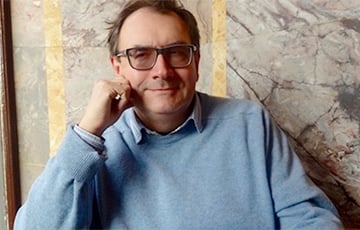
11- Vladimir Pastukhov
- 27.09.2026, 9:57
- 21,552
The Kremlin leader turned out to be a good-for-nothing thug.
Winning these “elections” (to the State Duma of the Russian Federation—Ed.) was no great feat for Putin, not to mention the fact that they can hardly be called elections. After all, he had no real opponent here, and the competition was solely against his former self (the 2026 election versus the 2021 election).
But the war turned out to be a bit more complicated: Ukraine isn’t “Yabloko”—you can’t just cross it off the list. Unfortunately for Putin, winning this “election” does him little good—he’s a stranger at this celebration of Kirienko’s life. Everyone has long been waiting for him to achieve a different kind of victory.
Part I. A Conversation with a Barbarian
In my view, the political atmosphere taking shape in Russia after the “elections”—despite their miraculous results—is not only unfavorable for Putin, but also humiliating. To understand why this is so, one must view what is happening through the lens of those very practical concepts that Putin himself has grown accustomed to using as his daily guide.
Let’s set aside for a moment the talk of violated rights, which bounces off Putin like peas off a wall. In his view, all gentlemen do this—if, of course, they can afford to. It is precisely for this reason that he has always paid only half-hearted attention to European accusations that he is destroying the rules-based world order: “Preach to your own.”
But Europe is conducting a completely different, private dialogue with Putin—one without unnecessary words and where everything is just as he likes it: according to the code of the St. Petersburg back alleys. After all, thank God, back alleys still exist in Paris and London, and life is bustling there as well. And in this private dialogue, the emphasis is placed quite differently than on the front pages of European newspapers.
For Putin, this conversation is not as simple or pleasant as a discussion of the root causes of the conflict. Then again, as they say, he brought it on himself. After all, he was the first to “draw first” against the Europeans. He “marched” into Europe just as he used to march into some “St. Petersburg oil terminal”—banging Ukraine on the table and, in a tone that brooked no objection, declared: “From here on out—it’s mine” (for more details, see Lavrov’s memorandum presented to Europe in January 2022).
So, publicly, people really did say a lot to him about “spaceships soaring through the halls of the Bolshoi Theater” (that’s when the lawyers swooped in and explained everything about rights). But behind the scenes, everything was handled in a very “brutal” way. Don’t underestimate Europe, as Putin does, or, conversely, overestimate it, as the Russian liberal opposition does.
Over there, everyone understands how this world works: they’ve had plenty of practice—after all, several thousand years of continuous wars and plundering can’t go to waste. Their hands remember (in terms of gestures) how to talk to barbarians.
Part II. A Purely Boyish Story
Actually, Europe’s informal message to Putin was simple: “Volodya, do you think this is yours?—Take it!” And a couple of words to wrap it up, just to make it perfectly clear: “As long as Ukraine is ready to fight, we’ll help her, because she’s our first European stronghold; so before you issue ultimatums to us, deal with her first, and then we’ll talk depending on the outcome.”
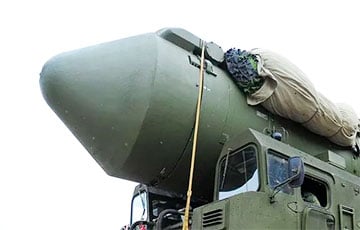
Putin is an expert in such matters himself, and he was, in principle, prepared for such a turn in the conversation, although he believed that Europe wouldn’t take the risk. So he brought his grandfather’s nuclear grenade to the meeting, pulled the pin, and placed it on the table. Just to be safe, he explained through the interpreter (Medvedev) what it was—in case they hadn’t figured it out on their own.
He had long been convinced—ever since the Surkov era—that Europe was a pushover that would back down the moment a grenade was even mentioned. But he miscalculated. Europe pulled out an identical grenade in response and said, “We’ll fly together.” At that point, the conversation reached an impasse.
And then came the war, in which Putin spent five years storming a Donbas forester’s cabin. What Manstein and Kleist accomplished in 396 days, and what Malinovsky and Tolbukhin redid in 270, Shoigu (and now Belousov) and Gerasimov have been trying to repeat for nearly 1,700 days, with no end in sight.
They’ve disgraced themselves to such an extent that the main condition for peace has become the demand to voluntarily cede a patch of Donbas land.
That’s where the problem lies—that’s the main sticking point. If he had succeeded, all the talk about international law would look different. But he didn’t succeed.
To put it bluntly, the problem wasn’t that Putin acted like a thug (one could always respond to that rhetorically—who doesn’t drink?). The problem is that he turned out to be an incompetent thug who didn’t keep his word as a guy.
Because he promised something else. He promised to win, not to wallow in blood for five years in a row. And for that matter, “victory” used to mean something different than it does now: the banners of the hated NATO, cast at the foot of the indomitable Mausoleum, rather than the ruins of the unconquered Donbas, cast at the foot of the Russian budget.
Putin cannot win the war that he himself started. This is, for now, the only fact worthy of attention when assessing the current situation—everything else is a red herring.
And it is precisely this stubborn fact—one that defies any propaganda narrative—that actually defines Putin’s political position today, which, in my view, is critical, despite and in defiance of the fabricated results of the plebiscite.
Part III. The Master of “Horizontal Victories”
In just under five years, Putin has established himself as a “master of horizontal victories”—that is, he has demonstrated a unique ability to maintain the public’s confidence in a victory that shifts like the horizon as one approaches it.
Moreover, it not only shifts but also fades like a mirage, because what was considered a victory four years ago is not at all what is considered a victory today.
Russians as of February 2022 would be very surprised if they were told that this whole affair was launched solely to recapture the Donetsk and Luhansk regions from Ukraine.
The question is how much longer he can afford to keep pushing back that horizon beyond which victory lies. It is worth recalling here a phrase usually attributed to Abraham Lincoln, that you can fool a small group of people indefinitely, you can fool many people for a short time, but no one can fool a very large number of people indefinitely.
Putin can make a small group of fanatics believe in a victory that is constantly being pushed further away; he can make the entire nation believe for a time that victory is just around the corner, but he will not succeed in making them believe indefinitely that victory awaits us just around the next bend.
Consequently, one of the main threats to Putin—one he cannot fail to recognize—is his own “pack’s” disappointment in its leader.
The longer the war drags on, the more insistently the sacrosanct refrain “Akela missed the mark” will echo behind Putin’s back. Of course, one could choose to ignore this entirely—repression reliably protects Putin from revolutions, at least for the foreseeable future.
But the issue isn’t revolution; it’s that a disillusioned pack will sabotage any mobilization efforts by the regime—and that is deadly dangerous in the midst of a war whose momentum is gathering ever more strength.
It’s like the tax revenue curve. By raising the rate up to a certain limit, you increase revenue, but after a certain point, it drops sharply because people simply stop paying.
The same applies here: once trust in Putin’s ability to win has fallen below a certain threshold, society will simply stop responding adequately to the authorities’ efforts to support the front (the collapse of the contract-based army recruitment system, desertion, capital flight, and the economy shifting into the shadow sector, and so on).
All of these are examples of algorithms for mass passive resistance—effective tools for combating which no government in the world has yet invented. In my view (a purely subjective assessment), this “phase transition” point—beyond which political rejection begins—is about to be crossed.
Putin—like Zelenskyy, for that matter—cannot afford to continue the war in the same manner as it has been waged over the past four years for even one more year, as this would lead to serious disorganization of the home front due to sabotage.
He is, of course, counting on a comeback this winter, but if that does not happen, by next summer the situation will look far more threatening than it does today—something he cannot fail to understand.
Therefore, aside from his faith in the “Gerasimov miracle,” he has a choice “here and now” between two strategies: to go all in (that is, to pursue direct military escalation in Europe with unpredictable consequences, without waiting for winter) or to strike a “big deal” with Trump—an option that seems utterly implausible to Europeans, but one that, in principle, given all the circumstances listed above, I wouldn’t rule out.
In the latter case, the next month and a half will be decisive.
Vladimir Pastukhov, “Telegram”

Bank's name: Bank Millennium S.A.
Address: ul. Stanislawa Zaryna, 2A, 02-593, Warszawa
IBAN: PL97116022020000000216711123
SWIFT: BIGBPLPW
Name of the account holder: Fundacja “KARTA ‘97”
Purpose/title of payment: Donation for statuary aims
You can contact us by the e-mail [email protected]