


The Ukrainian FP-7 Ballistic Missile Will Begin Combat Testing In Just One Week
3- 10.09.2026, 22:54
- 1,092
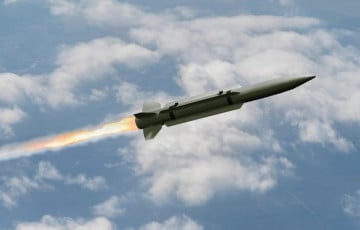
Long-range missiles may begin to be tested directly over Russia.
The Ukrainian FP-7 ballistic missile will be deployed for combat use within a few weeks as part of the third phase of testing for this weapon. This was announced by Irina Terekh , CEO of Fire Point , during the MSPO 2026 defense exhibition in Poland, according to media reports NV.
According to Terekh, the FP-7 missiles have successfully passed two of the three test phases.
“Therefore, we expect that this [weapon system—Ed.] will be ready for operational use very soon. That is, we’re talking about weeks, not months or anything like that,” said the CEO of Fire Point.
She explained that there are three stages of missile testing:
→ In the first stage, ground and laboratory tests are conducted on each system and subsystem separately. For example, rocket engines and various navigation systems are tested;
→ the second stage consists of flight tests on Ukrainian territory;
→ the third stage consists of military tests.
“It takes place as part of the codification process [registration and authorization of weapons for use by the Defense Forces], but it can also be called a military deployment, and this is another process we need to go through,” Terekh noted.
The FP-7’s stated range is 300 km. Another ballistic missile, the FP-9, which is also being developed by Fire Point, has an expected range more than 2.5 times greater—855 km.
Speaking about the FP-9, Terekh noted that the missile is currently in the flight test phase.
She suggested that since this is a “very long-range” ballistic missile, the second phase could gradually transition to combat testing.
“Because there isn’t enough space in Ukraine to conduct real tests. And we may have to start testing it directly against the enemy,” explained the CEO of Fire Point.
She had previously stated that the FP-7 would be ready for combat use by the end of September.
Ukraine needs its own ballistic missiles to strike the occupiers, since such weapons are harder for air defense systems to intercept than drones and cruise missiles.

Bank's name: Bank Millennium S.A.
Address: ul. Stanislawa Zaryna, 2A, 02-593, Warszawa
IBAN: PL97116022020000000216711123
SWIFT: BIGBPLPW
Name of the account holder: Fundacja “KARTA ‘97”
Purpose/title of payment: Donation for statuary aims
You can contact us by the e-mail [email protected]