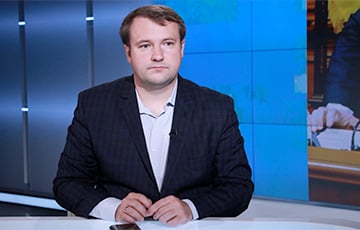

Oleg Belokolos: China Has A Wide Range Of Tools At Its Disposal To Put Pressure On Putin
5- 2.09.2026, 19:05
- 4,096
Beijing is capable of dealing Russia a serious economic blow.
At the SCO summit in Bishkek , Xi Jinping stated that China intends to strengthen coordination with other countries to achieve a political settlement of the war in Ukraine. Beijing promises to participate more actively in finding ways to end it.
What did Xi Jinping mean when he spoke specifically of a political settlement of the war in Ukraine? Can we expect a shift in Beijing’s position? The website Charter97.org discussed this with the director of the Center for National Resilience Studies in Kyiv and former advisor to the Ukrainian Embassy in Canada and Kenya, Oleg Belokolos:
— I’d like to start with a piece of news that has been widely discussed in the media. I’m referring to India’s position, which, while diplomatic, nonetheless stated its position: this is aggression, this is war, and what is happening is, generally speaking, abnormal.
Apparently, wise leaders not only in India but also in other countries are beginning to realize that a war in Europe and a war in the Middle East will sooner or later provoke yet another conflict. All these potential conflicts, taken together, could lead to a confrontation on a global scale.
I am confident that such concerns have been raised at various bilateral meetings, including, presumably, those involving representatives from China. An armed conflict of this magnitude will have very serious consequences for everyone. It is no longer possible to pretend that this war, now in its fifth year, concerns only Ukraine and the aggressor state. In the near future, the countries of the so-called Global South will feel this once again when prices for grain and other foodstuffs rise.
Due to the aggression, all these shipments are being hampered; prices will rise, and, accordingly, social tensions will escalate. Moreover, I want to emphasize that this will also have consequences for the leaders of those countries that do not seem to support Ukraine but instead take a so-called neutral stance or are even inclined to support Russia. For them, too, this war will be fraught with negative consequences. Let’s put it this way: I sense that political pressure may intensify, and it will increasingly be directed specifically at Moscow. All reasonable leaders understand that this is aggression—Russian aggression—and that it is Moscow that must stop.
Although we’ve discussed this before, there are virtually no signs that the Kremlin’s position will change, especially judging by the latest statements from Moscow. It’s unlikely we can count on anything here. The spiral of confrontation continues to intensify. The Kremlin leadership—that is, Russia’s leader himself, the permanent president, and the people around him—understands that it is precisely the war that has, up to this day, provided them with a certain conditional reprieve.
Because as soon as the war ends or comes to a halt, a host of questions will arise: Why did all this happen? What are the economic, demographic, technological, and other losses? These questions will emerge even within Russia itself, despite censorship and pressure. Therefore, they have no other choice but to continue the war.
At present, only pressure on Russia can have serious negative economic consequences for the country. After all, the economy matters to Russia, including in its relations with India and China.
— What real tools does China have to influence Putin and bring about an end to the war in Ukraine?
— China today has a wide range of tools to put pressure on Putin. I believe we’ve discussed this before.
While just a couple of years ago I said that Russia was turning into a sort of economic semi-colony of China, today, by all accounts, it is no longer a semi-colony.
Russia has become a market for Chinese manufactured goods and a supplier of inexpensive raw materials—at prices dictated by Chinese buyers.
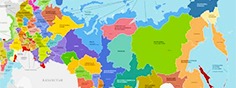
Based on my observations, virtually all economic projects currently being implemented in the territory stretching from Lake Baikal to Vladivostok, with rare exceptions, are linked either to trade with China or to the participation of Chinese investors. In other words, this Far Eastern–Transbaikal “wedge,” so to speak, is already very heavily tied to China. Therefore, at least in this region, China is already the de facto economic leader. All border, transportation, and logistics projects are either tied to China or are being implemented with Chinese participation.
It is clear that if China were to halt or even suspend all of this activity, the social consequences would be very serious. The population there is small compared to China’s, and the local economy is entirely dependent on interaction with China. Any negative action on China’s part—such as closing the border or imposing other restrictions—would instantly deal a very serious, if not critical, blow that the European part of Russia would be unable to offset.

Bank's name: Bank Millennium S.A.
Address: ul. Stanislawa Zaryna, 2A, 02-593, Warszawa
IBAN: PL97116022020000000216711123
SWIFT: BIGBPLPW
Name of the account holder: Fundacja “KARTA ‘97”
Purpose/title of payment: Donation for statuary aims
You can contact us by the e-mail [email protected]