
"It Threw A Wrench Into All Of The Kremlin's Plans"
2- 18.08.2026, 16:37
- 9,658
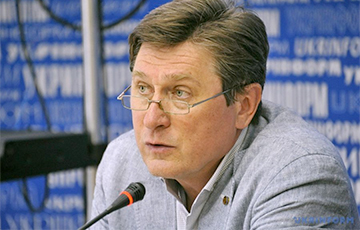
Photo: Ukrinform
Why Was Putin Afraid of "Yabloko"?
The Supreme Court of the Russian Federation revoked the registration of the "Yabloko" party's list of candidates for the State Duma elections. Why did the Kremlin reject the idea of allowing the opposition party to participate in the so-called elections?
The website Charter97.org discussed this and other topics with renowned Ukrainian political scientist and head of the “Penta” Center for Applied Political Studies, Vladimir Fesenko:
— The mystery lies in why they didn’t ban it right away. Many were surprised as to why “Yabloko” was allowed to participate in the elections in the first place. That was surprising; various theories have been put forward. Some believe this was an attempt to boost voter turnout; others thought it would help gauge the partially anti-war sentiment, while expecting Yabloko’s poll numbers to remain extremely low, as they had been in the past. And, in fact, it would demonstrate that there is no support in Russia for an anti-war party. In other words, what was surprising was that they were allowed to participate in the electoral process at all.
But the fact that they were banned is, in fact, logical and to be expected; it is in the spirit of modern Russia and fits Putin’s logic: to “keep out” and to ban. It’s very telling that, at the same time as the court-ordered ban on Yabloko’s participation in the elections, one of the party’s leaders Lev Shlosberg—who has been in custody since last year—was put on trial. Many in Russia are surprised that murderers received the same sentences, yet here a person was sentenced simply for speaking out against the war.
This is precisely where demonstrating punishment and exclusion is crucial. It’s a signal that no other position will be tolerated in the elections or in public opinion. Anyone who opposes this will be punished: either by being barred from the elections or by being sent to prison. And, by the way, certain candidates are also barred from the elections—even, for example, some Communists and so on.
Anyone who, in one way or another, doesn’t play by the Kremlin’s rules is barred from the elections. Therefore, the Kremlin’s decision (which is said to be Putin’s personal decision) is quite logical in this regard. It’s consistent with everything that’s been happening in Russia since 2022, and especially over the past year and a half: all sorts of restrictions on the internet, Telegram channels, and so on.
Rumor has it that the “Yabloko” affair revealed tensions between different “Kremlin factions.” One faction within Putin’s inner circle was promoting “Yabloko.” Apparently, they wanted their own controlled pseudo-opposition project. But this conflicted with the interests of Sergei Kirienko, the first deputy head of Putin’s administration, who is promoting the “New People” party as a pseudo-liberal and nominally opposition project.
It became apparent that “Yabloko” was taking votes away from the “New People” party. Therefore, many believe that it was Kirienko who pushed for Yabloko’s ban from participating in the elections and convinced Putin that it should be removed from the ballot. But the main reason, according to various surveys (sociological and otherwise), is that as soon as it became known that “Yabloko” might be allowed to participate in the election, the party’s poll numbers began to rise sharply.
Before the election campaign began, the party’s approval ratings were just above zero: 1.5%, at most 2%. According to various sources, they rose to 9% or even higher. And this, of course, caused great concern. It threw a wrench into all of the Kremlin’s plans. If a significant number of Russian voters had cast their ballots for a party with anti-war slogans, it would have been a clear demonstration of an anti-war stance. It could have become a crack in the structure the Kremlin had built around the war against Ukraine.
So this reason is probably the most important one. Fears that, due to “Yabloko’s” participation in the elections, anti-war sentiment might become widespread enough that part of the population would conclude, “Well, if an anti-war party is allowed to run, then it must be okay to oppose the war,” and this, of course, contradicts Putin’s position. Especially in the current situation, when Putin clearly wants to escalate the war rather than sign a peace agreement.
— Could Russia carry out a mobilization after the elections?
— Many people are talking about this, and, by all accounts, such a plan exists. However, there are also claims that the matter hasn’t been finalized. As I understand it, it’s the same as with “Yabloko.” In fact, we’re currently witnessing a somewhat chaotic struggle between different factions and differing viewpoints within the Kremlin, including among Putin’s inner circle. I think this also applies to the issue of mobilization. The military has been trying to convince Putin of the need for mobilization since 2022.
There was an attempt back then, as you may recall. Mobilization was announced in late September and early October. This led to widespread panic. About a million Russians either left or tried to leave Russia. That served as a lesson. The mass mobilization was halted, but the decree remains in effect—it has not been repealed. Therefore, the possibility of a mass mobilization after the Russian State Duma elections does indeed exist. I know from my sources that various Russian law enforcement agencies and local government bodies have received instructions stating that if an order is given to carry out a mobilization, they must provide every possible assistance. In other words, certain preparations for this are underway. But no final decision has been made.
In my view, the most likely scenario is not some large-scale mobilization in which they would attempt to mobilize a million or even more people. That is unlikely. This is because, for now, the Russian armed forces cannot handle such a large number of mobilized personnel all at once.
A limited mobilization is possible, on the scale of 300,000 to 500,000 people. This mobilization would not take place across all of Russia, but rather in specific regions. A sort of rehearsal for such a mobilization has already taken place. In early summer, there were attempts at such mobilization efforts with the help of law enforcement agencies in the Penza Region. And something similar could happen in other Russian regions.
Most likely, this will not take place in Moscow or major cities, but in the Russian hinterland—where the population is more disenfranchised and more dependent, both socioeconomically and administratively; that is where it is easier to carry out. Although attempts at such spontaneous, unofficial mobilization in the Penza region have also caused tension and a surge of discontent there.
Therefore, I think the Kremlin will decide whether or not to carry out a mass mobilization only after the State Duma elections. A combined approach is possible. Limited mobilization in certain regions, while at the same time continuing to recruit into the army under the contract system with the help of high monetary payments.
— How might Russians react even to a limited mobilization?
— They will certainly react negatively. That said, this reaction is more likely to be passive. Yes, there may, of course, be attempts at resistance.
In fact, they say there have already been such attempts in the Penza region. But perhaps the situation will be similar to what happened in October 2022, with part of the population simply trying to go into hiding. Either they’ll leave Russia, or they’ll look for other ways to avoid mobilization. But this, of course, could lead to a surge in discontent and social tension, as well as problems in the labor market, just as it did in 2022. So, there will undoubtedly be negative consequences here.
And this is probably the main factor that could stop the Kremlin from carrying out a mass mobilization.

Bank's name: Bank Millennium S.A.
Address: ul. Stanislawa Zaryna, 2A, 02-593, Warszawa
IBAN: PL97116022020000000216711123
SWIFT: BIGBPLPW
Name of the account holder: Fundacja “KARTA ‘97”
Purpose/title of payment: Donation for statuary aims
You can contact us by the e-mail [email protected]