


Putin's Defense Bank Reports Losses In The Billions
1- 17.08.2026, 18:10
- 4,156
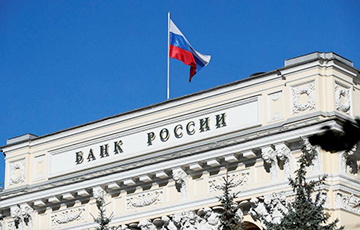
Due to loan defaults.
PSB Bank, which serves as a key financial institution for the Russian military-industrial complex, ended the first half of 2026 with a loss. According to the bank’s financial statements prepared in accordance with Russian Accounting Standards (RSBU), it lost 50 billion rubles over the six-month period, compared with a profit of 72 billion rubles during the same period a year earlier, reports The Moscow Times.
According to its financial statements, loan defaults have contributed to the problems faced by the bank, which ranks among Russia’s top five in terms of assets and holds more than 1 trillion rubles in deposits from individuals. Over the first six months of the year, PSB allocated nearly 195.7 billion rubles to provisions for potential loan losses—four times more than during the same period a year earlier.
PSB, which serves the defense sector and is 100 percent state-owned, became the only Russian bank among the top largest institutions to post a loss, notes Isa Aliyev, an analyst at RSHB Asset Management. “The bank faces risks due to directed lending with non-market margins,” explains Aliev: PSB provides loans to military factories that supply the army deployed to conquer Ukraine.
The scale of the bank’s losses on these loans is such that they “eat up” almost its entire interest margin—that is, the income derived from the difference between the cost of loans issued and the interest rates on deposits received. Taking into account provisions, PSB’s net interest income in the first half of the year fell tenfold—from 168.7 billion rubles to 16.9 billion, according to its financial statements. In addition, the bank recorded 22.8 billion rubles in “other losses,” the nature of which it does not disclose.
PSB’s losses are being covered by the budget, Aliyev notes. Since the beginning of 2026, the government has injected funds into the bank’s capital four times, most recently on July 15—39.3 billion rubles—and prior to that on June 10—3 billion rubles.
According to the Central Bank of the Russian Federation, as of April 1, 3.9% of loans issued by banks were “bad”—amounting to about 3.5 trillion rubles. However, a broader measure of non-performing loans is three times higher—11.6%. In monetary terms, the volume of problems on bank balance sheets reached 11.2 trillion rubles—an amount equal to two annual budgets of Moscow. This includes loans for which banks were forced to ease terms because borrowers were unable to keep up with payments.
Potential difficulties with debt servicing are possible for loans totaling 36 trillion rubles—this represents three-quarters of the total debt of the largest companies, according to the Central Bank’s assessment. Among the largest companies in critical condition are those in the coal and construction industries, as well as in retail and machine building, the Central Bank noted.

Bank's name: Bank Millennium S.A.
Address: ul. Stanislawa Zaryna, 2A, 02-593, Warszawa
IBAN: PL97116022020000000216711123
SWIFT: BIGBPLPW
Name of the account holder: Fundacja “KARTA ‘97”
Purpose/title of payment: Donation for statuary aims
You can contact us by the e-mail [email protected]