

Lithuania Will Be The First Country In The World To Decommission A Reactor Of The Same Type As The One That Exploded In Chernobyl
1- 14.06.2026, 19:24
- 2,854
What will happen to 1,400 tons of copper?
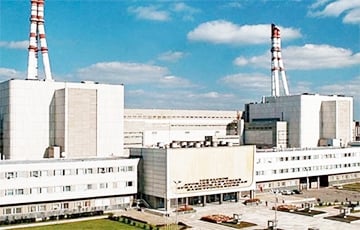
Lithuania is preparing to dismantle the core assemblies of the RBMK reactors at the former Ignalina Nuclear Power Plant—the very same type used at the Chernobyl plant—in a world-first.
This was reported by LRT.
The closure of the plant was one of the conditions for Lithuania’s accession to the EU in 2004.
The second power unit at the Ignalina Nuclear Power Plant was equipped with RBMK-1500 reactors—among the most powerful in the world and of the same type as those at Chernobyl.
Today, plant workers are dismantling everything that can be safely removed without highly specialized experts.
The reactor core will be dismantled by robots equipped, as plant representatives say, with “cutting-edge technology.” Work with equipment with such high levels of radioactivity is not performed by humans.
“This will be the most difficult task. But we will be the first in the world to do it,” said plant director Linas Baužis.
According to him, the graphite components of the reactor—the most difficult part of the decommissioning—are expected to be handled by specialists from international companies, most likely from the U.S. or France.
“The decommissioning process must be completed by 2049. What’s important is that we have removed all the fuel from the reactors and placed it in storage for 50 years. During this period, the state must construct a deep geological repository where all spent fuel will be permanently disposed of by 2090,” explained Baužis.
Geologists are currently evaluating 77 potential sites in nearly 30 municipalities. The Visaginas municipality, where the plant itself is located, has already been deemed unsuitable for this purpose.
“Scientists, not politicians, will determine where the repository will be located,” noted the plant director.
Some areas of the decommissioned plant now resemble a massive scrapyard—everything that can be dismantled is cut up, and the recovered metal is either sold at auction or recycled.
“Our goal is to decontaminate at least 77% of the metals and return them to secondary use. For example, we plan to clean 1,400 tons of copper, which could then be used in the production of wind turbines,” said Baužis.
If the metal cannot be cleaned, it will be necessary to build a much larger and significantly more expensive deep repository, which will add millions of euros in costs.
“Even in a few hundred years, storage facilities for radioactive components will likely look like burial mounds or small hills. Spent fuel storage facilities will remain concrete structures. We are also considering whether it is worth demolishing the main reactor buildings at all. It might be more practical to preserve them as a scientific test site or a technology center,” suggested Baužis.
For now, visitors can still tour the reactor facilities. “Everything is fully booked several weeks in advance,” said Milda Kiskite, while leading a tour of the plant, which is gradually being dismantled.
The city of Visaginas, where Ignalina is located, is preparing plans to position itself as a center for nuclear tourism—after all, ordinary visitors bring limited economic benefit to the plant itself. The goal is to attract specialists and enthusiasts interested in nuclear energy.
According to plant spokesperson Jolita Mažeikienė, a total of 45% of the equipment has already been dismantled.
As a reminder, the Ignalina Nuclear Power Plant—the only nuclear power plant in the Baltic states—was shut down in two stages: the first unit was decommissioned on December 31, 2004, and the second on December 31, 2009.
Due to the similarity of the equipment, the HBO series “Chernobyl” was filmed at the Ignalina NPP—it featured RBMK reactors of the same type as those at the Chernobyl Nuclear Power Plant.

Bank's name: Bank Millennium S.A.
Address: ul. Stanislawa Zaryna, 2A, 02-593, Warszawa
IBAN: PL97116022020000000216711123
SWIFT: BIGBPLPW
Name of the account holder: Fundacja “KARTA ‘97”
Purpose/title of payment: Donation for statuary aims
You can contact us by the e-mail [email protected]