

The Imperial Alliance Is Cracking
2- 8.06.2026, 13:48
- 8,040
How the Caucasus is slipping out of the Kremlin's clutches.
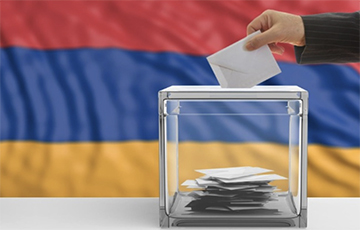
Armenia held parliamentary elections, the results of which made it clear that incumbent Prime Minister Nikol Pashinyan will retain power.
Will the country be able to continue its pro-European course?
Formally, Pashinyan's political force (the Civil Contract party) was opposed by 18 other parties. In reality, it is a duel between the Armenian people and Russia, which during May-June has been exerting unprecedented pressure on Yerevan and threatening Armenia with the "Ukrainian scenario", i.e. war.
The reason for the hybrid Russian-Armenian confrontation is simple: the European choice of the Armenian people and their aspiration to join the EU. This means Armenia's gradual withdrawal from under the Russian yoke in the form of the so-called Eurasian Economic Union and the CSTO (Collective Security Treaty Organization). The choice of Armenians is quite logical if we recall that during the Third Karabakh War in 2023, Russia together with its CSTO actually left Armenia to its fate. In the eyes of most Armenians, the Russians are traitors. But let's return to the current elections.
According to the analysis of the Foreign Intelligence Service of Ukraine, the desired scenario for the Kremlin was a complete change of power due to Nikol Pashinyan's electoral defeat. The minimum program for Moscow is the fragmentation of the future parliament and the deprivation of the pro-European Civil Pact party of the ability to solely make foreign policy and security decisions. On the face of it, the Kremlin has significant leverage to do so.
Armenia is a relatively small country of about three million people with limited natural resources. It is heavily dependent on Russian energy resources and foreign trade with under-importance: about 30% of the republic's exports go to Russia. In addition, the largest Russian military facility in the South Caucasus, the 102nd military base in the city of Gyumri, is located on the territory of the country. By the way, Russia does not pay rent to Yerevan for the land on which this base is located. We can say that Armenia is historically under partial occupation.
In these circumstances, on the eve of the elections, the Kremlin launched a campaign of pressure on Yerevan, which is in fact a blatant mockery of the Armenian people. At the end of May, the Russian Federation blocked imports from Armenia of fruit, flowers, mineral water, wine and cognac - goods on which the country's economy is largely based. At the same time, the propaganda machine of under-imperialization started working. A large-scale information and psychological attack on the government of Nikol Pashinyan is being conducted through Russian and pro-Russian resources.
According to SVRU, the plan to discredit the current government is to increase activity on Facebook, TikTok, Instagram and YouTube, bringing the daily coverage of content to 2.5-3 million views. A separate direction of IPSO: church topics. A kind of fifth column has been formed out of churchmen friendly to the ROC. Particularly zealous pro-Russian "zealots of faith" even tried to declare Nikol Pashinian the Antichrist. In addition, according to intelligence reports, Russia is massively importing titushkas (up to 100 thousand people) into the country. Does Yerevan have a chance to stand?
As of now, it is known that the political force of the incumbent prime minister has more than 50% support and is confidently leading among the competitors. It is very likely that Nikol Pashinyan will be able to form a parliamentary majority and continue his pro-European course. Undoubtedly, pro-Russian forces will also get representation in the parliament. But Armenia's struggle for real independence will continue. Why are the events in the South Caucasus important for us?
Because we are talking about a much broader process - the beginning of decolonization of under-imperialism. Armenia's withdrawal from the Eurasian Economic Union (the successor of the post-Soviet CIS) may be the beginning of the end of this entity itself. And the next stage of the historical process could be the decolonization of the so-called "Russian federation" itself. Today, such a scenario seems unlikely to many people. But if the imperial "economic union" cracks, sooner or later the empire itself will crack.
No one knows when exactly this will happen. But that is when the eternal external threat to our state will disappear. Today we exhaust the aggressor, and tomorrow he will die. That's the way it will be. We are working on it. Glory to Ukraine!
Yury Fedorenko, Facebook

Bank's name: Bank Millennium S.A.
Address: ul. Stanislawa Zaryna, 2A, 02-593, Warszawa
IBAN: PL97116022020000000216711123
SWIFT: BIGBPLPW
Name of the account holder: Fundacja “KARTA ‘97”
Purpose/title of payment: Donation for statuary aims
You can contact us by the e-mail [email protected]