
The Economist: Ukraine Has A New Tactics For Attacks Behind Russian Lines
1- 10.06.2026, 17:57
- 2,202
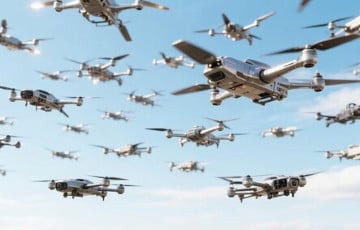
The strikes are carried out in two stages.
Ukraine’s campaign of strikes deep inside Russia has become much more extensive and precise: Kyiv is not only striking more frequently, but is increasingly targeting the same critical facilities, preventing Russia from quickly restoring its oil infrastructure.
According to ACLED data, from 2022 through the end of 2024, Ukraine carried out 335 strikes on targets located at least 100 km from the Russian border. In 2025 alone, there were already 658 such strikes—nearly twice as many as in the previous three years combined. At the current rate, the number of strikes could exceed 800 in 2026.
The Economist believes the actual figures are even higher. The magazine has built its own model based on NASA satellite data on fires, information about internet outages near strategic facilities, and other signs of attacks. According to this model, there could be roughly three times as many Ukrainian strikes in 2025 as ACLED records.
The main change is repeated strikes on the same targets. This tactic hits Russia in two stages. First, it thwarts rapid recovery: as soon as a target is partially repaired or fires are extinguished, Ukraine launches a new strike.
Journalists cite Tuapse as an example, where, after the aftermath of a new strike and an oil spill followed. This forces Russia to spend money not on the war or the civilian economy, but on constant repairs, restoration, and emergency work; that is, each new strike serves not only to destroy the facility but also as a long-term financial burden. The second strike is even more painful.
Ukraine is increasingly targeting not just refineries as sites, but the most complex and expensive parts of the plants—the so-called secondary units. It is these units that transform base fuel into more valuable products: gasoline, diesel, and other petroleum products. In other words, Ukraine is striking not only at the volume of Russian refining, but also at its quality and profitability. Damaging such units is easier than replacing them quickly: this is complex equipment, the repair of which requires time, money, technology, and spare parts.
The Economist also points to the growing gap between how much Russia could earn from oil at current global prices and how much it actually receives. According to the magazine’s calculations, from June to December 2025, Moscow’s revenues from fossil fuel exports were 12% below the expected level, and in the first four months of 2026, they were already 34% lower.

Bank's name: Bank Millennium S.A.
Address: ul. Stanislawa Zaryna, 2A, 02-593, Warszawa
IBAN: PL97116022020000000216711123
SWIFT: BIGBPLPW
Name of the account holder: Fundacja “KARTA ‘97”
Purpose/title of payment: Donation for statuary aims
You can contact us by the e-mail [email protected]