

“Russian Generals Can No Longer Feel Safe”
3- 10.06.2026, 15:29
- 1,364
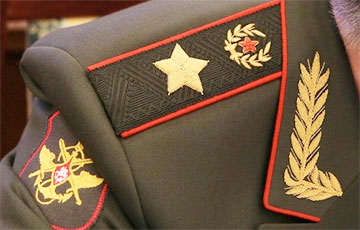
High-ranking status no longer guarantees immunity for Russian war criminals.
A high-ranking officer of the Russian Ministry of Defense was killed in an explosion near Moscow. According to media reports, the target may have been the deputy commander-in-chief of the Russian Aerospace Forces Sergei Maksimtsev, who is linked to missile strikes on Ukrainian cities.
What is currently known about this assassination attempt? How likely is it that Ukrainian intelligence services are behind this operation?
The website Charter97.org spoke with Major General (ret.) of the SBU Viktor Yagun about this:
— As of today, the only thing known for certain is that a car was blown up in Balashikha, near Moscow, resulting in the death of a high-ranking representative of the Russian military. As for the identity of the deceased, there are currently various theories, and none of them has yet been definitively confirmed.
It is premature to speak of the involvement of Ukrainian special services at this time. At the same time, one cannot ignore the fact that over the past two years, several similar incidents have already occurred in Russia involving people directly linked to the war against Ukraine. Therefore, the theory of a targeted operation remains a possibility, though at this point it has not been officially confirmed.
— Recently in Russia, several high-ranking military officials https://charter97.org/ru/news/2026/4/30/682335/ involved in the war against Ukraine have been eliminated. How do such operations affect the Russian army, the command structure, and the morale of other war criminals?
— The physical elimination of a single general or high-ranking officer rarely has a decisive impact on the course of hostilities, since any modern army has a system of functional redundancy and command succession.
The psychological effect is far more significant. When high-ranking officers begin to realize that they can become targets even hundreds of kilometers from the front lines, it forces them to change their lifestyle, strengthen security measures, and restrict their movements and communications. Some resources and time begin to be spent not on waging war, but on ensuring their own security.
Furthermore, such incidents create an atmosphere of mistrust within the Russian security apparatus. Every such incident inevitably raises questions: who passed on the information, where did the data leak occur, and how effectively are counterintelligence mechanisms working?
— Can we expect the list of targets for Ukrainian retaliation to expand? How vulnerable are members of Putin’s inner circle today, those who made the political decisions regarding the war against Ukraine?
— Ukraine officially asserts its right to self-defense and to hold accountable those who directly organize or facilitate aggression against its state.
When it comes to potential targets, the greatest risks theoretically lie not with political figures, but with those who make military decisions, plan strikes, and are responsible for logistics, arms supplies, the work of intelligence agencies, and the command of troops.
As for Putin’s inner political circle, it remains one of the most protected groups in Russia. However, recent events reveal an important trend: even high official status no longer no longer guarantees complete immunity. It is precisely this signal that may prove to be the most important consequence of such incidents, regardless of who exactly was behind their organization.
Overall, such cases have not so much a military as a strategic and psychological effect. They demonstrate that participation in the war against Ukraine can create risks not only on the battlefield but also far beyond it. And this inevitably influences the behavior and motivation of those involved in planning and carrying out Russian aggression.

Bank's name: Bank Millennium S.A.
Address: ul. Stanislawa Zaryna, 2A, 02-593, Warszawa
IBAN: PL97116022020000000216711123
SWIFT: BIGBPLPW
Name of the account holder: Fundacja “KARTA ‘97”
Purpose/title of payment: Donation for statuary aims
You can contact us by the e-mail [email protected]