
Portnikov Spoke About Russians' “national Resentment”
- 3.10.2026, 21:59
- 2,514
She has ties to Ukraine.
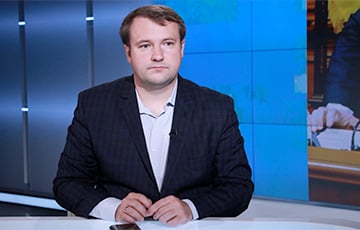
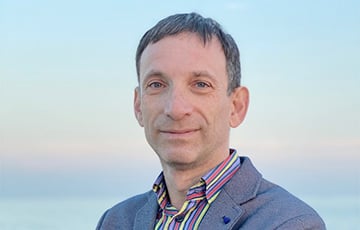
Ukrainian journalist and columnist Vitaly Portnikov on the air “Espresso” how the Ukrainian people’s desire for freedom led to a real catastrophe for Moscow in 1991.
The journalist recalled that on August 24, 1991, democratic Russia was triumphant in Moscow, the Communist Party of the Soviet Union was banned, and the path was opened to a “renewed federation of fraternal peoples.” On the same day, Ukrainians gathered in the Verkhovna Rada and voted for independence.
“The Communists are voting—they’ve always fought against this independence. Democrats are voting—people who, it would seem, should have been allies of Russian democrats. People from the East are voting,” he listed.
However, according to him, the referendum on December 1, 1991, was a real disaster for Moscow.
“As a witness, I can say unequivocally: no one believed that Ukrainians could possibly vote in favor of independence. It was considered a gambit by the Communists and nationalists,” Portnikov said.
According to him, Moscow was convinced that Kharkiv, Dnipro, Odesa, and Donetsk were “ours.” He also cited a conversation with Boris Yeltsin’s advisor Galina Starovoitova, who recounted that on the eve of the vote, Yeltsin had no doubt that no one would vote for independence. And even if they did vote for it, Gorbachev would “figure it out somehow.”
“The results of the referendum became the greatest national humiliation for Russians in terms of their myth about themselves as a nation,” the political scientist emphasized.
Therefore, he said, the average Russian remains convinced to this day that the Union was “broken up by Yeltsin, Kravchuk, and Shushkevich in Belovezhskaya Pushcha,” and the December 1, 1991, referendum is simply not mentioned in the Russian collective consciousness.
“But that doesn’t mean they’ve given up on us. They realized that if even a trace of Ukrainian culture remains—borscht with varenyky, the hopak with Kotlyarevsky—it will still take root, and their main goal is to ensure that we cease to be Ukrainians,” Portnikov concluded.

Bank's name: Bank Millennium S.A.
Address: ul. Stanislawa Zaryna, 2A, 02-593, Warszawa
IBAN: PL97116022020000000216711123
SWIFT: BIGBPLPW
Name of the account holder: Fundacja “KARTA ‘97”
Purpose/title of payment: Donation for statuary aims
You can contact us by the e-mail [email protected]