


Bloomberg: Putin May Be Pretending
1- 23.10.2026, 14:58
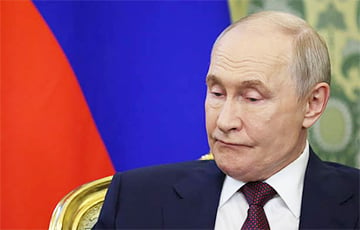
There isn't much chance of any real negotiations taking place before the end of winter.
The mere prospect of a meeting between Chinese leader Xi Jinping, Russian dictator Vladimir Putin, and U.S. President Donald Trump at the Asia-Pacific Economic Forum has already caused concern among U.S. allies, not to mention Ukraine.
This is reported by Mark Champion—a columnist for Bloomberg Opinion. He noted that Moscow is primarily interested in this meeting, as it will give Russia the opportunity to discuss the future of Europe and Ukraine without their participation. Against this backdrop, the author notes, Russia may still feign interest in the negotiations for some time. However, in his view, there is little chance of genuine negotiations taking place before the end of winter. This is because Putin is convinced that over the winter he will succeed in destroying Ukraine or forcing it to capitulate.
However, the author notes, Trump isn’t concerned about this. He is more interested in the commercial benefits of a reset in U.S.-Russia relations. The U.S. president accuses Ukraine of striking Russian oil refineries, claiming that this is affecting fuel prices in the U.S. And some American voters might believe this.
However, the stakes are higher for Putin at this meeting. After all, back in 2022, he stated that his key goal was not Ukrainian territory, but rather changing the entire security architecture of Europe so that Russia could restore its influence across the entire continent and reestablish itself as a great power. And the meeting in China could be a decisive step toward that goal.
Against this backdrop, the author notes, Russian media are enthusiastically comparing this meeting to the 1945 Yalta Conference, when world leaders laid the foundation for the UN and decided the fate of occupied countries.
However, Trump most likely plans to discuss nuclear arms control first and foremost. And this is the area where U.S. and Russian interests align. While Beijing is rapidly expanding its nuclear arsenal, it is still far from parity. Here, the task for Moscow and Washington is to reach an agreement on arms control. At the same time, according to the author, this meeting may not take place at all, as it could prove disadvantageous for Beijing.
The author notes that previous similar summits involving Trump do not inspire much hope for success. Furthermore, Washington is entering these negotiations under extremely unfavorable conditions, as it is waging a war against Iran, which serves as a lever of influence for China and Russia. Washington is losing its alliance with Europe and its influence in Asia. And it could suffer even greater losses if an agreement is reached in China without its participation.
“Even if there were no attempt to hold a second Yalta-style meeting, and the trilateral meeting in Shenzhen took place solely for symbolic purposes, it could still have the effect of diverting attention. After all, amid all this noise, the world would believe that something is being done to stop Russia’s invasion of Ukraine and its potential escalation in Europe, even though that is not the case. This only works in Putin’s favor,” the author concludes.

Bank's name: Bank Millennium S.A.
Address: ul. Stanislawa Zaryna, 2A, 02-593, Warszawa
IBAN: PL97116022020000000216711123
SWIFT: BIGBPLPW
Name of the account holder: Fundacja “KARTA ‘97”
Purpose/title of payment: Donation for statuary aims
You can contact us by the e-mail [email protected]