Andrei Dakhniy: Germany Remained In The Shadows For A Long Time
- 21.10.2026, 10:32
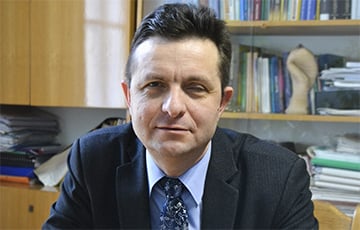
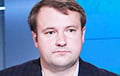
Photo: filos.lnu.edu.ua
Now is the time for her leadership to shine through.
"Alternative for Germany" (AfD), whose representatives are linked to the Kremlin, is gaining momentum and has won elections in two federal states—Saxony-Anhalt and Mecklenburg-Western Pomerania.
Will the traditional parties be able to hold on to power? How should Berlin respond to growing hybrid threats from Russia?
The website Charter97.org discussed this with Germanist, Head of the Department of the History of Philosophy at Ivan Franko National University of Lviv, Doctor of Philosophy, and Associate Professor Andriy Dakhniy:
— What is behind the rapid rise of the AfD?
— We need to talk about some deep issues here. Migration policy and much of what has been done in recent decades, it seems to me, have led to the average German feeling somewhat disadvantaged. The AfD is adept at capitalizing on these xenophobic sentiments, which have undoubtedly always existed. They were suppressed, but they never truly disappeared. As I see it, this is a specific instance of a global process that is taking place all over the world. People want simple answers to complex questions. We are witnessing a wave of populism, and Germany is no exception. Social media also plays an important role in this.
By the way, I could paraphrase a famous line by Marx and Engels from the *Communist Manifesto*. As you may recall, it begins: “A specter is haunting Europe—the specter of communism.” Here, I think, we could say: “A specter is haunting the world—the specter of populism.”
The “Alternative for Germany” party has capitalized very effectively on this populist trend. Traditional parties in many countries are losing influence, while populists are gaining strength. This is happening in France and other European countries—but not only in Europe. Undoubtedly, this poses a threat to many.
There is another telling example concerning traditional parties. If you recall, when Olaf Scholz was chancellor, there was a coalition in Germany known as the “traffic light” coalition. It consisted of three parties, one of which was the Free Democratic Party (FDP), Freie Demokratische Partei. It is very telling that it failed to win seats in the Bundestag and ceased to be a parliamentary party. This is yet another indication of how traditional parties are losing influence.
— How does the rise of this force threaten Germany and the unity of the EU?
— The fact that the AfD has become the leading party in the polls and is winning local elections undoubtedly poses a major threat, first and foremost to Ukraine. As you know, Ukraine’s public sector is, by and large, sustained by European Union funds, and Germany is one of the main donors. The AfD insists that aid to Ukraine must be reduced or suspended altogether. Therefore, the rise of this party threatens both us, Ukrainians, and the unity of the European Union. This is a simple observation, but it must also be noted.
— Will the AfD be able to change Berlin’s course, or will Germany maintain its firm support for Kyiv?
— Chancellor Friedrich Merz has been quite consistent in his support for Ukraine. His latest statements were no exception. Everything, of course, depends on the mood of German society.
The developments that are currently unfolding in France, Italy, and Belgium are causing me growing concern: might these sentiments spread to Germany? That would be very bad, but, thank God, there are no signs of that yet.
In any case, everything will depend on German voters. Merz’s coalition is quite fragile. If it collapses and early elections are held, that would be a very bad sign.
All the more so because France will hold presidential elections, and the likelihood of Marine Le Pen coming to power is very high. If something similar happens in Germany and the coalition—which currently actively supports Ukraine—changes, then the AfD will become a staunch advocate for a change in course. This does not bode well. Ultimately, German voters will decide everything. It is very important for Ukrainians that the current coalition holds together at least until the next election. Since those elections are not scheduled to take place for several years, the AfD will certainly not come to power. But if public sentiment shifts and early elections are held, the situation will become much more complicated and serious.
— Russia is stepping up its hybrid attacks on Germany. How should Berlin respond to the Kremlin’s provocations, and how will it act in the event of direct aggression against a NATO country?
— How will Germany respond? As you understand, much depends on NATO’s unity and the position of the United States. Things are very tense in America right now, and it’s hard to predict anything. Germany, as I understand it, has been dithering for too long and has been slow to build up its military capabilities and the capacity of its defense industry. Some processes are underway, but they’re moving quite slowly.
Therefore, it’s hard to say to what extent Germany will be ready to repel a possible attack. There’s no such certainty yet. But the Germans are already responding to specific provocations: they’re taking measures and issuing statements.
I believe it is necessary to strengthen security measures. Many people from the former Soviet Union live in Germany, as well as people who sympathize with Putin. We need to look at the sociological data separately here, but it seems to me that there are quite a few such people. There are also quite a few covert and overt agents of Russian influence in Germany. That’s why vigilance is so important.
These provocations will likely continue and escalate. The media component is of great importance. Much depends on how actively Russian troll farms continue to operate in Germany.
Recently, there have been attacks on Yandex’s data centers, after which the number of trolls has decreased slightly. This is also important. Residents of Germany may hold German passports, but they may still be under the influence of Russia Today and similar outlets. Such people may contribute to carrying out such provocations.
The attack on the Leipzig airport is just one example. I think there could be many more such incidents. Especially since we started the conversation with the AfD. It is a political force that quite openly supports Putin’s policies.
Even among native Germans—not just among immigrants from the Soviet Union or Russia—there are enough people who sympathize with Putin. The media must show the reality of the situation and the real threats coming from Russia.
— For decades, Germany has remained, above all, the economic engine of the EU. Is Berlin now ready to become Europe’s main military and political leader, and what will Germany’s new role be in a changing European Union?
— It’s certainly difficult for me to judge what will happen and whether Germany will remain a leader. In any case, economically speaking, it remains the leading country. For Ukraine, Germany is the most important donor during the war. It was, and I believe it remains, the economic engine of Europe.
However, three factors must be taken into account here. First, the German auto industry, which is not in the best shape right now. Competition from China is a major factor here. The second factor is that Germany’s economy has long relied, in part, on cheap Russian gas, which has not been available in recent years. The third factor, which is particularly undermining Germany’s economic position, is U.S. policy and the reduction of its military support for Europe, including Germany. As a result, Berlin has had to allocate significant funds not to healthcare, education, and culture, but to military purposes and the development of the defense-industrial complex.
These three factors have had a negative impact. Germany has weakened somewhat as an economic leader. I’m no economic expert, but judging by what I read, it is still Europe’s strongest economy, especially when compared to France’s or Britain’s. It continues to function quite well.
That said, politically speaking, Germany has long remained in the shadows. It seems to me that its leadership should now be more strongly manifested precisely in the political sphere. I’m impressed by what Chancellor Merz is doing right now. Ukrainians actively support his actions. If we compare Merz to the indecisive Olaf Scholz, we find Merz more likable. We remember what Scholz was called: a “zögerer”—that is, someone who constantly hesitates and can’t make up his mind. Merz, it seems to me, comes across as a more decisive leader.

Bank's name: Bank Millennium S.A.
Address: ul. Stanislawa Zaryna, 2A, 02-593, Warszawa
IBAN: PL97116022020000000216711123
SWIFT: BIGBPLPW
Name of the account holder: Fundacja “KARTA ‘97”
Purpose/title of payment: Donation for statuary aims
You can contact us by the e-mail [email protected]