

Mass Protests Have Erupted In Syria
- 15.09.2026, 21:37
- 1,248
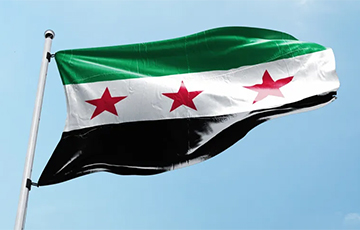
Syrians took to the streets following a sharp rise in fuel prices.
Syria has seen the largest protests since the ouster of Bashar al-Assad. The protests were triggered by the government’s decision to raise fuel prices, according to the BBC.
On Sunday, September 13, the Syrian government announced a 40% increase in the price of diesel fuel and a 28% increase in the price of gasoline.
The government stated that this is a temporary increase caused by rising prices for oil and petroleum products on the global market. The government cited another reason: a shutdown for modernization at the Baniyas refinery, the larger of Syria’s two oil refineries.
Syrian Energy Minister Mohammed al-Bashir said on Saturday that Syria currently produces only 102,000 barrels of oil per day, while consuming 325,000. As a result, the country is forced to import fuel.
In response to the government’s decision, many citizens—convinced that fuel prices would drive up all other prices—took to the streets, began burning tires, and blocked highways.
Reports of protests on Monday came from the cities of Hama, Khan Sheikhoun, and Ma’arat al-Numan on the highway leading through Aleppo to Turkey, Azaz and Al-Bab on the outskirts of Damascus, from Raqqa, Deir ez-Zor, and Hasakah in the eastern part of the country, from Qamishli in the northeast, in Syrian Kurdistan, and from other locations.
BBC Verify, the BBC’s fact-checking service, has verified and confirmed the authenticity of videos showing unrest at two border crossings: one on the border with Iraq and the other on the border with Turkey.
An AFP correspondent reports from Qamishli that hundreds of people took to the streets in protest there. They held signs reading “No to the policy of starvation!” and “No to fuel price hikes!” and chanted: “Fuel for the people!”
“This is the wrong decision! It’s a decision against farmers, workers, and students—against all of Syria’s poor,” Abdul Rahman Khalil, a 56-year-old local resident, told the agency.
Damascus taxi drivers explained in detail to Reuters correspondents what the spike in fuel prices means for them and the rest of the country’s residents.
“Yesterday I filled up with ten liters of gasoline for 185,000 (old Syrian pounds—the pound was redenominated by a factor of 100 at the beginning of this year. — BBC note), and I earned 225,000 for the whole day. And what did I end up with? I brought home 20,000–25,000,” taxi driver Mohammed told Reuters. 25,000 old Syrian pounds, or 250 new ones, is less than two dollars.
“That means I earned just enough for gas. I wasn’t working for myself,” Mohammed continued. “The solution? The solution lies with the government. We need them to do something urgently, because we drivers—we eat, we drink, and we have other expenses.”
“Gas prices have gone up now, and diesel prices have gone up. Tomorrow, vegetables will get more expensive, and food will cost more. Honestly, you can’t live like this—you just can’t. Find a way to deal with these prices—let people live, let people eat!” said another taxi driver, Imad Abu-Ras, to the news agency.
“I have five children. I need five packs of flatbread every day,” Imad continued. “If the price of flatbread rises to 9,000 (old Syrian pounds, 68 U.S. cents—Ed.) tomorrow, I’ll be spending 40,000 (three dollars—Ed.) on bread alone.” That means I’ll need a million pounds (75.76 dollars—Ed.) a month just for bread.”
Economists confirm Syrians’ fears that the retail price of fuel will drive up other prices as well.
“The problem of fuel prices in Syria isn’t just a debate over the price per liter of gasoline or diesel, nor is it merely a financial decision—just another in a series of price hikes,” Arab News quotes Syrian economist Hassan Murad as saying. “It is becoming a much broader issue affecting the future of production, transportation costs, food prices, citizens’ purchasing power, business profitability, employment, and investment—right down to the Syrian economy’s ability to recover and rebuild.”

Bank's name: Bank Millennium S.A.
Address: ul. Stanislawa Zaryna, 2A, 02-593, Warszawa
IBAN: PL97116022020000000216711123
SWIFT: BIGBPLPW
Name of the account holder: Fundacja “KARTA ‘97”
Purpose/title of payment: Donation for statuary aims
You can contact us by the e-mail [email protected]