Lukashenko's Aviation Fiasco
4- 26.08.2026, 19:00
- 2,952
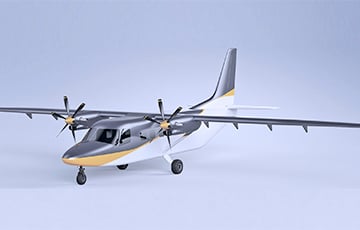
"Osvey" exists only on paper.
On August 25, Alexander Lukashenko met with Russian Deputy Prime Minister Denis Manturov. He presented Manturov with an order “in advance” and specifically mentioned support for Belarusian projects, “especially the aircraft.”
According to the Belarusian leader, “there are certain misunderstandings” that need to be discussed and resolved so that the “Osvey” can ultimately enter the common market: he said this would be a good aircraft for Russia and a way for Belarusian specialists to acquire new skills.
What “misunderstandings” was Lukashenko referring to? “Solidarnast” recalls the history of this controversial project and how many times the production of the “Union” aircraft has already missed its target deadlines.
The joint Belarusian-Russian project to develop a light multipurpose aircraft was first discussed back in 2023 — at that time, an agreement was signed between the 558th Aviation Repair Plant in Baranovichi and the Ural Civil Aviation Plant.
The first prototypes—which Belarusian and Russian officials were quick to tout—were scheduled to be released as early as 2026, and by 2030, between 85 and 150 of these “iron birds” were supposed to roll off the production line.
In early 2024 Pyotr Parkhomchikk, then Deputy Prime Minister of Belarus, stated: “We are moving quite quickly in the field of aircraft manufacturing. We are set to produce the first two aircraft by 2026.”
In 2025, a model of the 19-seat aircraft was even showcased at the “Innoprom. Belarus” exhibition. But that’s when things stalled. The head of the Russian Ministry of Industry and Trade, Anton Alikhanov, pointed to the Belarusian side—saying that the project specifications are ready, and we’re just waiting for a positive decision from our Belarusian partners.
Meanwhile, according to BelPol, the Russian State Military-Industrial Commission, represented by Dmitry Pantus, complained about numerous difficulties in working with the Russian side: deadlines are being missed, and they miscalculated the project’s funding—so now, no one is going anywhere.
Now, with no less enthusiasm than before, officials are citing new figures and dates: according to the aforementioned First Deputy Prime Minister of the Russian Federation, Denis Manturov, a prototype of the “Osveya” will be ready in 2027, at which time flight tests are also scheduled to begin. And by the end of 2029, certification will be completed, and “deliveries of the airliner to other countries are being considered.” Of course, this is assuming that no annoying errors have crept into the calculations again and that the parties have understood each other correctly.
It suddenly came to light that the “Union” aircraft will not be assembled at the plant in Baranovichi after all, but at the “Sokol” plant of the United Aircraft Corporation in Nizhny Novgorod. The Belarusian company’s website hasn’t had any news about this production for several years—just an old announcement with AI-generated images. I wonder if this is the “certain misunderstandings” Lukashenko mentioned?
Or is it a matter of funding after all? The estimated cost of the project—which was originally planned to cost about $15 million but rose to $36 million by 2025—turns out to still be undetermined. This is because the aircraft has both civilian and military customers, and it seems entirely possible to charge them vastly different amounts.
The head of Russia’s Ministry of Industry and Trade Anton Alikhanov stated recently: “We are currently coordinating with the Belarusian side on how we will divide any potential additional expenses caused by the new requirements.” I wonder, will the costs be split evenly or based on seniority?
Analyst Sergey Chaly, however, believes that the “Osvey” project will not yield any real results: “As soon as you start looking at how much money was spent, you realize that, in reality, this ‘Osvey’ project was just a pretext to obtain government funding. A classic story of how Russian money gets spent.”
But until 2027 arrives, we can dream, make promises, and make plans. And then push the deadlines back again due to unforeseen circumstances.

Bank's name: Bank Millennium S.A.
Address: ul. Stanislawa Zaryna, 2A, 02-593, Warszawa
IBAN: PL97116022020000000216711123
SWIFT: BIGBPLPW
Name of the account holder: Fundacja “KARTA ‘97”
Purpose/title of payment: Donation for statuary aims
You can contact us by the e-mail [email protected]