


Russians Rushed To Buy Cars With Diesel Engines
6- 26.08.2026, 18:25
- 1,380
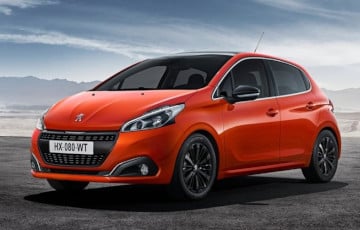
Gasoline has become scarce in Russia.
Gas shortages and long lines at gas stations have prompted Russians to take a closer look at diesel-powered cars. They aren’t very popular in Russia: diesel passenger cars account for just 6% of the country’s 47.7 million-vehicle fleet, according to data from Autostat. These are mainly produced by Western companies, and since their withdrawal from Russia, diesel cars have accounted for less than 2% of new car sales, according to The Moscow Times.
However, in July and the first half of August, their share rose to 1.7% from 1.4% in the first half of the year, according to calculations by Sergey Tselikov, CEO of the analytical agency “Autostat.” He also notes an increase in the share of diesel vehicles in used-car sales: 6.3% compared to 5.9% in January–June.
Tselikov attributes the increased demand for diesel cars to an “imbalance in fuel supply”: gas stations are once again facing a shortage of gasoline—especially high-quality gasoline—while diesel fuel “is available practically everywhere.” Retail sales of diesel are proceeding virtually without interruption, as confirmed by the Russian Fuel Union in a letter to Deputy Prime Minister Alexander Novak.
Sales of diesel cars could have grown even more—according to market participants’ estimates, demand for them has surged several-fold. However, this demand is not matched by supply, Tselikov notes. Russian manufacturers have almost no diesel models (only 0.3% of their lineup), Chinese manufacturers supply only diesel-powered pickup trucks to Russia, while alternative imports consist mainly of expensive diesel crossovers and SUVs such as the BMW X5 and X7 or the Toyota Prado, Tselikov explains.
Official dealerships are already empty. “At the beginning of the summer, the Haval H5—the only Chinese diesel SUV—was still on the market; there were even 2024 models available, but within 1.5 months, they were completely sold out,” says a dealer for the brand. “Everyone is asking for diesel cars now. We’ve had a 2008 Volkswagen Golf with a diesel engine on consignment since April for 600,000 rubles; no one bought it because it was too expensive, but in mid-August, buyers held an auction for it,” — says a businessman who resells cars.
There are more affordable options among used cars: for example, the best-selling diesel crossover this year is the Renault Duster, according to data from “Autostat.”
Importing “new” diesel cars is currently unprofitable due to the exorbitant recycling fee on vehicles with engines larger than 2 liters—and modern Korean, European, Japanese crossovers and SUVs—which are relatively affordable—fit this description, the dealer says. Therefore, he plans to expand his lineup with 6- to 15-year-old vehicles with engines up to 1.5 liters that qualify for the preferential disposal fee. He purchased them from intermediaries in Europe and is waiting for the cars to arrive in Russia via Belarus. For now, the situation is as follows, says another used-car dealer: you either buy a new luxury car with a diesel engine starting at 10 million rubles, or a car over 10 years old—priced between 500,000 and 3 million rubles, depending on the model.
The story with hybrids and electric vehicles began in a similar way: demand for them surged in June, when the first wave of the fuel crisis hit following regular attacks by Ukrainian drones on oil refineries, but dealers had almost nothing to offer. Over the course of a month, they shipped new batches of cars to Russia, including the affordable Nissan Leaf, and now this alternative to gasoline-powered engines is selling better and better. In July, sales of “pure” electric cars on the used car market nearly tripled year-over-year, according to Autostat: a record 3,650 used electric vehicles were registered that month, compared to 1,270 a year earlier. The Nissan Leaf accounted for one-third of sales. The previous high was in October 2025, before the scrap tax increase: 2,900. Sales of plug-in hybrids on the used car market rose by 38% year-over-year.
In the new-car market, the share of electric vehicles and plug-in hybrids rose to 12% (14,500 vehicles) in July, up from 8% in May, according to Autostat’s chief analyst Dmitry Yarygin.

Bank's name: Bank Millennium S.A.
Address: ul. Stanislawa Zaryna, 2A, 02-593, Warszawa
IBAN: PL97116022020000000216711123
SWIFT: BIGBPLPW
Name of the account holder: Fundacja “KARTA ‘97”
Purpose/title of payment: Donation for statuary aims
You can contact us by the e-mail [email protected]