
"This Is Exactly What Putin Was Afraid Of"
- 26.08.2026, 12:10
- 1,922
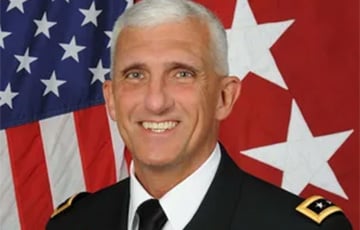
A U.S. general explained how Ukraine built a new army.
The Ukrainian Army has evolved from a weak and corrupt organization into one of the most adaptable forces in modern warfare. To a large extent, it was Russian aggression that accelerated this transformation. This is discussed by retired U.S. Army Lieutenant General Mark Hertling in The Bulwark.
Gertling recalls his first encounter with Ukrainian military personnel in 2004 in Iraq. At that time, he assessed that the Ukrainian contingent was experiencing serious problems with discipline, training, logistics, and combat readiness.
He describes the army of that period as an organization that still largely retained its Soviet institutional legacy. Officers, he says, were not competent enough, noncommissioned officers were untrained, and corruption remained a serious problem.
“I remember thinking that this was an army that still carried a significant portion of the Soviet Union’s institutional DNA,” the general recalls.
However, over time, the situation began to change. When Gertling commanded the U.S. Army in Europe, he worked closely with the Ukrainian military. The Ukrainian command sought to adopt new approaches to training military personnel, and sergeants were sent to study at U.S. military training institutions.
This cooperation took on particular significance after 2014, when Russia occupied Crimea and launched its aggression in the Donbas. According to Gertling, Russian aggression did not break Ukraine; on the contrary, it accelerated the creation of the very army that Moscow feared most: “Putin helped speed up the creation of exactly what he feared: a formidable Ukrainian national army.”
The result became particularly evident in February 2022. Russian troops were no longer facing the same Ukrainian army they had known in 2014.
Junior commanders began making decisions on their own, small units quickly adapted to changes on the battlefield, and soldiers improvised when initial plans stopped working. Ukrainian commanders also gained significant combat experience.
However, Gertling believes that this transformation should not be attributed solely to Western aid:
“We didn’t turn the Ukrainian army into an American one. The Ukrainians have made it their own and have made it extremely agile in learning and adapting.”
Today, he says, Western militaries are already studying the Ukrainian experience. This includes, in particular, the use of drones, electronic warfare, combat intelligence, dispersed operations, and the ability to quickly adapt tactics to the situation.
At the same time, the general acknowledges that Ukraine’s political transformation remains far more complex. Corruption has not been completely eradicated, and debates continue in the country over governance, accountability, and the relationship between parliament and the presidency.
However, Gertling emphasizes an important distinction: In his view, Ukraine is not a system built around corruption. The country has investigative journalists, law enforcement and anti-corruption agencies; political opponents can criticize the government; and citizens take to the streets to protest even during a full-scale war.
According to the American general, this is precisely one of Ukraine’s greatest achievements since gaining independence:
“Thirty-five years after gaining independence, Ukraine’s most important achievement is not that it has Western weapons, nor even that it is on the path to EU membership. The fact is that Ukraine possesses a democratic identity that its citizens are willing and able to defend.”

Bank's name: Bank Millennium S.A.
Address: ul. Stanislawa Zaryna, 2A, 02-593, Warszawa
IBAN: PL97116022020000000216711123
SWIFT: BIGBPLPW
Name of the account holder: Fundacja “KARTA ‘97”
Purpose/title of payment: Donation for statuary aims
You can contact us by the e-mail [email protected]