

The Iranian Rial Has Plummeted To A Historic Low
4- 24.08.2026, 15:52
- 5,758
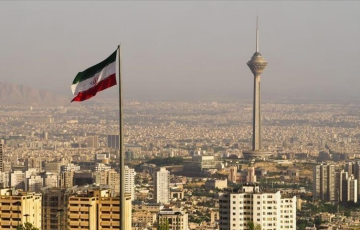
The U.S. is preparing an “economic D-Day” for Tehran.
The Iranian rial’s plunge to a historic low was one of the main causes of the mass protests in late 2025 and early 2026, which ended with a violent crackdown and mass executions. Donald Trump, who at the time promised aid to the protesters, is now preparing harsh sanctions. His Treasury Secretary Scott Bessent called them “Economic D-Day,” drawing an analogy with the Allied landings in Normandy in June 1944.
Against this backdrop, the rial hit a new all-time low. Its exchange rate on the black market fell to approximately 2 million rials per U.S. dollar, according to Bloomberg. In late December, when the protests began, the dollar was trading at about 1.45 million rials—by that point, the exchange rate had already fallen by 60% following the 12-day war with Israel in June 2025.
Oil exports have “practically ceased,” Iran’s Central Bank Governor Abdolnaser Hemmati said last week. As a result of the U.S. naval blockade, loaded Iranian tankers cannot leave the Persian Gulf, beyond which a whole fleet of empty vessels awaits them, Bloomberg notes. Near Malaysia, where Iranian oil is traditionally transshipped for delivery to Chinese refineries, there are currently tankers carrying 40 million barrels, but according to Kpler, only 4 million of those have not yet been sold—enough for just two supertankers.
The United Arab Emirates, which was one of Iran’s main trading partners, suspended all financial transactions with Iran last week.
Bessent promised to unveil a new sanctions program on Monday. According to him, it will be a plan for “the largest coordinated economic isolation in world history.” Bessent wrote in the Financial Times:
“President Donald Trump and the overwhelming power of our armed forces have significantly undermined Iran’s military capabilities and weakened its nuclear program. Now we are entering the final stage. The dawn of economic “D-Day”—the greatest financial offensive in history—is breaking.

Bank's name: Bank Millennium S.A.
Address: ul. Stanislawa Zaryna, 2A, 02-593, Warszawa
IBAN: PL97116022020000000216711123
SWIFT: BIGBPLPW
Name of the account holder: Fundacja “KARTA ‘97”
Purpose/title of payment: Donation for statuary aims
You can contact us by the e-mail [email protected]