

What Could Trump Learn From Donald Duck?
1- 24.08.2026, 15:04
Even Disney cartoons helped the U.S. during World War II.
The U.S. war with Iran is becoming increasingly costly for Washington, and the administration of U.S. President Donald Trump has still not been able to convince Americans of the need to continue the escalation. Against this backdrop, the historical experience of the 32nd U.S. President Franklin Roosevelt shows just how important it is for a president to manage public opinion, writes Foreign Policy.
Over six months of hostilities, U.S. spending has reached at least $35 billion, and there is still no clear prospect of the war ending. Initially, Washington stated the need to destroy Iran’s nuclear capabilities, but later one of the main objectives became ensuring security of the Strait of Hormuz.
Trump has made virtually no systematic effort to explain to Americans the necessity of a protracted campaign. Meanwhile, rising fuel and food prices directly affect citizens’ daily expenses and fuel discontent.
During World War II, isolationist sentiments were strong in the United States, and large-scale mobilization required significant sacrifices from citizens—ranging from paying taxes and purchasing war bonds to working in military factories and serving on the front lines. The Roosevelt administration understood that military strategy alone was not enough; the public needed to be constantly informed about the war’s objectives and the necessity of these sacrifices.
Washington made managing public opinion an integral part of its war policy. In 1942, the Office of War Information was established to coordinate the government’s interactions with the press, radio, Hollywood, and the advertising industry. The authorities sought to explain to Americans why new taxes, restrictions, and military spending were necessary.
Popular entertainers were enlisted to support the campaign. Well-known radio shows incorporated topics such as taxes and war bonds into their segments. Hollywood produced war films, and comic books turned the fight against Nazi Germany into part of popular culture.
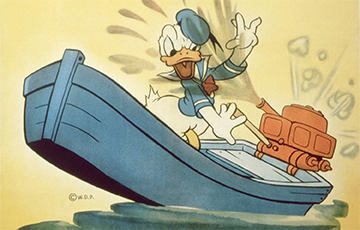
One of the most famous examples was a Donald Duck cartoon. The character learns why paying taxes is essential for victory. The film was released in 1942 and screened in more than 12,000 movie theaters. “Taxes will sustain democracy,” the cartoon proclaimed.
Propaganda was only part of a broader campaign. Americans truly viewed Germany and Japan as a serious threat, and millions of families were directly connected to the front lines. However, the Roosevelt administration did not take public support for granted.
This is precisely the principle that Trump lacks. “Trump approached the operation as a personal show, offering neither a clear plan nor a coherent explanation,” writes Foreign Policy.

Bank's name: Bank Millennium S.A.
Address: ul. Stanislawa Zaryna, 2A, 02-593, Warszawa
IBAN: PL97116022020000000216711123
SWIFT: BIGBPLPW
Name of the account holder: Fundacja “KARTA ‘97”
Purpose/title of payment: Donation for statuary aims
You can contact us by the e-mail [email protected]