
Major Blackout In Moscow: Russian Authorities Are Hiding What Really Happened
13- 19.08.2026, 22:01
- 26,788
The official version raised questions among experts.
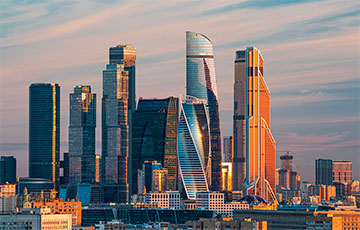
After 16 hours, authorities still had not identified the cause of the major blackout. The power outage in Moscow affected areas with a population of about 350,000 people.
“Agency” reports that 16 hours after the massive blackout in Moscow, Russian authorities still had not identified the exact cause of the outage. The power outage led not only to problems in residential neighborhoods but also to a widespread disruption of the Russian Internet.
After 8:00 p.m., the services “Sboy.rf” and Downdetector began recording a sharp increase in complaints about wired Internet, websites, and popular Russian services. Users reported problems accessing “Gosuslugi,” “VKontakte,” Rutube, services provided by MTS, “Megafon,” “Rostelecom,” “T-Mobile,” “Beeline,” “Tricolor,” online movie theaters, and services from a number of banks.
Complaints came from most regions of Russia, but most of all from Central Russia, Moscow, the Moscow Region, and St. Petersburg. According to an RBC source, the problem was linked to an outage in Moscow’s Gagarinsky District, where Moscow Long-Distance Telephone Exchange No. 9, known as MMTS-9 or M9, is located. Two other RBC sources and an employee at the station confirmed that power was out on some floors of MMTS-9.
Complaints came from most regions of Russia, but the majority were from Central Russia, Moscow, the Moscow Region, and St. Petersburg. According to an RBC source, the problem was caused by a power outage in Moscow’s Gagarinsky District, where Moscow Long-Distance Telephone Exchange No. 9, known as MMTS-9 or M9, is located. Two other RBC sources and an employee of the exchange confirmed that parts of MMTS-9 were without power.
The first reports of the power outage began to surface around 8:30 p.m.
The partial blackout affected at least four districts of Moscow: Gagarinsky, Danilovsky, Khamovniki, and Zamoskvorechye. According to Rosstat, approximately 350,000 people live in these districts. The outage affected more than just apartments: traffic lights and trams stopped working, shoppers were evacuated from the “Gagarinsky” shopping center, and on the Kaluzhsko-Rizhskaya metro line, train intervals increased to about 10 minutes.
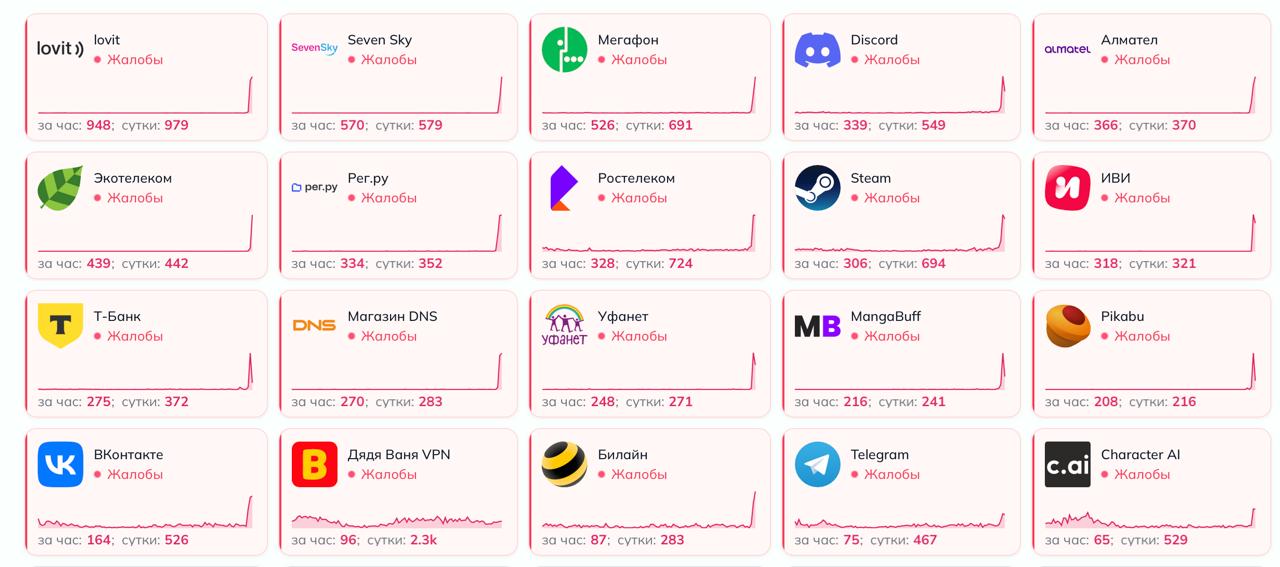
At 9:24 p.m., Moscow authorities reported that power had been restored, but referred only to “some consumers” and did not disclose either the number of homes without power or the number of people affected.
The Telegram channel “112,” which has close ties to law enforcement, initially reported a fire at a power substation on Vavilova Street, but later changed its wording to “explosion.” The Ministry of Emergency Situations stated that no signs of smoke were detected at the substation. Moscow authorities attributed the power outage to a “technical switchover of power sources” and dismissed information about the incident’s consequences circulating on social media as unreliable.
Experts consider this wording evasive. A representative of the “Na Svazi” project explained that power sources are usually switched when “the main source fails.”

Bank's name: Bank Millennium S.A.
Address: ul. Stanislawa Zaryna, 2A, 02-593, Warszawa
IBAN: PL97116022020000000216711123
SWIFT: BIGBPLPW
Name of the account holder: Fundacja “KARTA ‘97”
Purpose/title of payment: Donation for statuary aims
You can contact us by the e-mail [email protected]