

Magyar U-turn
3- "Socrates' Sieve."
- 12.05.2026, 10:27
- 11,754
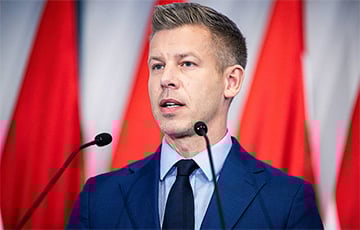
Photo: Getty Images
A purge of Russian agents has begun in Hungary.
The results of the parliamentary elections in Hungary, where Putin's friend Orban and his Fidesz party suffered a crushing defeat, claim to be a point of no return for Russian influence in the region. The official accession of Peter Magyar as Hungary's prime minister marked not just a change of faces in Budapest, but the dismantling of a longstanding "special path" that had turned Hungary into the Kremlin's chief advocate and lobbyist inside the EU and NATO.
One of the symbols of this geopolitical reversal was the high-profile expulsion from the country of Arthur Sushkov, who officially held the post of third secretary of the Russian Embassy, but in reality was identified as a staff member of the Foreign Intelligence Service (SVR).
Analysis of data from Hungarian investigators, such as the VSquare project, shows that the purge of the presence of Russian security services began even before Magyar's formal inauguration. In the light of the above-mentioned declaration of Sushkov as persona non grata is not an ordinary diplomatic incident. The episode can be interpreted as an act of the beginning of de-occupation of Hungarian state institutions. According to the Hungarian counter-intelligence agency, the Office for the Protection of the Constitution, Suszkow had for years worked unhindered in structures as close as possible to Orbán's entourage. Here Mathias Corvinus Collegium as a forge of personnel of the "illiberal regime", the Hungarian Institute of International Relations (HIIA) - a structure that prepared analytics directly for the Cabinet of Ministers, the John Lukacs Institute - a training ground for officers and employees of special services.
The Russian spy Sushkov was not just engaged in "gossip gathering". His area of interest included details of the Paks-2 nuclear power plant project, Hungary's position on Ukraine, and even attempts to recruit serving ministry officials.
A remarkable fact is that Hungarian counterintelligence demanded his expulsion as early as February 2026, but the Orbán government blocked the decision, fearing Moscow's wrath in the midst of an election campaign.
The observed change of course of Péter Magyar's government represents a shift from "strategic uncertainty" to active defense. Hungarian sources emphasize: under Magyar, the security services have been given carte blanche to work without regard to "political expediency."
Budapest will work to destroy Russia's network of influence, and Sushkov's expulsion is just the tip of the iceberg. Experts estimate that another 10-12 identified SVR officers remain in the Russian embassy in Budapest. Magyar has made it clear that Hungary is no longer a "safe haven" for Russian spies.
At the same time, Magyar has become concerned about Hungary's energy independence. The new government has already initiated an audit of all agreements with Rosatom and Gazprom, viewing them not as economic contracts but as instruments of political blackmail.
Budapest's readiness to fully rejoin the European family is obvious. Also, Prime Minister Magyar is positioning Hungary as a reliable NATO ally. No more vetoing aid to Ukraine and no more flirting with the aggressor.
Russian state media traditionally call what is happening "Russophobic hysteria" and "Washington's machinations." However, the harsh truth is much more prosaic: Hungarian society in the April 12 elections gave Magyar a mandate to restore sovereignty. And sovereignty in Budapest's understanding is now incompatible with the presence of SVR agents in educational institutions and government corridors.
Hungary's change of course toward Russia is an important signal to the entire region: Russian influence in Europe rests on corrupt ties to authoritarian leaders. Once these leaders leave, the Kremlin's "soft power" crumbles, exposing only a network of espionage and manipulation. Hungary is no longer the West's "weak link." It is gradually becoming its eastern bastion.
Telegram channel "The Sieve of Socrates"

Bank's name: Bank Millennium S.A.
Address: ul. Stanislawa Zaryna, 2A, 02-593, Warszawa
IBAN: PL97116022020000000216711123
SWIFT: BIGBPLPW
Name of the account holder: Fundacja “KARTA ‘97”
Purpose/title of payment: Donation for statuary aims
You can contact us by the e-mail [email protected]