

"Russia Has Become A Vassal Of China."
7- 1.05.2026, 16:11
- 3,726
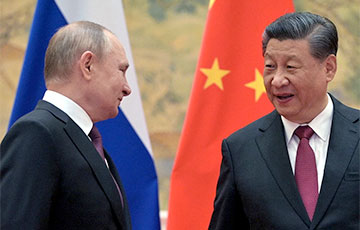
The Kremlin's dependence on technology imports via the PRC has reached 90%.
Russia's dependence on imports of sanctioned technologies via China has reached 90%, Bloomberg reports, citing sources familiar with the statistics.
According to them, despite the announced import substitution programs, the level of dependence has even increased compared to last year (80%). The reason was the strengthening of EU sanctions, which cut off the remaining supply channels from the West, notes The Moscow Times.
The EU is well aware of the role of China, which supplies the Kremlin with dual-use technologies and even satellite intelligence for war, but is wary of imposing sanctions against it because of possible retaliatory measures, the agency's sources said.
Despite Putin's claims of moving toward technological sovereignty, the break with the West has resulted in Russia becoming a "vassal of China," said Elina Rybakova, an economist at the Peterson Institute for International Economics in Washington.
China's importance to Russian trade is now so unbalanced that Beijing has a huge influence on Moscow, Rybakova told Deutsche Welle: "China is Russia's largest trading partner, while Russia accounts for only a small share of Chinese exports."
According to the Gaidar Institute, last year China bought 27 percent of all goods that Russia exported to foreign markets and supplied 36 percent of Russia's imports. However, Russia's market share in Chinese exports fell from 3.2% to 2.7% - a level Mexico is more than 5 times lower than the US.
Because of Western sanctions, Moscow is increasingly dependent on Beijing for high-tech and manufacturing goods, explains Bruegel Center expert Zsolt Darvasz: "Russia is a big country, but it doesn't have the capacity to be self-sufficient. So it has to get these goods from somewhere else. And that supplier is increasingly China."
Rybakova points out that China not only sells its products to Russia, but also helps facilitate the purchase of Western goods. First of all, it is about dual-use products, which can be used both for civil and military purposes.
The volume of mutual Russian-Chinese trade in 2025 for the first time since the beginning of the war decreased - by 6.5% to 1.63 trillion yuan ($234 billion). Both Chinese supplies of goods to Russia (down 3.4% over the year) and Russian exports to China (down 9.9%) fell. The decline in Russian-Chinese trade has caused concern in the Kremlin, sources close to the government told Reuters in August. According to them, during his visit to Beijing, Putin intended to ask Si Jinping not to reduce trade turnover, on which the Russian economy critically depends.

Bank's name: Bank Millennium S.A.
Address: ul. Stanislawa Zaryna, 2A, 02-593, Warszawa
IBAN: PL97116022020000000216711123
SWIFT: BIGBPLPW
Name of the account holder: Fundacja “KARTA ‘97”
Purpose/title of payment: Donation for statuary aims
You can contact us by the e-mail [email protected]