

Germany Adopted A Military Strategy For The First Time In Post-war History
3- 22.04.2026, 21:38
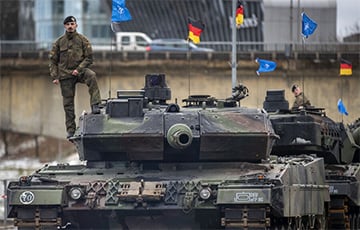
Berlin named Russia as the main threat.
Germany has adopted a defense strategy that describes Russia as the main security threat in Europe for the first time since World War II, Deutsche Welle reported. "Russia is preparing for a military confrontation with NATO through rearmament and considers the use of military force as a legitimate tool to advance its interests," German Defense Minister Boris Pistorius said Wednesday while presenting the country's comprehensive defense concept in Berlin. He said Moscow aims to destroy NATO by breaking the Europe-U.S. bond and seeks to expand its zone of influence.
The defense concept consists of a military strategy and a plan to develop the Bundeswehr (German armed forces), describing its structure and composition. The strategy document states that Russia is "creating preconditions for a military attack on NATO countries" and is already conducting hybrid operations against alliance members, including against the FRG. Diversions, cyberattacks, disinformation campaigns and espionage have become a constant threat and countering them is a regular task of the military, Pistorius emphasized.
According to the developed concept, the number of the army should reach at least 460,000 people, which will allow together with allies to resist possible aggression from the Russian Federation (now the German Armed Forces have 184,300 fighters). "We will transform the Bundeswehr into the strongest conventional army in Europe," said the defense minister. The reserve is recognized as an integral part of the armed forces and will be equipped with weapons and equipment.
One of the tasks of the army's development is also called ensuring "information superiority" over the enemy - including by building up military capabilities in space and cyberspace. At the same time, along with high technologies such as quantum computing and robotics, according to the authors of the defense plan, the Bundeswehr should master the capabilities of "deep strike" - the ability to hit targets far behind the front line. According to Pistorius and inspector general Carsten Breuer, the plan is about long-range, high-precision weapons that can destroy the enemy's logistics, infrastructure and command centers at an early stage, as the Ukrainian army does, including using cheap drones.
In the future, the FRG army should get more capabilities to accurately hit targets at long distances - in addition to the Taurus in service, it is planned to purchase JASSM-ER cruise missiles with a range of about 1,000 kilometers for the new F-35 fighter jet. Berlin also intends to develop multi-level air defense.
In addition, the authorities want to reduce bureaucracy and optimize work processes by digitizing them, reducing reporting and making greater use of technology, including AI systems. Details of the concept are classified so as not to help potential adversaries, Pistorius said, "Otherwise we might add Vladimir Putin to our mailing list."

Bank's name: Bank Millennium S.A.
Address: ul. Stanislawa Zaryna, 2A, 02-593, Warszawa
IBAN: PL97116022020000000216711123
SWIFT: BIGBPLPW
Name of the account holder: Fundacja “KARTA ‘97”
Purpose/title of payment: Donation for statuary aims
You can contact us by the e-mail [email protected]