The Guardian: Trump Will Leave Behind A World Divided Into Three Parts
1- 25.10.2026, 11:19

The consequences will be felt not only in Europe.
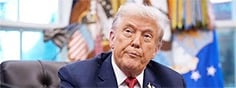
U.S. President Donald Trump may use the last two years of his presidency to shape a new world order in which the United States, Russia, and China would divide the world into spheres of influence. This is according to an op-ed for The Guardian Steve Bloomfield, a columnist, writes about this.
The author notes that Trump’s predecessors also attempted to cement their political legacies specifically toward the end of their terms. For example, George H. W. Bush intervened in the civil war in Somalia, Bill Clinton attempted to resolve the Israeli-Palestinian conflict, and Barack Obama moved to normalize relations with Cuba and concluded a nuclear agreement with Iran.
However, according to Bloomfield’s assessment, the current U.S. president may leave a far more dangerous legacy. The author identifies one of the key risks as a possible trilateral meeting between Trump, Russian dictator Vladimir Putin, and Chinese leader Xi Jinping, which has been proposed to take place in China next month.
“Such an unprecedented meeting, if it were to take place, could have potentially devastating consequences for everyone else. These three leaders seek to reshape the way the world is governed, essentially dividing it into spheres of influence,” the columnist writes.
The journalist emphasizes that this meeting alone will not lead to an immediate division of the world into three blocs. But from this point on, a dangerous and irreversible trend could begin.
According to Bloomfield, such a scenario threatens not only Ukraine. If Washington refuses to support European countries in the face of the Russian threat, the entire continent will feel the consequences. At the same time, the weakening of U.S. security guarantees in Asia will create additional risks for Taiwan, South Korea, Japan, and Australia.
The author also draws attention to the strategic interests of these three countries in the areas of technology, control over supply chains, energy resources, and space programs. At the same time, traditional U.S. allies may find themselves sidelined from new agreements.
“We’ve talked a lot about the end of the West over the past two years—and it seems that the moment has now come when many of these fears may come true,” Bloomfield writes.
At the same time, the columnist warns that the proposed format will not necessarily become a permanent geopolitical alliance. Future U.S. presidents may reject closer ties with authoritarian leaders. However, the very fact of the meeting is capable of strengthening the international standing of Putin and Xi Jinping.
“The image of the three leaders will become a symbol of an era in which the rules-based international order was shattered and a new, uncertain period began to take shape,” the journalist concludes.

Bank's name: Bank Millennium S.A.
Address: ul. Stanislawa Zaryna, 2A, 02-593, Warszawa
IBAN: PL97116022020000000216711123
SWIFT: BIGBPLPW
Name of the account holder: Fundacja “KARTA ‘97”
Purpose/title of payment: Donation for statuary aims
You can contact us by the e-mail [email protected]