

Lukashenko And The Void
10- Alexei Mazartov, “Belarusians and the Market”
- 27.09.2026, 13:31
- 7,160
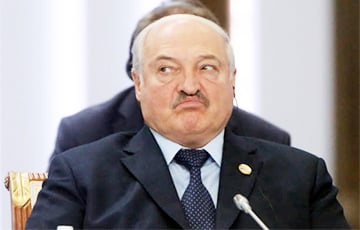
The dictator complained that no one wanted his “rental property.”
While the Russian Ministry of Finance is looking for ways to raise money for the war, Alexander Lukashenko seems unsure of what to do with all this money. At least, that’s the impression one gets when looking at the progress of certain government programs.
Lukashenko and the Empty Spaces
At a meeting on September 22, Alexander Lukashenko was trying to figure out what to do with the rental housing built on his orders.
“As I’ve been informed, the number of vacant rental apartments is growing. Strange, isn’t it? There are now more than 17,000 residential units on the list of unclaimed properties. ‘We built housing, and nobody wants it?’” Lukashenko said.
There are currently 165,000 rental apartments in Belarus. That means more than ten percent are vacant. And they’re not just sitting empty. Many apartments have been sitting vacant for years. And that’s not good for the apartments. According to Lukashenko himself, 6,000 rental units have already fallen into disrepair, so they need to be demolished. Two and a half thousand require urgent repairs.
Prime Minister Alexander Turchin, however, explained that this does not refer to new apartments, but mostly to old buildings that were constructed primarily in rural areas. In 2016, after Lukashenko came up with the idea of rental housing, these buildings were simply transferred to the rental housing stock. In other words, everything is fine; no one is to blame. Well, somehow these houses that nobody needs just ended up being built by accident, all on their own, and now we don’t know what to do with them.
And who built them, why they were built—who knows now? Although “who” and “why” aren’t exactly Newton’s binomial theorem. Because these rural houses were built on a massive scale as part of a state program for rural revitalization, which Lukashenko announced in 2005. Thanks to this program, 1,500 “agrotowns” sprang up across Belarus.
In 2016, the State Control Committee decided to check how people were living in these agrotowns. It turned out that in some places, no one was living there at all. Of the 300 agro-towns inspected, vacant housing was found in 130.
How did this happen?
In other words, they built the houses, but couldn’t find anyone willing to live in them. This is because, very often, these identical, attractive little houses were built without taking actual needs into account. They were built in places with no social infrastructure, no stores, and no regular transportation links to the nearest settlement. And most importantly, where there are no jobs. They were built just for the sake of building and to meet quotas. And judging by Lukashenko’s own words, nothing has changed over the past ten years.
“New apartments are being built not to meet actual demand, but to fulfill assigned quotas. It’s a disaster, isn’t it? At the same time, the regions sometimes complain that there is not only no need for construction, but also no sources of funding. So it turns out that the Grodno or Mogilev regions don’t need housing, yet someone is forcing them to build it,” said Lukashenko.
And since 10 percent of our rental housing stands vacant, what is the only logical conclusion we can draw from this? In my opinion, it’s obvious. We need to build even more.
“As I’ve been told, the pace of housing completions in the first half of this year has slowed. How can this be explained?” Lukashenko asked indignantly.
This year, Belarus plans to build 645,000 square meters of rental housing. Next year, the figure is set to increase to 900,000, and by 2030, another 300,000 will be added.
“The focus in planning has shifted toward small settlements with populations of up to 20,000 people,” explained Deputy Prime Minister Alexander Terekhov.
The deputy prime minister did not explain whether Belarusians would be willing to move en masse to small towns for state-provided rental housing. After all, the main thing is not to build, but to get people to move in. And as for why no one lives in these apartments again—in ten years, a completely different deputy prime minister will be explaining it anyway.
Alexei Mazartov, “Belarusians and the Market”

Bank's name: Bank Millennium S.A.
Address: ul. Stanislawa Zaryna, 2A, 02-593, Warszawa
IBAN: PL97116022020000000216711123
SWIFT: BIGBPLPW
Name of the account holder: Fundacja “KARTA ‘97”
Purpose/title of payment: Donation for statuary aims
You can contact us by the e-mail [email protected]