
Progressive Sclerosis In The Kremlin
1- Andrei Yakovlev
- 27.10.2026, 8:48
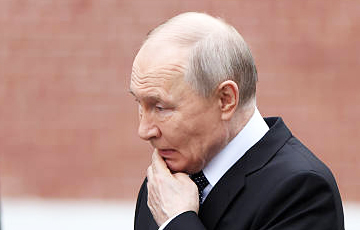
Not even his security forces need an old, weak Putin.
For systems like Putin’s—where there is no real politics, only bureaucratic competition and behind-the-scenes struggles between clans—to function properly, it is important to maintain incentives for people at the lower and middle levels of the administrative hierarchy. Of course, power itself is an incentive—it provides both status and material rewards—but career advancement prospects play an equally important role for those within the system.
If a person enters the system and sees that everyone is stuck in their positions with no room for advancement, they lose interest in their work. This is especially true when financial incentives continue to deteriorate—as has been the case over the past two years.
By the end of 2024, the Kremlin no longer had enough money to simultaneously fund the war, fulfill its social obligations, and pay out rents to the elites. Over the past 1.5–2 years, the balance between the “stick” and the “carrot” has shifted increasingly toward the “stick” — in the form of increasingly widespread nationalization of business assets and constant arrests of officials at all levels, which are now usually accompanied by the confiscation of property. But working solely under the fear of punishment is rarely effective.
In this sense, the possibility of career advancement—which costs the Kremlin nothing—is a crucial element in keeping the entire system running smoothly. That is precisely why so many people—including those within the Russian government apparatus—expected significant personnel changes following the September “elections.”
But they amounted to only minor changes in the government’s composition.
What was being discussed
The leading candidate to replace him was Mikhail Mishustin. With the start of the war—in contrast to his initial PR strategy—he tried to be as quiet and inconspicuous as possible: people even began calling him “the invisible man.” But no matter how much he tries to stay out of the spotlight, formally he is the number one contender to succeed Putin should anything suddenly happen.
Fully aware of this institutional feature of his system of governance, Putin has regularly changed prime ministers. Mishustin has been in office for 6.5 years now. Only Dmitry Medvedev lasted longer—but his entire term was marked by a “purge” of people who had been close to him during his presidency. Perhaps Mishustin retained his position as prime minister precisely because, as a highly experienced political insider, he himself took the initiative to weaken his own position by “sacrificing” Grigorenko—one of his closest aides for many years.
Another possibility is that the contenders for the prime minister’s position did not score enough “points” in the bureaucratic race. Neither the staunch statesman Andrei Belousov nor the “Kremlin storyteller” Maksim Oreshkin would certainly have turned down an offer to become prime minister. But as defense minister, Belousov is hampered by the military-political situation: the Russian army’s advance on the front lines has effectively stalled, and the Russian military is powerless to stop Ukrainian attacks deep into the country. And the Kremlin clans may well fear Belousov’s appointment as prime minister—of the current top officials, he is perhaps the only one who truly be able to shift the economy onto a war footing, which would entail serious losses for most of the elite.
Oreshkin, for all his ambitions and status as “Putin’s favorite,” is not perceived as a serious public administrator.
Another position that would be a “prize” for many players in the system is the office of mayor of Moscow. Even amid Russia’s economic troubles, the Moscow mayor’s office continues to control colossal resources, and Sergei Sobyanin has been mayor for a very long time, since 2010. Like Mishustin, he has tried to avoid being seen at pro-war rallies; among members of Russia’s top elite, he is considered one of the supporters of the “party of peace,” keeping his distance from the key clans. Many observers viewed Sobyanin’s unexpected and unprompted award of the title of Hero of Labor in early September as a signal of a possible “honorable retirement.”
There was talk that Sobyanin might be moved to the position of State Duma Speaker. And among those who passionately desired to take the mayor’s seat in Moscow was Putin’s first deputy chief of staff, the curator of domestic policy Sergei Kirienko, who—unlike Mishustin and Sobyanin—has actively supported the war throughout its duration: he oversees the “new territories” and launched the “Time of Heroes” personnel program.
Kirienko and his team have been with Putin’s administration for 10 years now, and aside from access to Moscow’s resources, he would most likely prefer a somewhat less stressful job.
But the “elections” did not go as Kirienko had hoped: while they nominally delivered the “result” the Kremlin needed, there were far more scandals and mudslinging than usual. On top of that, there have been regular clashes with the FSB, which arrested several of Kirienko’s staff members.
Another setback for Kirienko: Vyacheslav Volodin, his longtime political rival, retained his seat as chairman of the State Duma. There are reports that it was Volodin, together with the leadership of “United Russia,” who initially advocated for including the “Yabloko” party on the electoral lists—in order to weaken the position of “New People” (considered Kirienko’s “pocket party”). However, the sharp increase in the share of voters willing to support the party’s anti-war stance—which began after the Central Election Commission’s decision to register “Yabloko”—caused panic within the FSB and led to the urgent removal of “Yabloko” from the election—which dealt a blow to Kirienko, who, as the overseer of domestic policy, failed to prevent all of this.
Finally, shifts within the security apparatus were to be expected. Growing pressure from the security services—primarily the FSB—creates additional tension within the civilian bureaucracy and other security agencies. For virtually everyone in the government apparatus, the FSB provokes not merely irritation, but genuine hatred.
The strange and entirely atypical for Putin’s system case involving Ilya Traber (who was initially arrested on charges of a contract killing and then released “due to lack of evidence”) provided good grounds for personnel changes. But no major reshuffles took place here either—only the promotion of Naib Nagumanov to head of the FSB’s Economic Security Service.
What does the absence of personnel changes mean?
This decision may be partly due to random factors. In particular, personnel reshuffles are often carried out in a chain reaction: one person is removed, someone else is moved into their place, and then the next person takes that person’s place, and so on. And if one link in this chain remains in place (as happened with Volodin), everything else comes to a standstill as well.
There is also the argument that “you don’t change horses midstream”—that is, why replace those who are doing a good job during a time of crisis? But Putin has generally paid little heed to such considerations. Especially since there are still plenty of strong managers in the system. Take Andrei Nikitin, for example: he headed the Agency for Strategic Initiatives (ASI) for many years, was a successful governor in Novgorod, then became Minister of Transport, and has now been appointed Deputy Prime Minister. He is a competent manager, and if appointed prime minister, he would be up to the task.
The main reason lies elsewhere. It seems the war has consumed Putin to such an extent that he has loosened his characteristic tight grip on the system he has been building over the past 25 years.
Bureaucracy. Putin was known for rotating his staff. He regularly carried out reshuffles, and in doing so created a sense of dynamism (which he personally lacks). He constantly played this game, but now he has a new one: he’s treating the war like a game of soldiers. And by all accounts, he’s spending many times more time on it than on anything else.
One might recall the case of Alexei Kudrin. After the war began, he decided to step down as chairman of the Accounts Chamber; Putin let him go, but then the Accounts Chamber was without a leader for a year and a half (Kudrin left in November 2022, and Boris Kovalchuk was appointed in May 2024). Yet this is a very high-profile position, even higher than that of a minister: it grants real control. Audits by the Accounts Chamber are often followed by investigations by the prosecutor’s office and criminal cases—it is, in essence, a quasi-law enforcement agency, quite significant within Putin’s system. And so, for a year and a half, the position remained vacant—simply because the top boss didn’t have time to think about it or approve a candidate.
This is how the situation we’re seeing has come about: to keep people on their toes, they need to be shuffled around, but that requires a decision from Putin, and he doesn’t have time for it. And everyone has been sitting in their positions for an unusually long time by Putin’s standards. And this is beginning to increasingly resemble the personnel and other stagnation seen in the final years of Brezhnev’s rule
Security agencies. A somewhat similar process is also taking place among the security agencies. Previously, Putin maintained a balance, deliberately pitting different security agencies against one another: prosecutors against investigators, the FSB against the Ministry of Internal Affairs, and so on. The FSB always had the upper hand, but not the total dominance it enjoys today.
The FSB’s influence has grown to such an extent that it now resembles Stalin’s NKVD in its later years—albeit with fewer economic resources. Back then, the NKVD had the entire Gulag at its disposal, and Chekists were in charge of key military-technical projects, including nuclear weapons. The FSB is now comparable to the NKVD in terms of the terror it instills—but not in terms of actual power. The entire system is built on the state apparatus’s collective belief that there is a fearsome and terrifying FSB from which no one can escape. Everything works this way because when the FSB initiates a criminal case, investigators, judges, and the rest of the “people in uniform” effectively follow orders from Lubyanka. But they, like the technocrats, would be happy to change that.
Once, this actually happened! After Stalin’s death, the Politburo of the time, together with Georgy Zhukov, did not merely remove Beria, but completely dismantled the NKVD—which had become the Ministry of State Security after the war and combined, at a minimum, the functions of today’s FSB, FSO, Ministry of Internal Affairs, Investigative Committee, and Federal Penitentiary Service. This “super-ministry” was broken up into several agencies, and the status of its main successor—the KGB—was downgraded from a ministry to a committee, whose head was merely a member of the Party’s Central Committee. It was not until 1967, following the appointment of Yuri Andropov as chairman of the KGB, that the agency once again gained representation on the Politburo of the Central Committee.
If investigators, police officers, and judges were to decide that they are not obligated to follow orders from the FSB (and formally, the FSB cannot order them to do so), the system would simply cease to function, and the FSB’s influence would evaporate. An analogy can be drawn here with the political departments in the Soviet Army: they did not report to regimental or divisional commanders but were accountable only to the Main Political Administration. Regular career officers strongly disliked political officers because they were generally of no use, yet they could ruin a career. But everything changed literally overnight in 1991, when—following the GKChP coup—an order from the Ministry of Defense removed all political departments from the regular military structure. And as a career military officer who lived through that time told me, the political officers, who had looked down on the other officers, suddenly began “walking on eggshells.” The situation could turn out the same for the FSB.
But not under Putin.
However, things aren’t straightforward within the FSB itself either. In this regard, the previously mentioned story of the arrest and release of Ilya Traber—who is considered close to Putin—is telling. In particular, there is a major question as to whether his arrest was coordinated with Putin. If so, then his subsequent release on the grounds of “lack of evidence of a crime” (as well as the purges in the Economic Security Service that apparently followed) constitutes a clear violation of internal protocols and an obvious public blow to the FSB’s reputation.
If, on the other hand, this arrest was not authorized by Putin, then it may turn out that the FSB (or at least one of its “towers”) tried to “test the limits” of influential figures’ reach—and went after people in Putin’s inner circle. In that case, this whole affair looks like a sign that, at some point, the FSB could become a threat to Putin himself.
It’s clear that Putin comes from their ranks. But when he constantly complains in public that “the West has betrayed him,” while at the same time touting mythical “successes on the front lines”—it increasingly resembles the late Brezhnev era, when Brezhnev began to lose his mind. And the FSB has no shortage of ambitious officials aged 45–50 who believe they are fully deserving of top positions. Instead, they are effectively being told to sit back and watch as Putin and the “Kremlin elders” ruin the economy—and then, in 10–15 years, when they are no longer in the prime of their lives, they will have to clean up the mess.
According to Tatyana Stanovaya, even his security officials have no use for an old, weak Putin. However, Putin continues to “play soldier” and seems oblivious to all of this.
Andrey Yakovlev, The Moscow Times

Bank's name: Bank Millennium S.A.
Address: ul. Stanislawa Zaryna, 2A, 02-593, Warszawa
IBAN: PL97116022020000000216711123
SWIFT: BIGBPLPW
Name of the account holder: Fundacja “KARTA ‘97”
Purpose/title of payment: Donation for statuary aims
You can contact us by the e-mail [email protected]