

The Ice Has Started To Break Up
- Jovana Georgievski
- 2.11.2026, 15:30
- 1,846
On the Fall of the Vučić Regime.
November 1 marked the second anniversary of the collapse of a canopy at the renovated train station in Novi Sad, which claimed the lives of 16 people. It was this tragedy that set the wheels of change in motion and led to the birth of a new political movement—the Student List, which in the recent parliamentary elections in Serbia toppled the regime of Aleksandar Vučić and his Serbian Progressive Party, which had been in power for 14 years.
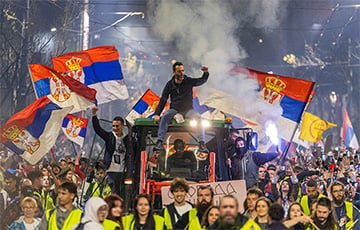
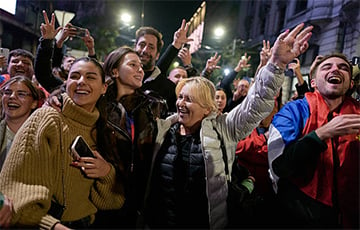
On the evening of October 25, the day of the parliamentary elections, Belgrade was swept up in a wave of euphoria. Tens of thousands of people took to the streets; the central squares were filled with revelers; cars honked; people sang and danced; and fireworks were set off. “When I left for work at nine this morning, people were still celebrating in the streets,” a colleague who lives in New Belgrade, not far from where the Student List’s campaign headquarters was located, told me on the morning of October 26. The celebrations continued the next day, when thousands of supporters of the Student List gathered at Slavia Square in the capital. Many couldn’t hold back their tears and said that, for the first time in a long while, they believed change was possible.
For some Serbian residents, what happened is so unbelievable that they’re looking for mystical elements in the story of Vučić’s downfall. They believe that during the election campaign, he was jinxed by a woman named Zora from Medveđi, one of the least developed municipalities. “One man has never known happiness; may the great God judge him,” Zora said to Vučić during a live broadcast from one of the campaign rallies in the south of the country. Just a few weeks before the election, this statement turned into a sort of spontaneous curse that citizens chanted at protests across Serbia.
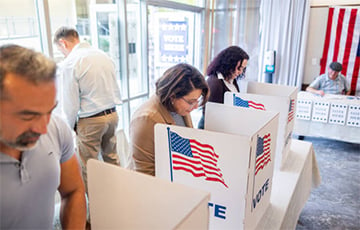
Until the moment of voting, I myself wasn’t sure that change was possible. I’d been on edge for weeks, and on election day, the tension reached its peak. From early morning, the police had blocked off the National Assembly building. Later, riot control vehicles appeared on the streets in central Belgrade; young people in jackets with black hoods entered the park in front of the New Palace, where the President of Serbia works, and the police blocked off the surrounding streets as well. The entire area between the Republican Electoral Commission, the National Assembly, and the New Palace was blocked off. I had the feeling that the Vučić regime was preparing for protests. Tanjug, a former Yugoslav state-run and now privately owned news agency close to the Serbian Progressive Party, reported live around 9:30 p.m. that, with 30% of the votes counted, the SPS was leading with 54%, while the Student List was at about 36%. It remained unclear exactly who was the source of this information, which turned out to be inaccurate.
Shortly thereafter, Vucic announced his party’s defeat live on air. Tears welled up in my eyes. When the camera cut back to the studio, the journalist Jovana Joksimović, the Serbian version of Ksenia Sobchak, looked completely flustered. She was clearly shocked and even forgot to introduce the guest who was in the studio. The very next day, Joksimović left the country. Citizen Vučić stated that he has no intention of fleeing and plans to continue his political struggle, now from the opposition.
Serbia seems to be becoming a different country. A great deal has changed in just one week: resignations among the political elite are coming one after another, arrests and searches are taking place, and the prosecutor’s office is working more actively than it has in perhaps the last ten years—at least for as long as I have been working as a journalist. A large-scale audit of all 87 district prosecutor’s offices across the country has been launched, in part to prevent the possible destruction of government documents. An investigation has begun into high-profile cases—ranging from the wiretapping of protest activists’ phones to the circumstances surrounding the collapse of a canopy at the Novi Sad train station. After all, the trial intended to determine who is responsible for the tragedy has not, in fact, even begun.
One of the most high-profile cases involves Alta Banka, owned by businessman Davor Matsura, who is considered close to Vučić. On the night of last Saturday, the National Bank of Serbia revoked Alta Banka’s license. This occurred after a whistleblower reported an attempt to transfer approximately one billion euros from the bank to Russia, which could have jeopardized pension payments and customers’ savings. It is not yet known who was behind the alleged attempt to transfer funds; these circumstances have yet to be determined by the court. The situation is causing particular concern among Russian citizens living in Serbia. The bank was one of the few in the country that continued to open accounts for Russians, and now they have temporarily lost access to their funds. It is still unclear how long this situation will last, and my Russian acquaintances in Belgrade say they cannot even imagine how they will buy groceries, since all their money is in accounts at Alta Banka.
It is expected that the Student List’s main priority will be to carry out internal reforms. The movement’s platform aims to restore the rule of law and free the judicial system and the media from political influence. Just how deeply the Serbian Progressive Party’s influence has penetrated the media sphere is becoming increasingly evident in light of last week’s resignations: the director general of Serbia’s public broadcaster, Radio and Television of Serbia, as well as the head of the public broadcaster in Vojvodina, an autonomous province in the north of the country, have stepped down from their posts. Radio and Television of Vojvodina publicly apologized to viewers for years of one-sided coverage of events in the country.
It remains to be seen who will become Serbia’s prime minister and what his approach to foreign policy will be. At the top of the Student List is Ilija Srdanović—a cardiologist and professor at the Faculty of Medicine at the University of Novi Sad—who is considered one of the possible candidates for the post of prime minister. Srdanović has already stated that the new government does not intend to drastically change Serbia’s foreign policy course and expects to continue cooperation with all countries, including Russia.
Moscow remains Serbia’s main gas supplier; about 80% of all gas imported by the country comes from Russia at a preferential price. The current gas agreement between Serbia and Russia—which was previously described as so important that Vučić and Vladimir Putin discussed it personally over the phone—expires on December 31, in the middle of winter. In addition, Russia remains the largest shareholder in Serbia’s key oil company, and, by all accounts, is in no hurry to sell its stake, despite two years of U.S. sanctions against the company, as well as protracted negotiations with the Hungarian company MOL regarding its purchase. Given all this, it is unlikely that Serbia will impose sanctions against Russia anytime soon.
The new government will certainly face a difficult task. However, the EU is making it clear that it is ready to welcome back its “prodigal daughter,” Serbia, which was granted candidate status for EU membership in 2012.
Jovana Georgievski Radio Free Europe/Radio Liberty

Bank's name: Bank Millennium S.A.
Address: ul. Stanislawa Zaryna, 2A, 02-593, Warszawa
IBAN: PL97116022020000000216711123
SWIFT: BIGBPLPW
Name of the account holder: Fundacja “KARTA ‘97”
Purpose/title of payment: Donation for statuary aims
You can contact us by the e-mail [email protected]