

The Kremlin Expects A Wave Of Panic In St. Petersburg
17- 16.09.2026, 7:38
- 16,326
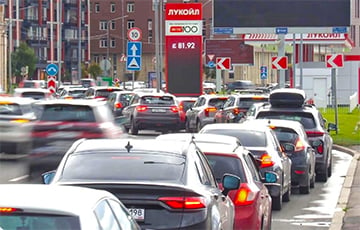
Unprecedented restrictions have been imposed at gas stations in the city and the region.
In Russia's Leningrad Region, authorities have decided to impose a uniform limit on fuel sales at gas stations. Drivers will be allowed to purchase no more than 30 liters per fill-up.
This was reported by The Moscow Times.
The decision was made amid a difficult fuel situation in the region. According to Leningrad Oblast Governor Alexander Drozdenco, the situation remains challenging, but authorities expect to stabilize it. He also urged residents not to panic.
The 30-liter limit is scheduled to be introduced at all gas stations in the region in the coming days. According to the Leningrad Region government, this is a temporary measure that is set to remain in effect until October 1.
A separate provision ensures that emergency services and ambulances will be able to refuel without waiting in line. At the same time, the “even-odd” system has been retained as a backup option.
Gasoline shortages have arisen in the region
Fuel problems in the Leningrad Region have already led to the closure of some gas stations. According to Drozdchenko, about 20% of the region’s private and small gas stations have suspended operations due to a fuel shortage, with the greatest difficulties arising with AI-95 gasoline.
The situation was also affected by the shutdown of the KINEF oil refinery, one of the largest oil refining facilities in northwestern Russia.
Why Fuel Problems Persist in the Russian Federation
It’s all due to the Ukrainian Armed Forces’ constant strikes on the occupiers’ refineries. For example, on the night of September 15, the Defense Forces struck an oil refinery in the Samara Region of the Russian Federation and the “Atlant Aero” facility in Taganrog. The consequences of a previous strike on the “Slavyansk ECO” oil refinery have also been confirmed.
Meanwhile, the U.S. president stated that Ukraine must stop striking Russian infrastructure—including oil refineries—as this allegedly leads to a global diesel fuel shortage.

Bank's name: Bank Millennium S.A.
Address: ul. Stanislawa Zaryna, 2A, 02-593, Warszawa
IBAN: PL97116022020000000216711123
SWIFT: BIGBPLPW
Name of the account holder: Fundacja “KARTA ‘97”
Purpose/title of payment: Donation for statuary aims
You can contact us by the e-mail [email protected]