

Hospitals Across Russia Have Begun To Be Converted Into Military Hospitals
8- 10.09.2026, 19:40
- 3,140
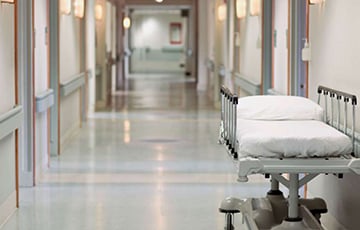
Due to the influx of wounded soldiers from the front lines in Ukraine.
The Ministry of Defense’s military hospitals have become overcrowded due to the large number of wounded, so participants in the “special operation” are increasingly being treated and rehabilitated in regular civilian hospitals—free of charge and without having to wait in line. As “Vot Tak”, entire wards are being repurposed for those who fought in Ukraine, and these wards are subject to special secrecy measures. Medical professionals from St. Petersburg, the Yaroslavl Region, and Siberia told the publication about the creation of such closed wards.
In late May 2023, the authorities promised to transfer nearly 5,000 hospital beds to the Ministry of Defense from 27 civilian hospitals in 11 regions, including Moscow, St. Petersburg, Rostov-on-Don, and Sevastopol. However, this decision was not officially announced, and the list of hospitals remains unknown, notes “Vot Tak.”
The first wounded were admitted to the I. I. Djanelidze Research Institute of Emergency Care in St. Petersburg in June 2024, a hospital employee told “Vot Tak.” At that time, two treatment wards for war veterans were opened there in place of the intensive care and shock therapy units. These wards were made off-limits: entry was permitted only with magnetic access cards, and the staff of these wards were isolated from the rest of the personnel. War veterans occupied about 60–70 beds.
According to medical workers, one of the hospitals in the Yaroslavl Region has also been operating two closed wards for war veterans since 2024—each with approximately 60–70 beds. A trauma surgeon at one of the city hospitals in Siberia explained that doctors and nurses in the wards where the “heroes of the Special Military Operation” are treated sign non-disclosure agreements. “All documentation is also classified. Even the medical records do not include a first name, last name, or patronymic—only a number,” she explained.
An anesthesiologist at the S. M. Kirov Military Medical Academy in St. Petersburg said that one of the wards is designed to accommodate 40 patients, but is currently treating up to 86 patients at a time. According to him, after the start of full-scale war, additional beds began to be set up in the hallways, and mattresses are being placed in the wards instead of beds. The anesthesiologist asserts that the shortage of beds is evident not only in other hospitals in St. Petersburg but throughout the country.
According to calculations by “Vot Tak,” there are currently at least 58,300 beds in military medical facilities across Russia. Nearly 1 million wounded can be treated there annually, yet there are still not enough beds.
According to doctors interviewed by the publication, the presence of military personnel in civilian hospitals affects the availability of medical care for other patients: it becomes more difficult for them to see specialists. Citizens can still receive emergency care, but there are problems with scheduled care.
Konstantin Boykov, a doctor and human rights lawyer, notes that participants in the “special military operation” are now given priority, but the number of doctors has not increased. “People are sitting in long lines, waiting for help, suffering—and then suddenly someone cuts in line. This, of course, causes irritation and social tension,” he said.
Civilian medical workers interviewed by “Vot Tak” report that hospital staff are dissatisfied with the arrival of patients from the front lines due to drunken brawls, thefts, and even shootouts. For example, in April at the Alexandrovskaya Hospital in St. Petersburg, a conflict between two patients—both “heroes of the special military operation”—ended in gunfire. In September, one soldier stabbed another in the stomach at the Peter the Great Hospital. Another wounded soldier—Vladlen Metzler—was discharged from the I. I. Dzanelidze Research Institute of Emergency Care after fights and conflicts with patients and medical staff. “They get drunk, call prostitutes. Sometimes they cause a ruckus. They give someone some money and are let through,” says one of the medical staff, describing the situation at the I. I. Dzanelidze Research Institute of Emergency Care in St. Petersburg. “They drink and steal. “They stole a TV from our ward, sold it, and got drunk,” says a doctor from the Yaroslavl Region.
According to estimates by the Center for Strategic and International Studies (CSIS), the Russian army’s total losses during the full-scale war as of June of this year amounted to 1.4 million people. Of that number, at least 450,000 were killed; the rest were seriously wounded or went missing.

Bank's name: Bank Millennium S.A.
Address: ul. Stanislawa Zaryna, 2A, 02-593, Warszawa
IBAN: PL97116022020000000216711123
SWIFT: BIGBPLPW
Name of the account holder: Fundacja “KARTA ‘97”
Purpose/title of payment: Donation for statuary aims
You can contact us by the e-mail [email protected]