


The Pentagon Is Developing A New Nuclear Strategy
4- 5.08.2026, 15:04
- 2,242
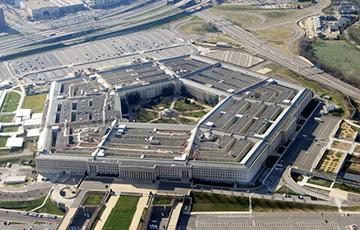
In the event of a war with China or Russia.
The U.S. Department of Defense is developing a new nuclear strategy that places particular emphasis on the possible use of shorter-range tactical weapons in the event of a regional war with China or Russia, according to NBC five people familiar with these plans. The work is being overseen by Elbridge Colby, the Under Secretary of Defense for Policy, who played a key role in canceling U.S. military aid to Ukraine and reviewing the U.S. military presence in Europe.
As part of the new plan, the options for a nuclear counterstrike—which are presented to the U.S. president during a crisis—are to be updated. According to NBC sources, the goal of the new strategy is to prevent a conventional war from escalating into a nuclear one, as well as to prevent an adversary from exploiting the conflict to its own advantage. This primarily concerns potential regional conflicts with Russia and China, which Washington considers its main adversaries in a nuclear standoff.
Colby advocates for an increased role for tactical nuclear weapons—in contrast to the current strategy, which calls for the use of long-range strategic weapons to destroy an adversary’s nuclear forces. Colby asserts that U.S. adversaries already know the U.S. is prepared to use such weapons. However, his approach is causing concern among a number of experts who believe it will weaken the policy of deterrence, as the threat of a large-scale nuclear strike will appear less credible. It could also reduce U.S. combat readiness in a number of scenarios, since the military would not be adequately prepared to take the necessary actions in the event of a nuclear apocalypse.
It is difficult to imagine an approach that would more strongly contradict the position articulated by Donald Trump that “we must make our nuclear deterrent great again,” a source in the U.S. Congress told NBC. According to the source, Trump would like to have more options in the area of nuclear deterrence, not fewer.
Trump and the Pentagon have previously stated that the U.S. must simultaneously confront two nuclear rivals—China and Russia. The Department of Defense’s list includes 130 organizations and institutions in China, Russia, and Iran whose activities threaten U.S. national security.
After the expiration in February 2026 of the latest treaty between the U.S. and Russia on strategic offensive arms (START III) Trump and members of his administration have made it clear that they are considering the possibility of deploying additional nuclear weapons, as well as, likely, conducting nuclear tests of some kind.
Colby plans to present his findings on Wednesday at a closed-door military event in Nebraska during a visit to U.S. Strategic Command, which is responsible for nuclear forces, sources told NBC.

Bank's name: Bank Millennium S.A.
Address: ul. Stanislawa Zaryna, 2A, 02-593, Warszawa
IBAN: PL97116022020000000216711123
SWIFT: BIGBPLPW
Name of the account holder: Fundacja “KARTA ‘97”
Purpose/title of payment: Donation for statuary aims
You can contact us by the e-mail [email protected]