
Following Russia, A Gasoline Crisis Has Begun In Iran
1- 25.08.2026, 13:06
- 2,616
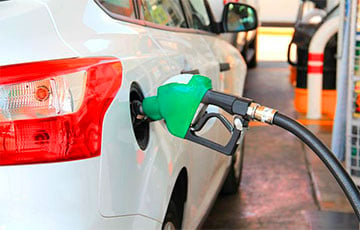
The U.S. naval blockade has caused long lines at gas stations in Tehran.
Two countries that rank among the world’s largest oil producers have run out of gasoline as a result of their aggressive foreign policies. Russia is already experiencing its second wave of the fuel crisis: after the shortage eased somewhat in early August, restrictions on fuel sales (typically 40–50 liters per person) have now been reimposed in various regions, including the capital. Iran has joined its Russian partner: the U.S. naval blockade has caused long lines at gas stations in Tehran, writes Financial Times.
A 20-liter limit per car is forcing drivers to return again and again, an employee at one of the capital’s gas stations told the newspaper. According to him, people are rushing to fill up “before their tanks run empty, fearing that the war might resume or that prices will rise.”
The state agency for fuel consumption optimization has warned of a “critical” gasoline shortage. According to its data, Iran is short 15 million liters to meet daily demand of 135 million liters. In other words, the shortage exceeds 11%.
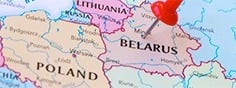
In Russia, the situation is even worse. According to Rystad Energy’s estimates, refining volumes are one-third below the seasonal average, as more than 10 refineries have come under attack since early August, with at least five having halted operations (and some facilities never resumed operations after the June–July wave of Ukrainian bombings). In July, Russia produced 8.76 million barrels of crude oil per day, according to estimates by the International Energy Agency (IEA), with an OPEC+ quota of 9.82 million barrels. However, due to the loss of refining capacity, Russia not only banned fuel exports but also began purchasing fuel from India, Morocco, and Turkey, while increasing gasoline imports from Belarus by a factor of 25.
In Iran, some refineries were also damaged as a result of Israeli and U.S. strikes at the start of hostilities this spring. Furthermore, Iran, which produces 2.6 million barrels of crude oil per day (IEA data for July—with a production capacity of 3.8 million barrels), lacks sufficient refining capacity. As a result, a significant portion of gasoline was imported, but this is now nearly impossible due to the naval blockade that the U.S. reinstated on July 14.
U.S. Treasury Secretary Scott Bessent stated on Monday that, as part of the economic war against Iran, its trading partners will be given “a certain period of time” to wind down commercial relations, and that organizations helping Tehran launder money or circumvent sanctions could be “cut off from the U.S. financial system.” Similarly, French President Emmanuel Macron proposed on the same day that allies cut off fuel supplies to Russia.
The fuel shortage in Iran is exacerbated by a subsidy system that keeps gasoline prices in the country among the cheapest in the world—15,000–50,000 ($0.0075–0.25). The government, which has had to actively draw down strategic reserves in recent months, states that the current system is no longer sustainable due to nearly 90% inflation, the rial’s plunge to a historic low, and war-induced supply disruptions, the FT notes.
Iranian President Masoud Pezeshkian stated in August that selling gasoline at below-market prices deprives the government of the resources needed to subsidize food and support workers. “Who said the government has to buy gasoline for 1.3 million rials per liter and then sell it for 15,000 rials?” he said.
However, a recent pilot project to raise gasoline prices in Kerman Province was halted just a few hours after it began. The country still vividly remembers the events of 2019, when a sudden price hike sparked protests in many cities, resulting in the loss of life.

Bank's name: Bank Millennium S.A.
Address: ul. Stanislawa Zaryna, 2A, 02-593, Warszawa
IBAN: PL97116022020000000216711123
SWIFT: BIGBPLPW
Name of the account holder: Fundacja “KARTA ‘97”
Purpose/title of payment: Donation for statuary aims
You can contact us by the e-mail [email protected]