
Seven Parties And Not A Single Independent Candidate: Kazakhstan Elects The Kurultai
1- 23.08.2026, 12:28
- 1,114
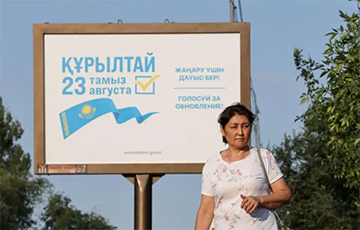
The elections are being held under the new constitution.
On August 23, Kazakhstan is holding the first elections to the Kurultai—a new unicameral parliament established following a sweeping constitutional reform. The reform changed the structure of government and, at the same time, paved the way for Kassym-Jomart Tokayev to serve another presidential term, according to BBC.
The 145 seats in the new parliament will be allocated among party lists: independent candidates are not allowed to run, and all seven approved parties support Tokayev’s policies.
Two chambers instead of one
More than 12.5 million voters are registered to participate in the Kurultai elections—the new parliament that will serve for the next five years, including during the next presidential election.
Most polling stations across the country opened at 7:00 a.m. local time; voting will continue until 8:00 p.m., but the first results will not be available until after midnight—the country prohibits the publication of exit poll results before that time.
Unlike the previous parliament, which consisted of the Senate and the Mazhilis, the new parliament will have a single chamber of 145 members.
In this election, the entire country constitutes a single electoral district, and voters cast their ballots not for specific candidates but for party lists.
Supporters of this system argue that it will strengthen the role of political parties and allow for the formation of stable factions. The OSCE Office for Democratic Institutions and Human Rights (ODIHR) points out that international standards require the option to run as an independent candidate, and most of the mission’s interlocutors who did not represent political organizations viewed the abolition of independent candidacy as a restriction on political participation.
This is a particularly sensitive issue for Kazakhstan, where opposition movements have been trying for years to register as parties, but none has managed to obtain official status or participate in elections. The current system leaves opposition politicians with no path—not even a theoretical one—to national elections.
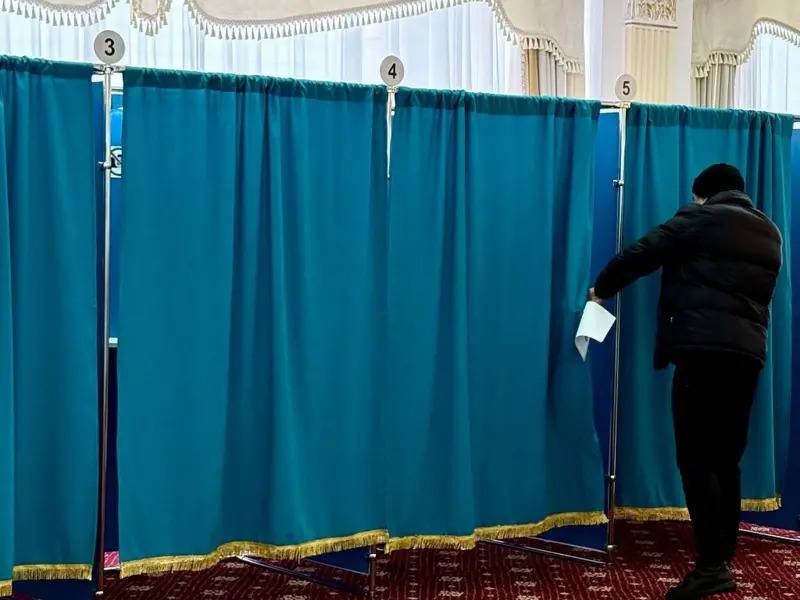
Seven parties admitted to the elections are participating: “Adilet,” the National Social Democratic Party, the Kazakhstani Green Party “Baytak,” the People’s Party of Kazakhstan, “Auyl,” “Ak Zhol,” and Respublica—all of which support the current president’s policies. The ballots also include a “none of the above” option.
To enter parliament, a party must receive at least 5% of the vote. After the election, the leadership of each party that has secured seats in the Kurultay will determine which candidates on its list will receive parliamentary seats.
The law requires that women, candidates under 35, and people with disabilities collectively make up at least 30% of each party’s representatives.
The new “Adilet” party fielded the largest slate—186 candidates. It was founded in May, registered in early June, and on June 12, “Amanat”—at that time the most influential party in the country—decided to join it.
“Amanat”—the successor to the “Otan” party, founded by Nursultan Nazarbayev and later renamed “Nur Otan”—served as the ruling party for nearly three decades. Even after its latest name change, it retained strong ties to the first president.
MP Erlan Sairov directly explained the rationale behind the merger with the newly formed “Adilet”: “The main goal is to completely rid ourselves of Nazarbayev’s political legacy.”
Although Tokayev came to power in 2019 as Nazarbayev’s successor, and independent experts described the first few years after the presidential handover as a period of dual power, the situation changed dramatically in January 2022 — when protests broke out in western Kazakhstan due to a sharp rise in liquefied gas prices; these protests quickly spread across the country and escalated into demonstrations against social inequality, corruption, and the lingering influence of the former president’s family.
In Almaty, the initially peaceful demonstrations turned into riots, and Tokayev declared the events an attempted coup d’état, ordering security forces to shoot to kill. According to official figures, 238 people died during those days in January, although the exact sequence of events and the roles of the various forces involved in the unrest have not yet been definitively established.
At the height of the crisis, Tokayev replaced Nazarbayev as head of the Security Council, and in late January, as head of the ruling party. Relatives and allies of the former president began to lose their government posts and influence.
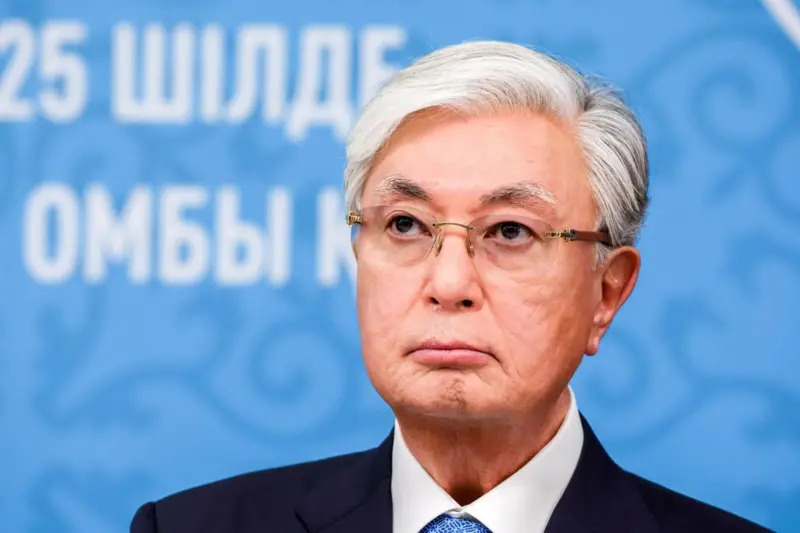
The new constitution allows Tokayev to remain president until at least 2036.
Tokayev promised at the time to abandon the “super-presidential” model, strengthen the role of parliament in the country, and make the political system more competitive. However, independent analysts speaking with the BBC note that, in reality, little has changed.
Kazakh political scientist Dosym Satpayev says: “Tokayev is a hostage to this system; he is trying to prolong it, he is trying to preserve its main pillars. Because Nazarbayev, for example, had four such pillars on which he relied—his family, the security forces, the oligarchs, and the nomenclature. Essentially, those same pillars remain in place today.”
The new “Adilet” party, led by Aibek Dadebay—who headed the presidential administration until May—openly states that it will serve as the political backbone of Tokayev’s agenda. Many party representatives took part in drafting the new constitution.
The new constitution
The Kurultai is the result of constitutional reform initiated by Tokayev in the fall of 2025. Initially, the plan was only to amend the constitution, but over the course of several months, the project expanded into a complete replacement of the 1995 constitution. The new constitution was adopted in a referendum in March 2026 and took effect on July 1.
The authorities presented the transition to a unicameral parliament as a way to speed up legislative work and strengthen the role of political parties. The Kurultai will pass laws, approve the budget, may pass a vote of no confidence in the government, and will approve the appointment of the prime minister, the vice president, judges of the Constitutional Court, and members of several state bodies.
At the same time, the constitution grants the head of state broad powers. For example, the president nominates the candidate for Kurultai chairperson. The president may also dissolve parliament if deputies repeatedly refuse to elect the proposed chairperson or to approve certain presidential appointments.
The first session must be convened no later than 30 days after the election results are published. Within two months after the opening of the first session, Tokayev must appoint a vice president with the consent of the Kurultai. This position, which was abolished in 1996, is now being reinstated: in the event of the president’s early resignation or death, the vice president is the first to assume his powers until an election is held. Experts believe that this is an excellent opportunity for Tokayev to name his successor in advance and avoid a power struggle among the elite.
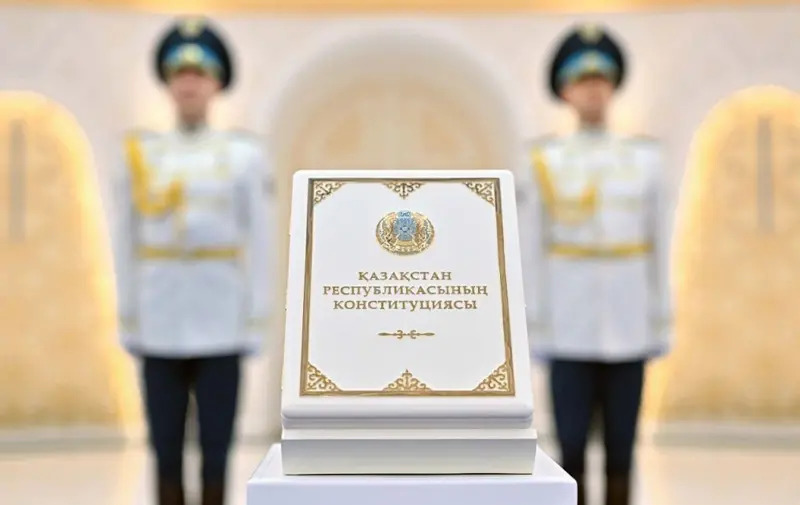
“For Kazakhstan, the end of the Nazarbayev era turned out to be a disaster. The office of vice president is needed precisely to prevent a recurrence of such problems and to protect the regime during a future transition, — says Luka Anceski, a professor of Eurasian studies at the University of Glasgow and an expert on authoritarian regimes and Central Asian politics. “The president will nominate a candidate, the Kurultai will approve him, and that person will be next in line. We just don’t know yet whether we’re talking about 2029 or 2036.”
Thanks to the new constitution, Tokayev has been given the opportunity to be re-elected as president in 2029.
The current elections are taking place amid restrictions on freedom of speech, according to an interim report by the OSCE’s Office for Democratic Institutions and Human Rights (ODIHR): Kazakhstan’s media market is dominated by the state. Among long-standing issues, the ODIHR cites state influence on editorial policy, arrests and pressure on independent journalists and their families, lawsuits against media outlets, the removal of content from the internet, and delays in accreditation.
On August 14, the Committee to Protect Journalists and eight other local and international human rights organizations stated that pressure on the press had significantly intensified ahead of the elections and reached an unprecedented level.

Bank's name: Bank Millennium S.A.
Address: ul. Stanislawa Zaryna, 2A, 02-593, Warszawa
IBAN: PL97116022020000000216711123
SWIFT: BIGBPLPW
Name of the account holder: Fundacja “KARTA ‘97”
Purpose/title of payment: Donation for statuary aims
You can contact us by the e-mail [email protected]