

"This Poses A Serious Problem For The Kremlin"
2- 14.08.2026, 10:18
- 5,992
The region where the Russian-Ukrainian war began is now feeling the full brunt of its consequences.
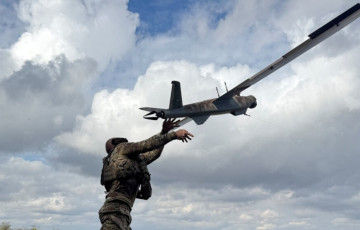
Ukrainian drone strikes on occupied Crimea have intensified significantly in recent months. Because of these attacks, life on the peninsula has become almost unbearable. This is reported by the American publication NPR.
Crimea, which is usually overflowing with tourists in the summer, is facing a completely different reality this year. The article notes that Ukrainian strikes are having an increasingly severe impact on the daily lives of the civilian population. One resident of the peninsula described the situation on social media as follows:
“Public transportation has completely stopped. There’s no gasoline, no fuel, no electricity. Stores are closed. Banks are closed. Nothing is working at all. There’s no water either.”
The author of the post notes that since Russia annexed Crimea in 2014, about one million Russian military personnel and civilians have moved to the peninsula. At the same time, a significant portion of the Ukrainian population has left Crimea. Its population is currently estimated at approximately 2.5 million people.
In recent years, Ukraine has declared its intention to reclaim the peninsula and has periodically carried out strikes against Russian military targets. However, in recent months, the intensity of the campaign has increased significantly. Military facilities in northern Crimea have been subjected to particularly heavy attacks. But supply problems are increasingly affecting the civilian population as well.
According to former U.S. Navy Rear Admiral Mark Montgomery, this poses a serious problem for the Kremlin.
“It’s impossible to keep that many people in a place with limited water supplies, no fuel, and limited food supplies. I mean, they’ll have to leave,” he said.
Russian ships and ferries delivering fuel, food, and other essential cargo to Crimea have become a separate target of Ukrainian attacks. Ukrainian Navy spokesman Dmytro Pletenchuk stated that over the past month, Ukrainian forces have struck more than 130 Russian vessels in the Sea of Azov and more than 80 in the Black Sea.
“Russia overestimated its naval power and did not expect such actions from us. Now they are trying to catch up with our technology. But they need six months, and we continue to improve. Russia has now reached a logistical impasse,” he noted.
At the same time, the author of the article emphasizes that it is not yet time to talk about the imminent liberation of Crimea by military means. Ukrainian forces do not have the capacity to launch a large-scale offensive to retake the peninsula. President Volodymyr Zelenskyy has also stated that Ukraine is not yet attempting to recapture Crimea directly, as saving lives remains the priority.
Thus, as the NPR article notes, Ukrainian attacks do not yet alter the fact of Russian control over Crimea, but they are increasingly undermining Moscow’s ability to ensure the normal functioning of the peninsula. At the same time, the Kremlin—which, after seizing Crimea, called it an “integral part of Russia”—now, as the author notes, hardly comments on the problems arising in the occupied territory.

Bank's name: Bank Millennium S.A.
Address: ul. Stanislawa Zaryna, 2A, 02-593, Warszawa
IBAN: PL97116022020000000216711123
SWIFT: BIGBPLPW
Name of the account holder: Fundacja “KARTA ‘97”
Purpose/title of payment: Donation for statuary aims
You can contact us by the e-mail [email protected]