
Natallia Radzina: It Seems That In Recent Weeks, Lukashenko Has Been Putting On A Show
18- Natallia Radzina
- 2.07.2026, 20:28
- 35,890
Ukraine must not forget that the dictator is a puppet of Russia.
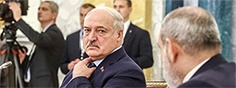
Belarus has found itself in the spotlight due to a series of high-profile events. On June 19, Ukrainian President Volodymyr Zelenskyy issued an ultimatum to Lukashenko, stating that the dictator must dismantle the Russian relay stations used to guide drones within a week. On June 24, Zelenskyy said that the Belarusian leader had complied with his demands. On June 26, Lukashenko appeared at Valdai, where he met with Putin. The dictators made no statements after the meeting, which sparked a series of rumors that the Kremlin was pressuring Lukashenko to launch another attack on Ukraine from Belarusian territory. On June 29, the Belarusian leader flew to China, where he met with Chinese President Xi Jinping. After the meeting in Beijing, a number of experts claimed that Lukashenko had allegedly “thwarted Putin’s plans” and “broken away from Russia, securing China’s support.”
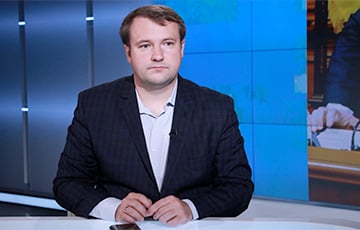
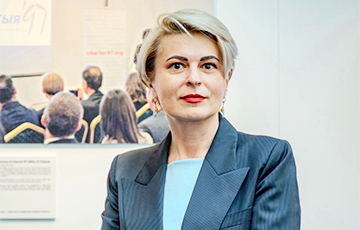
The editor-in-chief of the Charter97.org website, Natallia Radzina, in an interview with the YouTube channel of the Ukrainian news agency “UNIAN,” expressed the opinion that many of Lukashenko’s recent statements and actions are staged:
— I watched your report with interest, and I got the feeling that we’re simply taking part in some kind of grand spectacle. It seems there’s an active information and psychological operation underway, claiming that “Lukashenko is trying to escape pressure from Putin,” that he’s “successfully managing to do so,” and that “an attack on Ukraine is being prepared,” even though all experts unanimously state that there aren’t enough Russian troops stationed on Belarusian territory and we don’t see any preparations for offensive operations.
Claims have emerged that Lukashenko “has turned against Russia and shut down the relay stations.” The Commander-in-Chief of the Armed Forces of Ukraine Oleksandr Syrskyi said that these same repeaters were turned back on on June 29. This means Lukashenko did not shut them down permanently. We don’t even know what Lukashenko and Putin discussed at Valdai, since there were no statements—not to mention photos or videos—from that meeting.
As for China’s statements supporting sovereignty, it always talks about this, since a land corridor through Belarusian territory for its goods is extremely important to Beijing. There have been hundreds of statements from China asserting that Belarus must be a sovereign, independent state.
I get the feeling that, once again, they’re crafting an image of Lukashenko as someone who has once again distanced himself from Putin. “How wonderful he is, how cunning he is.” And now, supposedly, we can rely on Lukashenko, lift sanctions against him, and somehow build relations with him—even in Ukraine. And here I just want to warn you, because Lukashenko cannot be trusted under any circumstances.
Yes, he’s as slippery as an eel, but he’s completely dependent on Russia. He has no room to maneuver, even despite his current attempts to negotiate with the U.S. Believe me, he fears Putin far more than he fears Trump, who might lose the upcoming midterm elections to Congress.
All Lukashenko needs is for the sanctions to be lifted, because his economy is collapsing.
According to the editor-in-chief of the website Charter97.org, reports of pressure on Lukashenko from Putin are part of the Belarusian leader’s charade:
— We learned about this mainly from the Western press. Allegedly, the Kremlin is actively pressuring him to use Belarus in the war. But he’s already using it in this war.
Does he need a second offensive against Ukraine from Belarusian territory? First of all, Putin doesn’t have enough troops right now. We can see that the Russian army simply doesn’t have enough soldiers to fight in the Donbas. He would need at least another 100,000 troops, whom he would station in Belarus to attack Ukraine. No mobilization has been announced in Russia at this time.
Second, the Commander-in-Chief of the Armed Forces of Ukraine, Syrsky, stated in an interview that a second offensive from Belarusian territory is unlikely because the border area consists of marshy terrain, all the bridges have been blown up, and there are very few roads. Heavy equipment would simply get stuck if it tried to cross the border into Ukraine. If there is an offensive, for example, against the Chernihiv region, it will most likely come from Russia’s Bryansk region.
Of course, Putin is crazy; he wants to escalate the situation. But I still don’t understand how he could use Belarus at this point, given the lack of resources. The threat will always be there, and it will remain as long as Lukashenko, Putin’s puppet, rules Belarus. But right now, I still get the impression that this is just a show staged by Lukashenko.
Natallia Radzina believes that the Belarusian leader, who is seeking the lifting of sanctions, may resort to blackmail and pressure against the West and then, having created the illusion of autonomy, attempt to secure negotiations:
— First, he needs to scare the West by suggesting that Lithuania or Latvia could be invaded from Belarusian territory, or that there could be an attack on Poland. We are seeing hybrid attacks targeting neighboring NATO countries—balloons carrying contraband flying into Lithuania, migrant attacks on borders, and drone attacks. We’re seeing all of this, and I’m certain these incidents will keep happening. Undoubtedly, to escape these threats, a frightened Europe might agree that it’s worth engaging in some kind of dialogue with the Belarusian dictator. Especially since he’s “standing up to Putin,” “holding his ground bravely,” and has now traveled to China to negotiate with Xi Jinping.
Natallia Radzina points out an interesting detail related to Lukashenko’s visit to Beijing:
— He went to China to attend the graduation ceremony at Peking University for his youngest son, Kolya. That’s all. He combined a private trip for family reasons with a meeting with Xi Jinping. You understand that this is no longer an urgent visit, where it’s like, “Oh my goodness, help me, I’m rushing to you, Chinese people, help me—they’re putting so much pressure on me.” That’s why I’m calling it a show.
Natallia Radzina notes that today, turning Belarus into a war zone is not in the interest of any of the parties involved:
— Of course, Lukashenko is terrified of any strikes from Ukraine—whether on the notorious relay stations or other targets. Over the past month, we’ve heard statements from Ukrainian experts who have explicitly said that the Ukrainian Armed Forces could shut down the Belarusian economy in literally a single day. A few strikes on “Belaruskali,” the oil refineries in Novopolotsk and Mozyr—and the situation would instantly destabilize.
Another thing is that we cannot rule out the possibility that, in this situation, Russia would indeed fully drag Belarus into the war: an emergency mobilization would be carried out in the Russian Federation, since they would have to “save their Belarusian brothers,” and then Belarus would become a theater of military operations. As I see it, this is equally disadvantageous for both Lukashenko and Ukraine itself.
I understand why Ukraine is making these statements about its ability to launch strikes; I myself have called on Kyiv to warn the dictator. Lukashenko needs to be intimidated; he must understand that such a threat exists, and Putin must realize that this could happen.
However, it is more advantageous for Putin for Belarus to remain a springboard from which to intimidate both Ukraine itself and European countries; and when you stop intimidating and move on to concrete actions, in that situation, you could simply “get your ass kicked.” We know full well that if Russia, for example, were to actually attempt to attack a NATO country, the response would be immediate, and the Kremlin would lose that war.
The editor-in-chief of the website Charter97.org points out that it is in Putin’s interest to use Belarus to circumvent Western sanctions:
— He understands perfectly well that sanctions against Belarus are weaker than those against Russia. In particular, the Americans have begun the process of lifting some economic restrictions on the Belarusian regime in exchange for the release of some—though not all—political prisoners.
This allows Russia to receive sanctioned goods via Belarusian territory. I think that Belarus is still being used here, just as it has been since 2014, as a smuggling hub through which everyone traded. Therefore, it is extremely disadvantageous to turn Belarus into a theater of military operations.
At the end of the interview, Natallia Radzina answered a question about the situation and public sentiment in Belarus:
— The overwhelming majority of Belarusians are against this war. As for the situation, just today I read that a report by the Special Rapporteur on Belarus was presented to the UN Human Rights Council, and he stated that our country ranks first in the world in terms of the number of political prisoners per capita.
Can you imagine the level of repression taking place in Belarus today? In this situation, of course, people cannot openly speak out against the war or take part in anti-war demonstrations. But, without a doubt, people in Belarus do not want to participate in this war or fight—especially against Ukrainians. Lukashenko and Putin also understand that the Belarusian army, which has no combat experience, would absolutely not want to fight against Ukraine.
The year 2020 showed that Belarusians are not particularly susceptible to being brainwashed by propaganda, whether Belarusian or Russian. The protests that took place across the country, when about a million people took to the streets against Lukashenko, showed that propaganda doesn’t work.
The website “Charter ’97,” of which I am the editor-in-chief, writes extensively about Ukraine; we strive to provide our readers with as much information as possible about what is happening in your country. We are the most popular independent website, and despite being blocked, a very large number of people in Belarus read us. We can see from the statistics that the topic of Ukraine is extremely important—that Belarusians are reading about it and are interested in what is happening in your country. We know that we’ve also been able to raise awareness about the Belarusian army. Belarusians have always been more European; they differ mentally from Russians. And here, of course, even Russian television hasn’t been able to corrupt the Belarusians.

Bank's name: Bank Millennium S.A.
Address: ul. Stanislawa Zaryna, 2A, 02-593, Warszawa
IBAN: PL97116022020000000216711123
SWIFT: BIGBPLPW
Name of the account holder: Fundacja “KARTA ‘97”
Purpose/title of payment: Donation for statuary aims
You can contact us by the e-mail [email protected]